Sunday, July 05, 2009

Freedom and Fireworks in Skagway Alaska

Left: Fireworks over Skagway, AK.
*********************************

Freedom and Prophecy

Rick Malloy, S.J.
Notes from Homily for 14th Sunday, Year B, 2009, Skagway Alaska

A guy forgets his wife’s birthday. A few weeks later he forgets their anniversary. She is mad. He repeatedly apologizes, but no go. He’s still getting the cold shoulder, and every time he asks her how things are going she says, “Fine.” All guys know when a women says things are “Fine”… he’s in trouble. Finally he says, “Look. I’m sorry. What can I do to make it up to you? What do I have to do so we can get back on track?” She’s been wanting a car so she says, "Well, you could put something in the driveway that goes from 0 to 200 in six seconds.” So the next day she sees an envelop in the driveway. She runs out, rips it open, and reads, "Your gift is in the garage." She opens the garage door looking for a new car. Instead she finds a bathroom scale. … We’re told he’ll get out of the hospital in another week or two… Let me play the prophet and tell you: Don’t give your wife a bathroom scale…

Today we’re called to reflect on the relationship between Freedom and Prophecy. Happy July 4th. This weekend our county celebrates our freedoms (FDR’s four freedoms: Freedom of Speech, Freedom of Religion, Freedom from want and Freedom from fear).

Cardinal Rigali was approached by a worried college student who awkwardly asked, “Should I, like, kiss your ring?" The Cardinal, putting the student at ease replied, “The essence of our faith is the freedom of the children of God.” Christ calls us to freedom (“For Freedom Christ has set us free,” Gal 5:1)

You can do anything you want. But that’s not FREEDOM; that’s LICENSE. You are not free to do things that are dumb, dangerous, and deadly. DON’T GET YOUR WIFE A BATHROOM SCALE AS A JOKE! Don’t think, “I’m a free person, so I can drink a half gallon of vodka a day.” You are not free to drive on the left side of the road. Freedom for the follower of Christ is all about choosing what is loving and lasting. Freedom is all about choosing all that is sane and smart.

Freedom is not doing whatever you want. True Freedom is wanting to do what you ought to do. Freedom open to the influence of grace means that we find in ourselves the power to want to do what we ought to do. St. Thomas Aquinas taught that Grace is the ability to do what you could not do before. If little boys don’t develop the freedom to take a shower every day, by the time they are 13 no one wants to sit next to them (If you didn’t know the smelly kid in school… maybe you were the smelly kid!). If you don’t develop the freedom to study and learn, you’ll never graduate from school. If we don’t learn the freedom of discipline, our lives become chaotic and out of control. Addictions reign in our lives and soul. If our political and social and economic orders don’t learn discipline and true freedom, our society runs off the rails.

We are called to freedom for love and the common good and to open our hearts to all that creates the good and builds up the community. We are called to discipline ourselves for freedom from all that destroys and diminishes us. We are called to open our hearts to the freedom that makes for a world of peace and prosperity, justice and joy, faith and freedom, hope and healing, love and life and life eternal.

There is a connection between prophecy and freedom

Prophecy and Jesus as Prophet:

Biblical prophets were not those who foretold the future (no one can foretell the future. If someone claims they can, ask them for next week's lottery numbers). Biblical prophets were those who announced in the present what has to be freely chosen and done in light of the truth of the future. Prophets articulated programs and actions on the personal and social levels that would get us to the desired future.

Jesus was a prophet. In the light of the coming Kingdom of God, he told us, and tells us, what we need to do and where we need to go in order to get to the Kingdom of God, a Kingdom of “truth and life; holiness and grace; justice, love and peace” (Preface of Christ the King).

We need to discern between true and false prophets. There are too many screaming and yelling and pretending they know what the future holds. Glenn Beck and Keith Olbermann… are those two on the same planet? Do we follow those who, like Rush Limbaugh, starkly state they want our leaders to fail? Do we listen only to those who say what is wrong? Or are we free to carefully evaluate the plans and ideas offered and ready to join together to work to solve the problems we face?

The Church does not tell people for whom to vote, nor on whose side they ought to be in political debates (see the U.S. Catholic Bishops' website Faithful Citizenship). But Americans of all political persuasions should agree with what President Obama said on the 4th of July: “We Americans don’t fear the future; we make the future.”

Vatican II and Freedom

FROM THE DECLARATION ON HUMAN FREEDOM (DIGNITATIS HUMANAE PERSONAE). “8. Many pressures are brought to bear upon the men of our day, to the point where the danger arises lest they lose the possibility of acting on their own judgment. On the other hand, not a few can be found who seem inclined to use the name of freedom as the pretext for refusing to submit to authority and for making light of the duty of obedience. Wherefore this Vatican Council urges everyone, especially those who are charged with the task of educating others, to do their utmost to form men who, on the one hand, will respect the moral order and be obedient to lawful authority, and on the other hand, will be lovers of true freedom-men, in other words, who will come to decisions on their own judgment and in the light of truth, govern their activities with a sense of responsibility, and strive after what is true and right, willing always to join with others in cooperative effort. Religious freedom therefore ought to have this further purpose and aim, namely, that men may come to act with greater responsibility in fulfilling their duties in community life.” http://www.vatican.va/archive/hist_councils/ii_vatican_council/documents/vat-ii_decl_19651207_dignitatis-humanae_en.html

Labels: , , , , , , , , , , ,

Tuesday, June 23, 2009

Bubble on My Bellybutton: Painless Surgery


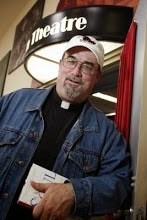
OK. OK. Who would have thunk it? Painless surgery? But I am a witness. This really happened to me. And despite Bill McGarvey's sense of humor at Bustedhalo.com, the picture at left is not a photo of me!

http://www.bustedhalo.com/features/mind-body-and-the-bubble-on-my-bellybutton/

Labels: , , , , , , , ,

Saturday, June 13, 2009

Newsweek: dumb or racist? All Supreme Court Justices are "white"?

Ms. Dahlia Lithwick and Newsweek exhibit the subtle and disturbing racial amnesia that afflicts so many well meaning "White" Americans. How could she and Newsweek state that ALL the Supreme Court Justices are "White"? (Newsweek, June 30, 2008, p.31, in the print edition). http://www.newsweek.com/id/142669 (accessed June 12, 2009). Did she just forget Justice Thomas? And why bash the wisdom of the healthy elders?

"The justices.
Anybody who believes the current Supreme Court looks like America needs to take a few more trips on a Greyhound bus. All the judges are white and/or old; most are both" (Lithwick, "The High Court: A User's Guide," Newsweek, June 30, 2008, p. 31).

Newsweek should correct this glaring inaccuracy in the on-line edition. One hopes reporting about Judge Sotomayor's confirmation hearing demonstates a higher level of journalism.

Wednesday, June 10, 2009

E.L. Doctorow, "Seeing the Unseen"

This essay by novelist E.L. Doctorow, is an amazing meditation, ruminating on creativity, genius, and science, among other topics. I've been reading much about physics and evolution (e.g., Greene, The Elegant Universe and The Fabric of the Cosmos; Hawking, A Brief History of Time and Space and The Universe in a Nutshell; Haught, God After Darwin; Miller, Finding Darwin's God; Tipler, the Physics of Christianity and the Physics of Immortality [N.B., Tipler's ideas are pretty controversial]) as I work on a book trying to articulate a vision of Catholic Intimacy and Prayer, realizing how prayer makes us appreciate, relish and be at one with all of creation known by science. As we plumb the depths of the meanings of evolution and the revolution wrought in Physics in this past century (e.g., the multiverse), we stand on the shore of an immense new land (or sea) to be explored by the synthesis of human cultures, religions and scientific knowledge. Peace - Rick

Seeing the Unseen

http://discovermagazine.com/2004/dec/seeing-the-unseen/?searchterm=doctorow

12.03.2004

Creative genius in both science and the arts is a heightened state of perception that transforms the very pulses of the air into revelations

by E. L. Doctorow

Recently a coterie of distinguished scientists, including Murray Gell-Mann, Brian Greene, and Sir Martin Rees, were featured speakers at “Einstein: A Celebration,” a conference hosted by the Aspen Institute and sponsored in part by Discover. After three days of discussion about Albert Einstein’s impact on science, society, and culture, the task of defining the nature of his creative genius fell to a great American novelist: E. L. Doctorow. “Perhaps the organizers of this conference understood all too well that any report on the genius of a mind like Einstein’s would have to be a matter of fiction,” he joked. Yet it was fitting that Doctorow be given the last word on the subject. His novel City of God begins with a meditation on the Big Bang and includes several memorable passages in which a fictional writer peers inside Einstein’s mind and channels his thoughts. This is an adapted version of Doctorow’s remarks at the Aspen Institute on August 11.

When I was a student at the Bronx High School of Science in New York City, our principal, Dr. Morris Meister, had an image for scientific endeavor and the enlightenment it brings: “Think of science as a powerful searchlight continuously widening its beam and bringing more of the universe into the light,” he said. “But as the beam of light expands, so does the circumference of darkness.”

That image would certainly have appealed to Albert Einstein, whose lifelong effort to find the few laws that would explain all physical phenomena ran into immense difficulties as the revolutionary light of his theory of relativity discerned a widening darkness.

Of course, to a public celebrating its own mystification, that hardly mattered. The incomprehensibility of his space-time physics, and the fulfillment of an early prophecy of the theory of relativity when Sir Arthur Eddington’s experiments confirmed the bending of starlight as it passed by the sun, was enough for Einstein to be exalted as the iconic genius of the 20th century.

This was a role he could never seriously accept; he would come to enjoy its perks and use it as he grew older on behalf of his various political and social causes, but his fame was an irrelevancy at best and did not accord with the reality of a life lived most of the time in a state of intellectual perplexity. To be a genius to someone else was not to be a genius to oneself. Acts of mind always come to us without a rating.

Einstein would say by way of calming his worldwide admirers: “In science . . . the work of the individual is so bound up with that of his scientific predecessors and contemporaries that it appears almost as an impersonal product of his generation.”

Could this statement have been something more than an expression of modesty on his part?

Einstein came of age in a culture that was in hot pursuit of physical laws. In Europe some of his scientific elders—Albert Michelson and Edward Morley, Hermann Helmholtz, Heinrich Hertz, and Ernst Mach, to name a few—determined that electromagnetic waves move through space at the speed of light; their work called into question the concepts of absolute motion and absolute rest, everything in the universe moving only in relation to something else. So the science leading up to Einstein’s breakthrough was in a sense premonitory—it gave him the tools with which to think.

If we look outside the scientific enterprise of his time to the culture in general, we discover that this same turn-of-the-century period in which Einstein conceived his theory of relativity put him in the national German-speaking Jewish company of such contemporaries as Sigmund Freud, Franz Kafka, the revolutionary atonalist composer Arnold Schoenberg, the critic Walter Benjamin, the great anthropologist Franz Boas, and the philosopher of symbolic forms Ernst Cassirer. They joined the still-living precedent generation of Friedrich Nietzsche, who had proclaimed that God is dead, and Gustav Mahler, whose freewheeling First Symphony was written while Einstein was still a child. Mahler’s First, a big kitchen sink of a symphony, with its openness to idea, its structural relaxations, its excesses of voice and extravagance of mood, all coming after the unified and majestic sonorities of Brahms, for example, was in effect a kind of news broadcast: “This just in: The 19th-century world is coming apart.”

Frederic V. Grunfeld’s book Prophets Without Honor is the definitive account of this cultural florescence of German-speaking Jews. A multibiographical study of some of the artists and intellectuals of the period, it finds as their common characteristic not only an intense work ethic but also a passion that would drive them to take on the deepest and most intransigent questions. As Freud would plumb the unconscious in his effort to “understand the origin and nature of human behavior,” so Einstein would set off on his lifelong quest for a unified field theory that would encompass all physical phenomena.

Of course, outside Germany some world-shattering things were going on as well: in Paris, Braque’s and Picasso’s cubist paintings and Stravinsky’s The Rite of Spring, which brought on a riot at its premiere; in Bologna, Marconi’s experiments with radio waves; at Kitty Hawk, the Wright brothers’ first flight. So Einstein came of age at a moment not only in German culture but in world history—those early years of the 20th century—that if I were a transcendentalist I might consider as manifesting the activity of some sort of stirred-up world oversoul.

The English poet and essayist Matthew Arnold speaks about such historic moments of creative arousal in literature in his 1865 essay “The Function of Criticism at the Pres-ent Time”: “The grand work of literary genius,” says Arnold, “is a work of synthesis and exposition, . . . its gift lies in the faculty of being happily inspired by a certain intellectual and spiritual atmosphere, by a certain order of ideas, when it finds itself in them; of dealing divinely with these ideas. . . . But it must have the atmosphere, it must find itself amidst the order of ideas, in order to work freely; and these it is not so easy to command. This is why great creative epochs in literature are so rare; this is why there is so much that is unsatisfactory in the productions of many men of real genius; because for the creation of a masterwork of literature two powers must concur, the power of the man and the power of the moment, and the man is not enough without the moment.”

Arnold’s thesis puts me in mind of the debate among historians of science as to whether science at its most glorious (for example, the work of Copernicus, Galileo, Darwin, or Einstein) is a revolution or whether it emerges incrementally as evolution. Perhaps it is both evolutionary and revolutionary. Perhaps there is an evolving communal intellect, and its role is periodically to be stunned and possibly outraged by the revolutionary ideas that it had not realized it was itself fomenting.

Thus, to speak of the power of the moment does not gainsay the power of the man. Opinions vary as to when, if ever, the theory of relativity might have been articulated if Einstein had not lived. Some scholars have said it would have taken generations. The eminent English astrophysicist Sir Martin Rees believes that it would have been conceived by now, but not by just one theorist working alone.

So what are we to make of Einstein’s own reference to the communal context of creativity, whereby the scientific work of an individual “appears almost as an impersonal product of his generation”? As always, he was being totally honest. Yet we must ask to whom the work appears as an impersonal product—certainly not to the world that applauds it and names its producer a genius. Rather it appears impersonal to the producer himself, the revelation of such work coming to his mind always as a deliverance, at a moment in his thought when his personality, his psyche, is released from itself in the transcendent freedom of a revelation.

The creative act doesn’t fulfill the ego but rather changes its nature. You are less than the person you usually are.

Einstein’s theory of relativity was an arduous work of self-expression no less than that of a great writer or painter. It was not accomplished without enormous mental struggle. It was created not merely from an intellectual capacity but also from an internal demand of his character that must have defined itself in his nightmares as Atlas holding up the sky with his shoulders. It was a matter of urgency to figure things out lest the universe be so irrational that it would come down around his and everyone else’s head. The term “obsession” is woefully insufficient to describe a mind so cosmologically burdened.

We have to assume also that there was the occasion of lightning clarity when that formula E = mc2 wrote itself in his brain, the moment of creative crisis, the eureka moment let’s call it. And here a writer can only scrub about in his own field to find a writer’s equivalent moment, as described by a giant of his profession: Henry James.

In his essay “The Art of Fiction,” James speaks of the “immense sensibility . . . that takes to itself the faintest hints of life . . . and converts the very pulses of the air into revelations.” He celebrates the novelist’s intuitive faculty “to guess the unseen from the seen,” but the word guess may be inadequate, for it is a power, I think, generated by the very discipline to which the writer is committed. The discipline itself is empowering, so that a sentence spun from the imagination confers on the writer a degree of perception or acuity or heightened awareness that a sentence composed with the strictest attention to fact does not.

+++

Every author from the writers of the ancient sacred texts to James himself has relied on that empowering paradox. It involves the working of our linguistic minds on the world of things-in-themselves. We ascribe meaning to the unmeant, and the sentences form with such synaptic speed that the act of writing, when it is going well, seems no more than the dutiful secretarial response to a silent dictation.

This feeling, I suggest, may be the same as the scientist’s in his eureka moment, when what he has discovered by seeing past the seen to the unseen has the character of appearing as “an impersonal product of his generation.”

And there must be something common to the creative act, whatever its discipline, in James’s assertion that from one evocative fragment of conversation overheard by the writer a entire novel can be written, that from the slightest bit of material a whole novelistic world is created. We may represent this as the Little Bang of the writer’s or scientist’s inspiration, thinking analogously of the Big Bang, that prime-moving happenstance when the universe blew out into its dimensions, exploding in one silent flash into the volume and chronology of space-time.

If the analogy seems grandiose, I remind myself that the writers of the ancient texts, the sacred texts of our religions, attributed the Little Bang of their own written cosmologies not to the impersonal product of their generation but to God. The God of the universe was the author of what they wrote, so awed were they by the mystery of their own creative process.

But whether the creative mind feels it is dutifully transcribing a silent dictation, or that its work appears almost as an impersonal product of a generation, or that it is serving as a medium for the voice of God, what is always involved is a release from personality, liberation, an unshackling from the self.

That self was wildly manifest in Einstein’s youth, when he seems to have renounced both his German citizenship and his Jewish faith; it was manifest in his adulthood during the course of two difficult marriages and an affinity for extramarital wandering. His biographers tell us how, in his student days as an assimilated Jewish boy in a German gymnasium, one of his teachers held up a rusty nail and, looking directly at Albert, said such spikes were driven through Christ’s hands and feet. That brought home to the boy the social isolation he was born to, a position he came to relish because looking in from the outside, he saw clearly the pretensions and lies and dogmas upon which the society fed. He would come to distrust every form of authority. He was from the beginning, as he himself said, “a free spirit.”

It was in childhood that Einstein’s difference as a quiet, unflinchingly observant Jewish kid allowed him to hone the skepticism that as an adult he applied to intellectual postulates that had been in place for centuries. His society’s resentment grew as Einstein’s mind grew, exponentially. By the 1930s, a winner of the Nobel Prize, he was at the top of Hitler’s enemy list. He was designated for assassination, and even when he was out of the country, in Belgium, authorities insisted that he have bodyguards. Einstein’s biographers agree that he was always philosophical, always calm in the face of personal danger. As his fame grew, he had necessarily to apply his mind to social, political, and religious issues. He brought to these nonscientific issues the same clarity of thinking that was evident in the only definitions of time and space that he could allow himself: time, “something you measure with a clock,” and space, “something you measure with a ruler.” God he called Das Alte, or “the Old One,” identifying the only attribute of God he could be sure of—old in nominal existence solely. He applied that same beautiful and scrupulously pragmatic clarity of thought to the famous ethical conundrum most forcefully postulated by Immanuel Kant: How can there be an ethical system without an ultimate authority, without the categorical imperative of an ought—in short, without God?

Here is how Einstein cut through that problem: “Ethical axioms are found and tested not very differently from the axioms of science. Truth is what stands the test of experience,” he said. “For pure logic, all axioms are arbitrary, including the axioms of ethics. But they are by no means arbitrary from a psychological and genetic point of view. They are derived from our inborn tendencies to avoid pain and annihilation, and from the accumulated emotional reaction of individuals to the behavior of their neighbors. It is the privilege of man’s moral genius . . . to advance ethical axioms which are so comprehensive and so well founded that men will accept them as grounded in the vast mass of their individual emotional experiences.”

There is one more point to be made in the futile project of trying to plumb the creative mind of this genius: Throughout his life he found excuses, almost apologies, for his prodigious accomplishment. “Sometimes I ask myself,” he once said, “how it came about that I happened to be the one to discover the theory of relativity. The reason is, I think, that the normal adult never stops to think about space and time. Whatever thinking he may do about these things he will already have done as a small child. I, on the other hand, was so slow to develop that I only began thinking about space and time when I was already grown up. Naturally, I then went more deeply into the problem than an ordinary child.”

Einstein had a sense of humor; a sly diffidence was one of his stocks-in-trade when dealing with the press, and this was a sweetly funny thing to say—except that in this case I think he was quite serious. For hidden in this remark is an acceptance of himself as an eternal child. This prodigy of thought was eternally a child prodigy. And if that would seem to diminish the man, remember that it was a child who cried out that the emperor had no clothes. All his life Einstein would point to this or that ruling thought and reveal its nakedness, until finally it was the prevailing universe that had no clothes.

Dare we think that a mind of this immensity—independent, self-directed with such a penetrating clarity of thought, and driven with a rampant curiosity—must have had, too, a protective naïveté about the nature of itself? There was a confidence in reality that must have protected him from the philosophical despair of Ludwig Wittgenstein, another genius born to the power of the moment, just 10 years after Einstein, and the most influential European philosopher of his generation.

Wittgenstein revolutionized philosophy by dismissing everyone from Plato to Hegel as purveyors of metaphysical nonsense. All philosophy could do was to logically understand thought. He was a philosopher of language who used linguistic analysis to distinguish those propositions that were meaningful from those that had no justifiable connection to the existing world. “The meaning is the use,” he said. Wittgenstein’s philosophy, a technique more than a teaching, was almost directly attributable to the appropriation by science of the great cosmological questions that had traditionally been the province of philosophy. Certainly Einstein’s discoveries were the salients of this scientific encroachment. Yet Wittgenstein believed that science, even at its most successful, by its nature could go only so far. He articulated the most desolate intellectual pronouncement of the 20th century: “If all possible scientific questions are answered,” said Wittgenstein, “our problem is still not touched at all.”

What did he mean? He meant that even if Einstein, or we, find the final few laws to account for all phenomena, the unfathomable is still there. He meant all science hits a wall.

Wittgenstein’s is the steely gaze of the inconsolable and ultimately irretrievable spirit directed into the abyss of its own consciousness. His is the philosophical despair of a mind in the appalled contemplation of itself. Such a despair was not in the nature of Einstein’s beautifully childlike contemplations.

Einstein was directed outward, his face pressed into the sky. The universe had always been there, as it was, regardless of how it was conceived by humanity, and so the great enterprise was to understand it as it was in the true laws by which it operated. It was a matter for wonder and mental industry. The crackling vastness of black holes and monumental conflagrations, the ineffable something rather than nothing, such an indifference to life as to make us think that if God is involved in its creation he is so fearsome as to be beyond any human entreaty for our solace or comfort or the redemption that would come of our being brought into his secret—this consideration did not seem to be part of Einstein’s cosmology.

Einstein’s life spanned the terrors of the 20th century—two world wars, the worldwide Great Depression, fascism, communism, the Holocaust, the threat of nuclear war—and he was never less than steadfast and rational in his attention to the history of his time. He lived as he thought, in the thrill of the engagement. He was a scientist, a secular humanist, a democratic socialist, a Zionist, a pacifist, an antinuclear activist, and never, so far as I know, did he succumb to a despair of human life. So finally, even if in his Einsteinian pragmatism God could only be accurately described as the Old One, surely there was a faith in that image, perhaps an agnostic’s faith, that made it presumptuous for any human being to come to any conclusion about the goodness or incomprehensible amorality of God’s universe or the souls it contained until we at least learned the laws that governed it.

For Albert Einstein a unified field theory needn’t be the end. It can just as well be the beginning.

Saturday, May 23, 2009

Vatican Says Obama is not "Pro Abortion"

Hola Amigos: Feb 4, 2009 I argued on this blog that President Obama is not "pro" abortion. Seems I was ahead of the Vatican on this one! Those who erroneously charge that Obama is "pro" abortion now are out of tune with the Vatican. - Richard G. Malloy, S.J.

http://www.catholicnewsagency.com/new.php?n=16067

Editor of Vatican newspaper says ‘Obama is not pro-abortion’

.- The Editor-in-chief of the Vatican newspaper L’Osservatore Romano explained today to Paulo Rodari, a Vatican analyst for the daily “Il Riformista,” that President Barack Obama’s speech to graduates of Notre Dame was very respectful and that he “is not a pro-abortion president.”

In the interview with Rodari, Editor-in-chief Gian Maria Vian discussed his thoughts on President Obama at the University of Notre Dame. “Obama has not upset the world,” he said. “His speech at Notre Dame has been respectful toward every position. He tried to engage the debate stepping out from every ideological position and outside every ‘confrontational mentality.’ To this extent his speech is to be appreciated.”

Vian continued, “Let me be clear, L’Osservatore stands where the American bishops are: we consider abortion a disaster. We must promote, always and at every level a ‘culture of life’.”

“What I want to stress is that yesterday, on this precise and very delicate issue, the President said that the approval of the new law on abortion is not a priority of his administration. The fact that he said that is very reassuring to me. It also underlines my own clear belief: Obama is not a pro-abortion president,” he told Rodari.

Continuing the interview, Rodari stressed that L' Osservatore Romano ran two different stories on the same issue, one positive about Obama's speech at Notre Dame, the other extremely critical about his embryonic stem cell research position which quoted the concerns of the USCCB.

Vian answered: “This is our policy, the way we inform. If a national bishops’ conference says something, we report it.” However, he continued, it is “appropriate to present other perspectives” to the readers so they can accurately judge "international information.”

According to Rodari, "the words of Vian are important. Because they speak about a confrontation between Obama and the Catholic Church which for now seems to be limited mainly among part of the American episcopate. A confrontation that the Holy See neither approves nor disapproves. Simply observes.

Saturday, May 16, 2009

Protests at Notre Dame Against President Obama are Useless.

Readers: Bravo to what Mr. Davich says below. The protests at ND will do nothing to stop abortion. If we want to stop abortion (and we do), it would make much more sense to talk with young people about their attitudes, aspirations and actions in the area of sexual morality. Peoples' choices to engage in sex have ramifications not just for themselves, but for all of society, especially when society is asked to condone the killing of the child in the womb, thus aborting the baby's and our future. Saturday nights have consequences for us all on Monday morning. We need to express concern and compassion for people, especially women, caught up in a culture that offers them abortion as an easy answer for their situation.

All this bloviating against politicians has done nothing to change Roe v. Wade. Even overturning Roe v. Wade will just send the issue back to each individual state, and thus abortion will be legal in at least some states (This is Sen. McCain's position on the issue).

Abortion will end when no one at the abortion clinic can make money aborting babies. The only way to stop abortions is to have our young people stop producing unwanted children, and empowering young women to give birth to any child they carry, and supporting their choice to give life. Adoption is always a better choice than abortion. Peace, - Fr. Rick

***************************************************************************

Just imagine if all the time, money, and energy wasted - yes, wasted - over President Obama's controversial appearance and commencement speech on Sunday at Notre Dame could be spent on more meaningful endeavors.

Think of it - what will really change after his speech and all the protesters - both in support and against his invitation there - go home for the night? Not much, if anything.

The pro-life supporters will return to their daily orbits, content in their efforts. The pro-choice supporters will return to theirs, feeling the same way. And media personnel will return to their offices to broadcast "the news of the day."

What, really, will be accomplished by all this? Besides higher TV ratings, bold headlines, and a lot of back-slapping, nothing really.

Instead, why don't those protesters spend their time, energy, and Christian compassion on, say, people in need of it. God knows, there are enough of them in this country.

Instead of standing outside the venue where Obama will give his speech, joining thousands of others, go alone or in a group to a homeless shelter and feed the hungry.

Instead of yelling in the streets and hoisting signs toward the heavens, find one person who is starved for human companionship, if only for that day.

Instead of publicly pontificating on the hot-button issues of abortion and stem-cell research - to no one in particular - visit a nursing home and talk to people who have no one to talk to.

I [Jerry Davich] get so fed up with people such as these protesters who want to change the world one policy at a time, Jerry Davich is the metro columnist for the Post-Tribune Newspaper. Since 1995, he's written thousands of columns and stories with one goal in mind: to create a dialogue with readers, not a monologue. He hopes this blog expands his goal into cyberspace. but who are clueless, or unwilling - or both - to do it one person at a time.

Thursday, May 14, 2009

Yo Guys! Want to be Happy? REAL LOVE is the answer


The New York Times nytimes.com
Copyright 2009. The New York Times Company


They Had It Made
By DAVID BROOKS May 12, 2009 Op-Ed Columnist
http://www.nytimes.com/2009/05/12/opinion/12brooks.html?_r=1&em

In the late 1930s, a group of 268 promising young men, including John F. Kennedy and Ben Bradlee, entered Harvard College. By any normal measure, they had it made. They tended to be bright, polished, affluent and ambitious. They had the benefit of the world’s most prestigious university. They had been selected even from among Harvard students as the most well adjusted.

And yet the categories of journalism and the stereotypes of normal conversation are paltry when it comes to predicting a life course. Their lives played out in ways that would defy any imagination save Dostoyevsky’s. A third of the men would suffer at least one bout of mental illness. Alcoholism would be a running plague. The most mundane personalities often produced the most solid success. One man couldn’t admit to himself that he was gay until he was in his late 70s.

The men were the subject of one of the century’s most fascinating longitudinal studies. They were selected when they were sophomores, and they have been probed, poked and measured ever since. Researchers visited their homes and investigated everything from early bed-wetting episodes to their body dimensions.

The results from the study, known as the Grant Study, have surfaced periodically in the years since. But they’ve never been so brilliantly captured as they are in an essay called “What Makes Us Happy?” by Joshua Wolf Shenk in the forthcoming issue of The Atlantic. (The essay is available online today.)

The life stories are more vivid than any theory one could concoct to explain them. One man seemed particularly gifted. He grew up in a large brownstone, the son of a rich doctor and an artistic mother. “Perhaps more than any other boy who has been in the Grant Study,” a researcher wrote while he was in college, “the following participant exemplifies the qualities of a superior personality: stability, intelligence, good judgment, health, high purpose, and ideals.”

By 31, he had developed hostile feelings toward his parents and the world. By his mid-30s, he had dropped off the study’s radar. Interviews with his friends after his early death revealed a life spent wandering, dating a potentially psychotic girlfriend, smoking a lot of dope and telling hilarious stories.

Another man was the jester of the group, possessing in college a “bubbling, effervescent personality.” He got married, did odd jobs, then went into public relations and had three kids.

He got divorced, married again, ran off with a mistress who then left him. He drank more and more heavily. He grew depressed but then came out of the closet and became a major figure in the gay rights movement. He continued drinking, though, convinced he was squeezing the most out of life. He died at age 64 when he fell down the stairs in his apartment building while drunk.

The study had produced a stream of suggestive correlations. The men were able to cope with problems better as they aged. The ones who suffered from depression by 50 were much more likely to die by 63. The men with close relationships with their siblings were much healthier in old age than those without them.

But it’s the baffling variety of their lives that strikes one the most. It is as if we all contain a multitude of characters and patterns of behavior, and these characters and patterns are bidden by cues we don’t even hear. They take center stage in consciousness and decision-making in ways we can’t even fathom. The man who is careful and meticulous in one stage of life is unrecognizable in another context.

Shenk’s treatment is superb because he weaves in the life of George Vaillant, the man who for 42 years has overseen this work. Vaillant’s overall conclusion is familiar and profound. Relationships are the key to happiness. “Happiness is love. Full Stop,” he says in a video.

In his professional life, he has lived out that creed. He has been an admired and beloved colleague and mentor. But the story is more problematic at home. When he was 10, his father, an apparently happy and accomplished man, went out by the pool of the Main Line home and shot himself. His mother shrouded the episode. They never attended a memorial service nor saw the house again.

He has been through three marriages and returned to his second wife. His children tell Shenk of a “civil war” at home and describe long periods when they wouldn’t speak to him. His oldest friend says he has a problem with intimacy.

Even when we know something, it is hard to make it so. Reading this essay, I had the same sense I had while reading Christopher Buckley’s description of his parents in The Times Magazine not long ago. There is a complexity to human affairs before which science and analysis simply stands mute.


Men at 65: New Findings On Well-Being
By DANIEL GOLEMAN January 16, 1990
http://www.nytimes.com/1990/01/16/science/men-at-65-new-findings-on-well-being.html?fta=y

THE secret of emotional health among older men is not a successful career, a happy marriage or a stable childhood, new findings suggest. It lies instead in an ability to handle life's blows without passivity, blame or bitterness.

The findings, which contradict widely held theories about the importance of early life for emotional well-being in adulthood, are among recent conclusions of a study of 173 men who have been scrutinized at five-year intervals since they graduated from Harvard in the early 1940's.

The project, known as the Grant study after the W. T. Grant Foundation, which initially supported it, is one of a handful that have intensively assessed people at regular intervals through their adult years. Such studies are particularly valuable for the understanding of psychological development because they allow researchers to see what factors matter, for better or worse, later in life.

The researchers defined emotional health at 65 as the ''clear ability to play and to work and to love,'' and a feeling of satisfaction with life.

These were among their findings:
* Pragmatism and dependability are particularly important.
* Many factors in early life, even devastating problems in childhood, had virtually no effect on well-being at 65.
* Being close to one's siblings at college age was strongly linked to emotional health at 65.
* Severe depression earlier in life caused problems that persisted.
* Traits that were important at college age, like the ability to make friends easily, were
unimportant later in life.

The latest data were collected by George E. Vaillant, a psychiatrist at Dartmouth Medical School. He and his wife, Caroline O. Vaillant, a social worker, reported the findings in an article in the January issue of The American Journal of Psychiatry. In 1977 Dr. Vaillant published a book, ''Adaptation to Life'' (Little, Brown), based on findings of how the men fared at the age of 47.

The men hardly represent a cross-section of Americans. All were Harvard undergraduates, white, and in good mental and physical health when selected. The researchers say that by avoiding complicating factors like sex, economic status and race, they were able to focus on more subtle forces that propel one person forward while another lags.

One of the most surprising results, Dr. Vaillant said, was that having been close to one's brothers and sisters at college age strongly predicted emotional well-being in adulthood - far more strongly, for example, than having had a good marriage or successful career. Those who were only children or who said they were distant from their siblings at college age fared poorly at 65 compared with those who had at least one close brother or sister.

Before age 50, the most powerful predictors of adult mental health were an emotionally close home life as a child and parents who encouraged trust and initiative. But by 65 those factors faded in significance, and closeness to siblings in childhood ''became as powerful a predictor of later-life adjustment'' as three other factors taken together: family closeness, good relations with parents and the absence of emotional problems in childhood. Dr. Vaillant said researchers could only guess at the reasons. ''It's intriguing, a sleeper variable that didn't show up as important until the men reached 65,'' said Dr. Vaillant. ''I would guess that those who were close early in life had the seeds of a good relationship late in life.''

At the age of 47, the quality of relationships with siblings was not an important factor; having a good marriage and enjoyable job were more strongly related with life satisfaction and emotional health. But in the decade before retirement age, neither mattered as much as did having been close to a sibling earlier in life.

'Lots of Surprises'

By and large, those most satisfied at 47 were still happy at 65. But ''there were lots of surprises,'' said Dr. Vaillant. Poor health or alcoholism in that 18-year span set some men back; those with ''strong stoicism'' at 47 were doing well at 65.

The researchers found little evidence that several factors long assumed to be important in lifelong psychological development had much effect on well-being at 65. They included being poor or orphaned in childhood, having parents who divorced (or who were happily married) and having emotional problems in childhood or college.

For instance, of the 204 men in the original group, 13 felt troubled enough during college to have seen a psychiatrist. But by the age of 65 these men fared no worse than the rest of the group.

''In the long run, people are extraordinarily adaptable,'' Dr. Vaillant said. ''Given enough time, people recover and change; a half-century perspective shows that time heals.''
One of the most devastating experiences over the course of life was a severe depression, Dr. Vaillant found. Of the 204 men, 21 had such a depression at some point between the ages of 21 and 50. In the latest study, 15 of the 21 were chronically ill or had died.

''I expected that the men in the study would be better-adapted and protected than most,'' Dr. Vaillant said. ''If they got depressed, it would pass with little lasting effect. But depression led to a greater global disruption of life than any other single factor.''

Buffers Against Depression

Having close family relations may have been a buffer against depression, since the researchers found that having had a ''bleak childhood'' predicted depression later in life. But not all of those who had a difficult childhood became depressed. And for those who escaped depression, bad times in childhood seemed to have little long-term effect.

Only 7 percent of those who did well at 65 had not been close to a brother or sister, Dr. Vaillant said. Of the 21 men who became seriously depressed at some point in their lives, 12 were only children or said they were estranged from their siblings by college age.

Whether they were only children or were distant from brothers and sisters, he said, ''the effects of the isolation seem to be the same in later life.'' Psychoanalytic theories of depression hold that emotional warmth early in life, whether with parents or siblings, can be a buffer against depression later.

One of the most potent predictors of well-being at 65 was the ability to handle emotional crisis maturely. Immature reactions included becoming bitter or prejudiced, collecting injustices, feigning cheerfulness and chronically complaining without allowing anyone to help.

The best way to handle emotional crisis, the study found, is to control the first impulse and give a more measured response. ''It's having the capacity to hold a conflict or impulse in consciousness without acting on it,'' Dr. Vaillant said. ''You can acknowledge the clouds, but also see the silver lining.''

Two lifelong traits, pragmatism and dependability, also emerged as particularly important to emotional health at 65 - more so than being clever in analytic work or having a creative flair.

Those who in college had been seen as being good at practical organization in their course work, rather than as having a theoretical, speculative or scholarly bent, were among the healthiest in mind at retirement age, the study found. So were those who as college sophomores were rated by a psychiatrist as ''steady, stable, dependable, thorough, sincere and trustworthy.''

On the other hand, traits that seemed important for psychological adjustment in college mattered less and less over the years. Among these were spontaneity and the ability to make friends easily.

By 65, being pragmatic and well-organized was the trait that most strongly predicted well-being. ''It's another way of measuring perseverance,'' Dr. Vaillant said. ''At this age, perseverance is more important than whether you can run the bases fast.''

Friday, May 08, 2009

Vatican not all worked up about Ron Howard's Movie Angels and Demons

Pix at left: Howard, Hanks and Brown.


Vatican paper: 'Angels & Demons' film is harmless

VATICAN CITY (AP) — Reviewers at the Vatican's newspaper have passed judgment on "Angels & Demons," finding the religious thriller commercial and inaccurate, but concluding it is "harmless" entertainment and not a danger to the church.

L'Osservatore Romano ran a review and an editorial in Wednesday's edition, critiquing the movie based on the Dan Brown best-selling novel of the same name.

"Angels & Demons" had its world premiere Monday in Rome, after director Ron Howard charged that the Vatican interfered with getting film permits to shoot scenes in the city — a contention the Vatican said was a publicity stunt.

The newspaper wrote that the movie was "a gigantic and smart commercial operation" filled with "stereotyped characters." The paper suggested moviegoers could make a game out of finding the many historical inaccuracies in the plot.

However, L'Osservatore praised Howard's "dynamic direction" and the "magnificent" reconstruction of locations like St. Peter's Basilica and the Sistine Chapel. Much of the film was shot on sets that painstakingly recreated church landmarks.

The film offers "more than two hours of harmless entertainment, which hardly affects the genius and mystery of Christianity," L'Osservatore's reviewer wrote. It's "a videogame that first of all sparks curiosity and is also, maybe, a bit of fun."

"Angels & Demons" features Harvard symbologist Robert Langdon of "The Da Vinci Code" fame, played by Tom Hanks. In the film, the Vatican turns to Langdon after an ancient secret brotherhood called the Illuminati kidnap four cardinals considered front-runners to be the next pope, and threaten to kill one an hour and then explode a bomb at the Vatican.

On Sunday, Howard said the Vatican had interfered with his efforts to get permits to shoot some scenes. A Vatican spokesman said the statement was designed purely to drum up publicity for the film.

Top church officials strongly objected to "The Da Vinci Code" because it was based on the idea that Jesus married and fathered children and depicted the conservative Catholic movement, Opus Dei, as a murderous cult.

Labels: , , , , ,

Friday, May 01, 2009

America's Editors Elucidate the Notre Dame - President Obama Controversy


SECTARIAN CATHOLICISM

America: the National Catholic Weekly Magazine.

The Editors. May 11, 2009

The clouds roll with thunder, the House of the Lord shall be built throughout the earth, and these frogs sit in their marsh and croak—‘We are the only Christians!’” So wrote St. Augustine about the Donatists, a perfectionist North African sect that attempted to keep the church free of contamination by having no truck with Roman officialdom. In the United States today, self-appointed watchdogs of orthodoxy, like Randall Terry and the Cardinal Newman Society, push mightily for a pure church quite unlike the mixed community of saints and sinners—the Catholic Church—that Augustine championed. Like the Circumcellions of old, they thrive on slash-and-burn tactics; and they refuse to allow the church to be contaminated by contact with certain politicians.

For today’s sectarians, it is not adherence to the church’s doctrine on the evil of abortion that counts for orthodoxy, but adherence to a particular political program and fierce opposition to any proposal short of that program. They scorn Augustine’s inclusive, forgiving, big-church Catholics, who will not know which of them belongs to the City of God until God himself separates the tares from the wheat. Their tactics, and their attitudes, threaten the unity of the Catholic Church in the United States, the effectiveness of its mission and the credibility of its pro-life activities.

The sectarians’ targets are frequently Catholic universities and Catholic intellectuals who defend the richer, subtly nuanced, broad-tent Catholic tradition. Their most recent target has been the University of Notre Dame and its president, John Jenkins, C.S.C., who has invited President Barack Obama to offer the commencement address and receive an honorary degree at this year’s graduation. Pope Benedict XVI has modeled a different attitude toward higher education. In 2008, the pope himself was prevented from speaking at Rome’s La Sapienza University by the intense opposition of some doctrinaire scientists. The Vatican later released his speech, in which he argued that “freedom from ecclesiastical and political authorities” is essential to the university’s “special role” in society. He asked, “What does the pope have to do or say to a university?” And he answered, “He certainly should not try to impose in an authoritarian manner his faith on others.”

The divisive effects of the new American sectarians have not escaped the notice of the Vatican. Their highly partisan political edge has become a matter of concern. That they never demonstrate the same high dudgeon at the compromises, unfulfilled promises and policy disagreements with Republican politicians as with Democratic ones is plain for all to see. It is time to call this one-sided denunciation by its proper name: political partisanship.

Pope Benedict XVI has also modeled a different stance toward independent-minded politicians. He has twice reached out to President Obama and offered to build on the common ground of shared values. Even after the partially bungled visit of House Speaker Nancy Pelosi with Pope Benedict, Vatican officials worked quickly to repair communication with her. Furthermore, in participating in the international honors accorded New Mexico’s Governor Bill Richardson in Rome last month for outlawing the death penalty (See Signs of the Times, 5/4), Pope Benedict did not flinch at appearing with a politician who does not agree fully with the church’s policy positions. When challenged about the governor’s imperfect pro-life credentials, Archbishop Michael Sheehan of Santa Fe responded on point, “We were able to help him understand our position on the death penalty.... One thing at a time.” Finally, last March the pro-choice French president Nicolas Sarkozy was made an honorary canon of the Basilica of St. John Lateran, the pope’s own cathedral.

Four steps are necessary for the U.S. church to escape the strengthening riptide of sectarian conflict and re-establish trust between universities and the hierarchy. First, the bishops’ discipline about speakers and awards at Catholic institutions should be narrowed to exclude from platforms and awards only those Catholics who explicitly oppose formal Catholic teaching. Second, in politics we must reaffirm the distinction between the authoritative teaching of moral principles and legitimate prudential differences in applying principles to public life. Third, all sides should return to the teaching of the Second Vatican Council and Pope Paul VI that in politics there are usually several ways to attain the same goals. Finally, church leaders must promote the primacy of charity among Catholics who advocate different political options. For as the council declared, “The bonds which unite the faithful are mightier than anything which divides them” (“Pastoral Constitution on the Church in the Modern World,” No. 92).

Labels: , , , , ,

Saturday, April 18, 2009

Archbishop Dolan's Excellent Homily


Archbishop Timothy Dolan's inaugural homily sounds strong notes, plays harmonious chords, and sets a new tone, as he calls us to the work of Christ and the Church

Richard G. Malloy, S.J., Ph.D


April 15, 2009. Archbishop Timothy Dolan recognized all in the Church, as he began his "apostolic ministry" to the people of New York.

He spoke Spanish, noted the contributions of those as seemingly different as Franciscan Father Micheal Judge (one of the first to die on 9/11) and Fr. Richard John Neuhaus, and told some self deprecating jokes ("Maybe I should not be so flattered that so many are here . . . after all, everybody wants to "take sanctuary on income tax day!"). He named and recognized all who contribute to the life and presence of the church, folks as seemingly disparate as Catholic lay leaders like Pierre Toussaint, Dorothy Day, and Governor Al Smith.

He said this is not about Tim Dolan. It's all about Jesus and the Church, the human face of Jesus in the world today.

Dolan spoke of the Resurrection of Jesus continuing in the church's service to "the struggling, searching, and marginalized, as thousands of those closest to Christ's Sacred Heart-the hungry, homeless, sick, troubled, and immigrants." He spoke eloquently of the Resurrection going on, as the Church continues to embrace and protect the dignity of every human person, the sanctity of human life, from the tiny baby in the womb to the last moment of natural passing into eternal life. And the cathedral erupted in applause.

He loudly and lovingly proclaimed, " Everyone in this mega-community is a somebody with an extraordinary destiny. Everyone is a somebody in whom God has invested an infinite love. That is why the Church reaches out to the unborn, the suffering, the poor, our elders, the physically and emotionally challenged, those caught in the web of addictions."

Dolan got to the heart of the matter when he told New York and the World what the church has to offer. "And just what, I ask you, does the Church have to give? Does she have power and clout, property and prestige? Forget it! Those days are gone, if they ever did exist at all. The Church instead borrows the vocabulary Jesus Himself used in those days after He rose, as we speak of "a peace He gives us," of "feeding my sheep," of "teaching the nations."

The Church really has no treasure but her faith in the Lord, which is not bad at all, as we shrug and say with Peter and John in the Acts of the Apostles, "Silver and gold we have not, but, what we do have, we give: Jesus Christ...!"

Amen. This is a guy with whom we can walk the road to Emmaus, the image he used to poetically draw his homily together.

This is a guy for whom priests and people can play. The house that Ruth built may be seeing a new Bambino swinging for the fences in Tim Dolan.

*******************************************************
Here are excerpts from the homily.

"This is the day the Lord has made! Let us rejoice and be glad! Alleluia!" "He has risen as He said, alleluia! alleluia!" "Jesus Christ yesterday and today, the beginning and the end, Alpha and Omega. All time belongs to Him and all the ages, to Him be glory and power! Amen!" ...

Thank you all!

But, I hope you understand, as grateful as I am to all of you, there is another claim on my gratitude that towers above all the rest.

Above all, above all, I give praise to God, our Father, for raising His Son Jesus Christ from the dead! For "Christ is risen! He is truly risen! Give thanks to the Lord for He is good! For His mercy endures for ever!"

For this is not all about Timothy Dolan, or all about cardinals and bishops, or about priests and sisters, or even about family and cherished friends.

Nope . . . this is all about two people: Him and her . . . this is all about Jesus and His Bride, the Church. For, as de Lubac asked, "What would I ever know of Him without her?"

The Resurrection, Easter, is the very foundation of our faith, our hope, our love. Everything in the Church commences when, like those two disciples on the road to Emmaus that first Easter, we recognize Jesus as risen from the dead. The Church herself begins.

The Resurrection of Jesus is so central to our faith that we celebrate it every Sunday at Mass. On my first day as your archbishop I dream that we can reclaim Sunday as the Lord's Day, anchored in our faithfulness to Sunday Mass, our weekly family meal with the risen Jesus. ...

In thanking God for the Resurrection of Christ, we thank God for the Church. For as "Jesus is the human face of God," as Pope Benedict XVI often reminds us, the Church is the human face of Jesus.

For us as Catholics, Christ and His Church are one.

The triumph, the life, the light, the mercy, the raising up, the salvation which exploded Easter morning as Jesus rose from the dead continues in His Church, an extraordinary spiritual family that gathers men and women of every nation, race, language, and background into a breathing tapestry of faith.

The power of the risen Christ shows itself -- Christ shows Himself! -- in the extraordinary community that is the Church.

God's love for us is so personal, so passionate, so intense that He gave His only begotten Son for our salvation. And when God the Father raised His Son from the dead, He put His divine seal of approval upon His work of art, the human project, on women and men made in His own image and likeness, washed clean by the blood of His Son on Good Friday, destined to spend eternity at His side, and assured us, "The evil, horror, lies, hate, suffering and death of last Friday will not prevail! Goodness, decency, truth, love, and life will have the last word."

That's the Easter message the Church is entrusted to live and to tell. For, believe it or not, the dying and rising of Jesus continues in His Church. ...

--The Resurrection of Jesus goes on in our apostolate for the struggling, searching, and marginalized, as thousands of those closest to Christ's Sacred Heart-the hungry, homeless, sick, troubled, and immigrants--find solace and help in our Catholic charities and healthcare. Conscious are we of former Mayor Ed Koch's observation that the Catholic Church is the glue that keeps this city together . . . and, and . . . the Resurrection goes on, as His Church continues to embrace and protect the dignity of every human person, the sanctity of human life, from the tiny baby in the womb to the last moment of natural passing into eternal life. As the Servant of God Terrence Cardinal Cooke wrote, "Human life is no less sacred or worthy of respect because it is tiny, pre-born, poor, sick, fragile, or handicapped." Yes, the Church is a loving mother who has a zest for life and serves life everywhere, but she can become a protective "mamma bear" when the life of her innocent, helpless cubs is threatened. Everyone in this mega-community is a somebody with an extraordinary destiny. Everyone is a somebody in whom God has invested an infinite love. That is why the Church reaches out to the unborn, the suffering, the poor, our elders, the physically and emotionally challenged, those caught in the web of addictions.

--The risen Jesus remains alive in this archdiocese as the Church partners with respected neighbors and friends of other Christian families, our Jewish older brothers and sisters in the faith, who today conclude Passover and have our best wishes, and with our Islamic and Eastern religious communities, as the Church relishes the unique ecumenical and inter-religious concord of this greater New York community; and as the archdiocese collaborates with our political, civic, cultural, and business leaders, so very welcome here today, in all noble prospects advancing human welfare and dignity. Seven-and-a-half years ago, on September 11, 2001, New Yorkers gave a lesson of extraordinarily generous courage to the world. Selfless police officers, fire fighters, and emergency medical personnel, saved lives, and many gave theirs. Their sacrifice was an ecumenical, interreligious civic testimony to the worth of every human person. You did us all proud, and now how proud I am now to partner with all of you in that same spirit;

--and, maybe most of all, Christ remains present in His Church as people whisper prayers, worship at Sunday Mass, struggle with sin and pursue virtue, hunger for God's Word and Sacrament, and realize that, as much as we love New York, we have here no lasting home, for our true citizenship is in heaven.

And just what, I ask you, does the Church have to give? Does she have power and clout, property and prestige? Forget it! Those days are gone, if they ever did exist at all.

The Church instead borrows the vocabulary Jesus Himself used in those days after He rose, as we speak of "a peace He gives us,"

of "feeding my sheep,"

of "teaching the nations."

The Church really has no treasure but her faith in the Lord, which is not bad at all, as we shrug and say with Peter and John in the Acts of the Apostles, "Silver and gold we have not, but, what we do have, we give: ...

Jesus Christ...!

Now, let me bring this home by suggesting that we all take a little stroll down...the road to Emmaus.

See, I mentioned to you that the Church continues not just the rising but also the dying of Jesus Christ. We've just been through a litany of ways that the rising of Jesus radiates in the Church in this historic archdiocese. But we'd be naive if we overlooked the dying, wouldn't we?

For indeed not only the Resurrection but the cross, the dying, of Christ goes on:

--As we are tempted to fatigue in our works of service and charity;

--As we continue realistically to nurse the deep wounds inflicted by the horrible scandal, sin, and crime of sexual abuse of minors, never hesitant to beg forgiveness from God and from victim survivors and their families, committed to continue the reform, renewal, and outreach Pope Benedict encouraged us to last year, when, among many other places, he urged us in this very cathedral, "to respond with Christian hope to the continuing challenges [of] this painful situation..."

-- The cross is there as more and more of our people are burdened under financial woe and uncertainty;

--As strains on the family take their toll, or as the Church is ridiculed for her teaching on the sanctity of marriage;

--As we struggle to keep our parishes and schools strong, and recognize that we need a new harvest of vocations to the priesthood, diaconate, religious life, and faithful, life-long, life-giving marriage;

Shortages and cutbacks, people mad at the Church or even leaving her, and our seeming inability to get the Gospel message credibly out there . . .

. . . are we not at times perhaps like those two dejected disciples on the road to Emmaus? They were so absorbed in their own woes, so forlorn in their mistaken conclusion that the one in whom they had placed their trust was dead, so shocked by the shame, scandal, and scorn of last Friday . . . that they failed to recognize Jesus as He walked right alongside of them!

I say to you, my sister and brother disciples now on the road to Emmaus, let's not turn inward to ourselves, our worries, our burdens, our fears; but turn rather to Him, the way, the truth, and the life, the one who told us over and over, "Be not afraid!", who assured us that He "would be with us all days, even to the end of the world," and who promised us that "not even the gates of hell would prevail," the one who John Paul the Great called, "the answer to the question posed by every human life," and recognize Him again in His word, in the "breaking of the bread," in His Church.

Let Him "turn us around" as He did those two disciples, turned them around because, simply put, they were going the wrong way, and sent them running back to Jerusalem, where Peter was, where the apostles were, where the Church was.

For three weeks in July, 1992, I was on pilgrimage in Israel. I had a wonderful Franciscan guide who made sure I saw all the sacred places in the Holy Land. The day before I departed, he asked, "Is there anything left you want to see?"

"Yes," I replied, "I would like to walk the road to Emmaus."

"That we cannot do," he told me, "You see, no one really knows where that village of Emmaus actually was, so there is no more road to Emmaus."

Sensing my disappointment, he remarked, "Maybe that's part of God's providence, because we can now make every journey we undertake a walk down the Road to Emmaus."

My new friends of this great archdiocese, would you join your new pastor on an "adventure in fidelity," as we turn the Staten Island Expressway, Fifth Avenue, Madison Avenue, Broadway, the FDR, the Major Deegan, and the New York State Thruway into the Road to Emmaus, as we witness a real "miracle on 34th street" and turn that into the road to Emmaus?

For, dare to believe, that:
From Staten Island to Sullivan County
From the Bowery, to the Bronx, to Newburgh,
From White Plains to Poughkeepsie...

He is walking right alongside us.

"For why do we look for the living among the dead?"

"For He is risen as He said, alleluia, alleluia!"

"Give thanks to the Lord for He is good, for His mercy endures forever."

© Archdiocese of New York 2006-2008. All rights reserved

Wednesday, April 08, 2009

The Passion of George Bailey


The Man Behind the Chair and the Passion of George Bailey: A Lenten Reflection on It’s a Wonderful Life

Richard G. Malloy, S.J.
Author of A Faith That Frees: Catholic Matters for the 21st Century (Orbis 2007)

GEORGE: “I’ve misplaced $8,000. I can’t find it anywhere.”

POTTER: “You’ve misplaced it?”

God is working in our lives, even when we cannot see it. It’s a Wonderful Life is a great story evidencing that faith fact. A staple of the Christmas season, I’ve found this film to be fodder for faith reflection during Holy Week. George’s life is Christ like, even though he is unaware of the salvation God works through and for him.

Saving his little brother Harry, George loses his hearing in one ear. He saves Mr. Gower from a prison sentence. George’s dreams of traveling the world, building bridges and skyscrapers, disappear in the long years of nine to five days when he takes over the Bailey Building and Loan rather than let the board vote with Potter to dissolve the small lending institution, so needed by Bedford Falls’s working classes. George sacrifices his life so others may live in a small home with four walls and a bath, thus saving many from Potter’s slums. He even helps out Iris Bick, risking his own reputation as small town tongues wag. And through it all, he fails to realize what is really going on.

The habits of a lifetime kick in, and, rather than blame befuddled Uncle Billy, George is ready to assume responsibility for the missing money. In the moment of crisis, he is told by the malicious Potter, “You’re worth more dead than alive,” and George contemplates suicide. It is then, as George approaches death, that the divine intervention occurs in the person of Clarence Oddbody, angel second class. George’s outlook on life is revolutionized as he sees what the world would be like had he never lived. Without George, the lovely, peaceful hamlet of Bedford Falls would have devolved into Potterville, a tawdry, bar-filled, hard town, populated by unhappy and sullen people.

The movie starts with prayers storming heaven, and one filmed ending had the entire cast kneeling and reciting the Lord’s Prayer together. Director Frank Capra tells a tale of good versus evil, with a curious twist for 1940s Hollywood: The bad guy gets away with the money. Potter is never brought to justice, and wheels away with the stolen $8,000.

The only other person in the story who knows the truth is the man behind the chair. He remains silent as Potter, his boss, rakes George over the coals. With a word, this unknown, unnamed man could have saved George a great deal of anguish, pain and suffering. But, like Pilate, he washes his hands of the matter, and George heads for the bridge.

First, George stops at Martini’s restaurant, and voices a prayer (Annie Lamott says the best two prayers are, “Help!” and “Thank You”). George, not a praying man, asks God to show him the way. George mistakenly thinks the answer to his prayer is the immediate response, a punch in the jaw. He heads out into the blinding snow, crazed and a bit drunk, planning to end his life in the dark, cold swirling waters.

Again the habits of a lifetime of helping others inspire George to dive in to save Clarence. And in helping one another, all is saved. George goes through a period of uncomfortable growth in self awareness. He struggles to comprehend the gift he’s been given, the chance to see the world as if he had not been born. The truth explodes in his consciousness, and from Clarence’s mouth, “You really had a wonderful life.”

Mary Hatch-Bailey is the real hero of the story. As a child she swore she would love George forever, and that love sustains and saves her husband. Instead of descending into self pity and anger as he husband breaks down, she scatters all over town, telling people George is in trouble, and all those George has helped over the years come to his aid.

Our spiritual journeys often parallel the outline of George and Mary Bailey’s story. Lent is a good time to ask ourselves some questions the movie raises, questions that we may not ask while basking in the late winter glow of tree lights reflected in frosted window panes, our inner selves comforted by warm whiskeys and potent egg nogs. It is more during the blustery and cold days of early spring that we examine our souls and our attitudes toward our lives.

Are we grateful for our existence, even those parts of it that range from the mundane to difficult? Do we realize our work in some way is being utilized by God for the furthering of the Kingdom Jesus inaugurated and for which he died? Do we trust our lives, the lives God has given us, or are we too often dreaming and yearning for the unreality of some impossible existence, e.g., 100 lbs. lighter or $1 million richer? Do we appreciate and cherish the loved ones close to us? Are we willing to ask for help for our loved ones who are in trouble? Where would George have been without Mary? Where would Uncle Billy have been without George? Where would we all be if some organizations and institutions like the Bailey Savings and Loan did not look out for, and care for, our well being and the common good?

Do we live our lives seeking power and prestige as Potter did? Do we cooperate with the powers and principalities that crush people, keeping them mired in poverty and despair? Are we silent like the man behind Potter’s chair as we see injustice perpetrated against the defenseless?
As we pray this Holy Week, let’s realize that there is no resurrection without the cross, which means there is no cross in our lives that does not contain within it the seeds of resurrection.

George’s cross came in the form of a misplaced bundle of money. Our crosses also will come. Let us bear them with grace, dignity, courage and grace, knowing there is always a community on which we can rely. In and through the loved ones in our lives, God again will grace us with the power and peace of Jesus’ resurrection.

*************************************

Labels: , , ,

Friday, February 20, 2009

Nancy Pelosi: "Socialist" or "Scary Person" or Catholic?


Got a ranting email from someone today yelling that Nancy Pelosi is a socialist and a marxist. How dare she argue that the rich should help the poor? How could she not? She's a Catholic. Yep, got blessed by the Pope last week. I disagree with her stance on abortion, but when she's right, she's right. The email called her a "very scary person." Here are some quotes from other "scary people."

“The Father sent the Son into the world to defend the poor.” – St. Augustine.

“If someone who has the riches of this world sees his brother in need and closes his heart to him, how does the love of God abide in him?" (1 Jn 3:17). It is well known how strong were the words used by the Fathers of the Church to describe the proper attitude of persons who possess anything towards persons in need. To quote Saint Ambrose: "You are not making a gift of your possessions to the poor person. You are handing over to him what is his. For what has been given in common for the use of all, you have arrogated to yourself. The world is given to all, and not only to the rich.” – Pope Paul VI, Populorum Progressio (On the Progress of Peoples), 1967, #23.

“A consistent theme of Catholic social teaching is the option or love of preference for the poor. Today, this preference has to be expressed in worldwide dimensions, embracing the immense numbers of the hungry, the needy, the homeless, those without medical care, and those without hope.” – Pope John Paul II, Solicitudo Rei Socialis (On Social Concern), 1987, #42.

“As followers of Christ, we are challenged to make a fundamental “option for the poor” -- to speak for the voiceless, to defend the defenseless, to assess life styles, policies, and social institutions in terms of their impact on the poor. This "option for the poor" does not mean pitting one group against another, but rather, strengthening the whole community by assisting those who are the most vulnerable. As Christians, we are called to respond to the needs of all our brothers and sisters, but those with the greatest needs require the greatest response.” – U.S Catholic Bishops, Economic Justice For All, 1986, #16.

“As individuals and as a nation, therefore, we are called to make a fundamental "option for the poor". The obligation to evaluate social and economic activity from the viewpoint of the poor and the powerless arises from the radical command to love one's neighbor as one's self. Those who are marginalized and whose rights are denied have privileged claims if society is to provide justice for all. This obligation is deeply rooted in Christian belief.” – U.S Catholic Bishops, Economic Justice For All, 1986, #87.

“The needs of the poor take priority over the desires of the rich; the rights of workers over the maximization of profits; the preservation of the environment over uncontrolled industrial expansion; the production to meet social needs over production for military purposes.” – (U.S Catholic Bishops, Economic Justice For All, 1986, #94.

“Then he will say to those on his left, 'Depart from me, you who are cursed, into the eternal fire prepared for the devil and his angels. For I was hungry and you gave me nothing to eat, I was thirsty and you gave me nothing to drink, I was a stranger and you did not invite me in, I needed clothes and you did not clothe me, I was sick and in prison and you did not look after me.' "They also will answer, 'Lord, when did we see you hungry or thirsty or a stranger or needing clothes or sick or in prison, and did not help you?' "He will reply, 'I tell you the truth, whatever you did not do for one of the least of these, you did not do for me.' "Then they will go away to eternal punishment, but the righteous to eternal life.” (Matt 25:41-46).

“And raising his eyes toward his disciples he said: "Blessed are you who are poor, for the kingdom of God is yours. Blessed are you who are now hungry, for you will be satisfied. Blessed are you who are now weeping, for you will laugh. Blessed are you when people hate you, and when they exclude and insult you, and denounce your name as evil on account of the Son of Man. Rejoice and leap for joy on that day! Behold, your reward will be great in heaven. For their ancestors treated the prophets in the same way. But woe to you who are rich, for you have received your consolation. But woe to you who are filled now, for you will be hungry. Woe to you who laugh now, for you will grieve and weep. Woe to you when all speak well of you, for their ancestors treated the false prophets in this way.” (Luke 6:20-26 NAB)

“His mercy is from age to age to those who fear him. He has shown might with his arm, dispersed the arrogant of mind and heart. He has thrown down the rulers from their thrones but lifted up the lowly. The hungry he has filled with good things; the rich he has sent away empty.” (Lk 1:50-52 NAB).

Labels: , , ,

Monday, February 09, 2009

How Bad is the Economic Situation in the USA?


How bad is it?  This graph from the Bureau of Labor Statistics shows how bad things are.   People are hurting.  Tell your representatives in Washington to get busy and get done for regular folks what they did last December for the super rich folks on Wall Street.


Labels: , , , , , ,

Wednesday, February 04, 2009

Confronting Abortion: How?


To Anne B., Ed F. and Bill G.:

Thanks for your thoughtful and cordial comments.

Overall, I think we share the same goal: the cessation of the killing of life in the womb. Many of us favor pro-life in any and all situations (e.g., no capital punishment, no war, no euthanasia).

Mother Teresa calls us to care for the last and the lost, the lonely and the least, of our society. Abortion is one of a host of Social Justice issues we must confront as Catholics. The question is, how?

Some things politicians can and should do for us all (e.g. universal health care; clean water, etc.), things we cannot do on our own. It would be nice if politicians would outlaw abortion, but in the many years since Reagan's election, they have done relatively little of any real substance to stop abortion. On the other hand, we can stop abortions by convincing young people to not abort the children they conceive. Even better, we should challenge their ethical standards and behavior across the board.

Concerning Obama, as I understand it, the Illinois vote you cite, Bill, was a moot point, because there was already a law on the books which mandated that doctors protect the life of a child who survived an abortion attempt. Obama’s voting against the particular law you and others continually cite made no difference in the practice of protecting children in Illinois. People constantly citing that case skew the reality of the situation.

McCain is not pro life. In 2000, he was against repealing Roe v. Wade, a position he changed for the recent election. In the third debate in 2008, he clearly stated that the abortion question should be returned to the States to decide, State by State, which virtually assures legalized abortion in this country.

The only pro life candidate in the last election was Ron Paul. We all should have voted for him if we wanted to back the pro life position with our vote.

Many are screaming that Obama is pro-abortion. I do not think he is. He clearly states he supports a woman’s right to choose. That doesn’t mean he is advocating, or forcing, or encouraging women to abort babies. He will not use the power of the State to legislate morality in this case. Frankly, he can’t. Neither can any President. Until the constitution is changed, or the Supreme Court’s reading of Roe v. Wade changes, there is nothing a President can do to make abortion illegal. Presidents take an oath to uphold the constitution. It is up to us to change the constitution, not blame Presidents for abiding by the law as it stands.

I wish abortion were not legal. Like the Everyman in A Man For All Seasons, I wish rainwater were beer (or Diet Pepsi since I don't drink). But it isn't. All the Republican candidates, who took Catholics votes in the years since Reagan was elected, have not done anything of real substance to make abortion illegal. This President will not make abortion illegal either. He is just honest about it.

Abortions decreased under Clinton. They increased under George W. Bush. Abortion has as much to do with people being able to afford children as it does with making it legal or illegal.

Even if abortion becomes illegal in the USA, it will be legal in other lands. There is no way to stop women from aborting babies, or men from paying for abortions, if they choose to do so.

I say forget Washington. No law forces a person to abort. If we want to end abortion, let’s work to change the hearts and minds of people. When no one shows up at the abortion clinics, abortion ends.

Let's stop yelling at easy targets (politicians) and get down to the hard and challenging work of speaking with our young people. We need to help them understand, desire, and practice the truth we live by, i.e., the Love of God in Christ Jesus.

Peace,

Fr. Rick

Labels: , , , ,

Wednesday, January 21, 2009

Of the Constitution: Strengths and Weaknesses

January 20, 2009

Over 1000 people (students, staff, faculty) gathered in the gym at Chestnut Hill College in Philadelphia. Excitement, elation, enthusiasm, and electricity filled the air as the Inaugural ceremonies danced on the huge screen set up for the occasion.

Inaugurations always fills me with hope and pride in the United States. Having lived for three years in Chile during the Pinochet dictatorship (1981-1984), I do not take for granted the incredible achievement of "we the people" as power is peacefully transferred to the newly elected President. There are many places on earth where such peaceful transfer of power cannot be presupposed (and some would say the election in 2000 made it worrisome here in the USA). Such elections and transfer of power did not happen in Chile for many years because of the unjust political choices made by people like Kissinger and Nixon. May our nation never repeat such injustices.

Yesterday we saw once again the vision and wisdom of the nation's founders still strong and vibrant. The Constitution lives (the Constitution Center here in Philly is a national treasure). Someday we hope the unborn will be afforded the rights the rest of us presuppose. That day will necessitate a change in the Constitution, not just a change in who sits in office.

Those who, many Catholics included, decry Obama as a "pro-abortion" President are wrong. I disagree with his stand on abortion, but I do not believe he will work to see abortions increased. He is not "for" abortion. Mostly, when we blame the politicians for not being "right" on abortion, we are shirking our own duties to challenge our young people, especially our young men, in their sexual attitudes and actions. The way to stop abortion is to change the minds of young women who think that abortion is a solution to their problem, to help them see that they carry a small person within them, and that to give birth and lovingly give the child up for adoption are just and loving choices. It is not our politicians who parent and pastor our young people. We do. The day no one shows up at the abortion clinics is the day abortion ends.

Making abortion illegal will not stop abortions. A short plane ride to another country, and the deed will be done. Leaving it up to the states (McCain's position. So why did anyone think he was pro-life?) just assures abortion will be forever legal, at least in some of the fifty states.

The only way to stop abortion is to help women want to give birth to the babies they and their male partners conceive.

In the movie Juno, the young woman experiences metanoia when the her high school classmate tells her the baby has fingernails. That makes the pregnant girl rethink her options. What is really pathetic is the zombie like attitude taken by the young boy who fathered the child. He is completely incomptent to decide anything, let alone the life or death of a child. Boys must be taught there are consequences to their actions.

May the new administration see that the blessings of prosperity and liberty reach not just from "sea to shining sea" but also all across the globe. May we all work to see that life is respected and protected, not simply by government, but also by the people, i.e., "we the people," who create and give power to the governments under which we live.

Labels: , , , , ,

Thursday, January 01, 2009

Sex Slavery in our 21st century - Nick Kristof, NY Times

New York Times Op-Ed Columnist

The Evil Behind the Smiles

By NICHOLAS D. KRISTOF PHNOM PENH, Cambodia. Published: 12/31/2008

Western men who visit red-light districts in poor countries often find themselves surrounded by coquettish teenage girls laughingly tugging them toward the brothels. The men assume that the girls are there voluntarily, and in some cases they are right.

Sina Vann

But anyone inclined to take the girls’ smiles at face value should talk to Sina Vann, who was once one of those smiling girls.

Sina is Vietnamese but was kidnapped at the age of 13 and taken to Cambodia, where she was drugged. She said she woke up naked and bloody on a bed with a white man — she doesn’t know his nationality — who had purchased her virginity.

After that, she was locked on the upper floors of a nice hotel and offered to Western men and wealthy Cambodians. She said she was beaten ferociously to force her to smile and act seductive.

“My first phrase in Khmer,” the Cambodian language, “was, ‘I want to sleep with you,’ ” she said. “My first phrase in English was” — well, it’s unprintable.

Sina mostly followed instructions and smiled alluringly at men because she would have been beaten if men didn’t choose her. But sometimes she was in such pain that she resisted, and then she said she would be dragged down to a torture chamber in the basement.

“Many of the brothels have these torture chambers,” she said. “They are underground because then the girls’ screams are muffled.”

As in many brothels, the torture of choice was electric shocks. Sina would be tied down, doused in water and then prodded with wires running from the 220-volt wall outlet. The jolt causes intense pain, sometimes evacuation of the bladder and bowel — and even unconsciousness.

Shocks fit well into the brothel business model because they cause agonizing pain and terrify the girls without damaging their looks or undermining their market value.

After the beatings and shocks, Sina said she would be locked naked in a wooden coffin full of biting ants. The coffin was dark, suffocating and so tight that she could not move her hands up to her face to brush off the ants. Her tears washed the ants out of her eyes.

She was locked in the coffin for a day or two at a time, and she said this happened many, many times.

Finally, Sina was freed in a police raid, and found herself blinded by the first daylight she had seen in years. The raid was organized by Somaly Mam, a Cambodian woman who herself had been sold into the brothels but managed to escape, educate herself and now heads a foundation fighting forced prostitution.

After being freed, Sina began studying and eventually became one of Somaly’s trusted lieutenants. They now work together, in defiance of death threats from brothel owners, to free other girls. To get at Somaly, the brothel owners kidnapped and brutalized her 14-year-old daughter. And six months ago, the daughter of another anti-trafficking activist (my interpreter when I interviewed Sina) went missing.

I had heard about torture chambers under the brothels but had never seen one, so a few days ago Sina took me to the red-light district here where she once was imprisoned. A brothel had been torn down, revealing a warren of dungeons underneath.

“I was in a room just like those,” she said, pointing. “There must be many girls who died in those rooms.” She grew distressed and added: “I’m cold and afraid. Tonight I won’t sleep.”

“Photograph quickly,” she added, and pointed to brothels lining the street. “It’s not safe to stay here long.”

Sina and Somaly sustain themselves with a wicked sense of humor. They tease each other mercilessly, with Sina, who is single, mock-scolding Somaly: “At least I had plenty of men until you had to come along and rescue me!”

Sex trafficking is truly the 21st century’s version of slavery. One of the differences from 19th-century slavery is that many of these modern slaves will die of AIDS by their late 20s.

Whenever I report on sex trafficking, I come away less depressed by the atrocities than inspired by the courage of modern abolitionists like Somaly and Sina. They are risking their lives to help others still locked up in the brothels, and they have the credibility and experience to lead this fight. In my next column, I’ll introduce a girl that Sina is now helping to recover from mind-boggling torture in a brothel — and Sina’s own story gives hope to the girl in a way that an army of psychologists couldn’t.

I hope that Barack Obama and Hillary Clinton will recognize slavery as unfinished business on the foreign policy agenda. The abolitionist cause simply hasn’t been completed as long as 14-year-old girls are being jolted with electric shocks — right now, as you read this — to make them smile before oblivious tourists.

Nick Kristof invites you to comment on this column on his blog, On the Ground. Please also join him on Facebook, watch his YouTube videos and follow him on Twitter.

Labels: , , ,

Saturday, December 27, 2008

Merry Christmas. Here are some thoughts...


MERRY CHRISTMAS!!!

Hope everyone is having a great Christmas celebration, which goes from Dec 25th to Feb 2nd!!! Keep the season going! Here are some thoughts and an O'Bama revelation.


And just for fun... O'Bama is Irish!! From the same County Offaly from where the Malloys hail (maybe I'm related to O'Bama. Yo, Barack buddy, how about hooking me up with some tix to the Inauguration???)

http://www.youtube.com/watch?v=4Xkw8ip43Vk

http://www.youtube.com/watch?v=EADUQWKoVek

Sunday, November 16, 2008

U.S.Catholic. The Word Made Digital

This December, check out the cover story for U.S. Catholic magazine.
http://www.uscatholic.org/church/2008/11/the-word-made-digital?page=0%2C0


Labels: , , , ,

Tuesday, November 04, 2008

Congratulations and a little humor


Whoever you are voting for, realize what a tremendous cultural and social achievement a functioning democracy actually is.

Realize all those
who have sacrificed so we could choose change.

Realize all those who worke
d so hard to make the USA a beacon of hope for the World.


Labels: , , , ,

Monday, October 13, 2008

What Catholic Bishops Teach About Voting


What Catholic Bishops Teach About Voting

It is a mistake to think that the Catholic Church tells people how to vote. Catholic Bishops tell people they need to form their consciences and vote accordingly.

The Bishops’ provocative and prophetic statement “Forming Consciences for Faithful Citizenship,” (found on the Bishops’ website ( http://www.faithfulcitizenship.org/ ) clearly articulates the Catholic position much better than supposedly Catholic websites like catholicvote.com.

It is exceedingly curious that the authors of catholicvote.com refuse to identify themselves on their website, although something called the "Fidelis Center for Law and Policy" (again no names identifying who runs the organization) will take your money. I always wonder about those who write and publish their opinions, yet refuse to sign their names. And I am very suspicious of those who ask for money but refuse to reveal their identities. Who are the people behind catholicvote.com?

The U.S. Catholic Bishops take responsibility for what they publish in the public forum. Let the Bishops’ words speak for themselves. Here are some pertinent quotes (One can see the whole statement at http://www.usccb.org/faithfulcitizenship/FCStatement.pdf

“In this statement, we bishops do not intend to tell Catholics for whom or against whom to vote. Our purpose is to help Catholics form their consciences in accordance with God’s truth. We recognize that the responsibility to make choices in political life rests with each individual in light of a properly formed conscience....” (U.S. Conference of Catholic Bishops, “Forming Consciences for Faithful Citizenship,” 2008, p. 2).

“There are some things we must never do, as individuals or as a society, because they are always incompatible with love of God and neighbor. Such actions are so deeply flawed that they are always opposed to the authentic good of persons. These are called “intrinsically evil” actions. They must always be rejected and opposed and must never be supported or condoned. A prime example is the intentional taking of innocent human life, as in abortion and euthanasia” (U.S. Conference of Catholic Bishops, “Forming Consciences for Faithful Citizenship,” 2008, p. 8).

“Two temptations in public life can distort the Church’s defense of human life and dignity: The first is a moral equivalence that makes no ethical distinctions between different kinds of issues involving human life and dignity. The direct and intentional destruction of innocent human life from the moment of conception until natural death is always wrong and is not just one issue among many. It must always be opposed. The second is the misuse of these necessary moral distinctions as a way of dismissing or ignoring other serious threats to human life and dignity. Racism and other unjust discrimination, the use of the death penalty, resorting to unjust war, the use of torture, war crimes, the failure to respond to those who are suffering from hunger or a lack of health care, or an unjust immigration policy are all serious moral issues that challenge our consciences and require us to act. These are not optional concerns which can be dismissed. Catholics are urged to seriously consider Church teaching on these issues. Although choices about how best to respond to these and other compelling threats to human life and dignity are matters for principled debate and decision, this does not make them optional concerns or permit Catholics to dismiss or ignore Church teaching on these important issues. Clearly not every Catholic can be actively involved on each of these concerns, but we need to support one another as our community of faith defends human life and dignity wherever it is threatened. We are not factions, but one family of faith fulfilling the mission of Jesus Christ” (U.S. Conference of Catholic Bishops, “Forming Consciences for Faithful Citizenship,” 2008, p. 9).

Labels: , , ,

Monday, September 29, 2008

White Privilege is the Problem

Tim Wise provides a provocative piece on white privilege. This is a potent reminder that Cardinal Anthony Bevilacqua was correct when he prophetically promulgated his pastoral letter, "Healing Racism through Faith and Truth" (1998).

"Racism is a moral disease and it is contagious. No one is born a racist. Carriers infect others in countless ways through words and attitudes, deeds and omissions. Yet, one thing is certain - the disease of racism can and must be eradicated. … In short, racism and Christian life are incompatible" (Bevilacqua 1998).

"Racism has been condemned as a sin many times… For the truth to have an impact on us, for it to really set us free, it must become our truth. It must be operative within us. It must penetrate and ignite our minds and hearts" (Bevilacqua 1998).

***************************************************************************

This is Your Nation on White Privilege

By Tim Wise
September 13, 2008, 2:01 pm

http://www.redroom.com/blog/tim-wise/this-your-nation-white-privilege

For those who still can’t grasp the concept of white privilege, or who are constantly looking for some easy-to-understand examples of it, perhaps this list will help.

White privilege is when you can get pregnant at seventeen like Bristol Palin and everyone is quick to insist that your life and that of your family is a personal matter, and that no one has a right to judge you or your parents, because “every family has challenges,” even as black and Latino families with similar “challenges” are regularly typified as irresponsible, pathological and arbiters of social decay.

White privilege is when you can call yourself a “fuckin’ redneck,” like Bristol Palin’s boyfriend does, and talk about how if anyone messes with you, you'll “kick their fuckin' ass,” and talk about how you like to “shoot shit” for fun, and still be viewed as a responsible, all-American boy (and a great son-in-law to be) rather than a thug.

White privilege is when you can attend four different colleges in six years like Sarah Palin did (one of which you basically failed out of, then returned to after making up some coursework at a community college), and no one questions your intelligence or commitment to achievement, whereas a person of color who did this would be viewed as unfit for college, and probably someone who only got in in the first place because of affirmative action.

White privilege is when you can claim that being mayor of a town smaller than most medium-sized colleges, and then Governor of a state with about the same number of people as the lower fifth of the island of Manhattan, makes you ready to potentially be president, and people don’t all piss on themselves with laughter, while being a black U.S. Senator, two-term state Senator, and constitutional law scholar, means you’re “untested.”


White privilege is being able to say that you support the words “under God” in the pledge of allegiance because “if it was good enough for the founding fathers, it’s good enough for me,” and not be immediately disqualified from holding office--since, after all, the pledge was written in the late 1800s and the “under God” part wasn’t added until the 1950s--while believing that reading accused criminals and terrorists their rights (because, ya know, the Constitution, which you used to teach at a prestigious law school requires it), is a dangerous and silly idea only supported by mushy liberals.


White privilege is being able to be a gun enthusiast and not make people immediately scared of you.


White privilege is being able to have a husband who was a member of an extremist political party that wants your state to secede from the Union, and whose motto was “Alaska first,” and no one questions your patriotism or that of your family, while if you're black and your spouse merely fails to come to a 9/11 memorial so she can be home with her kids on the first day of school, people immediately think she’s being disrespectful.


White privilege is being able to make fun of community organizers and the work they do--like, among other things, fight for the right of women to vote, or for civil rights, or the 8-hour workday, or an end to child labor--and people think you’re being pithy and tough, but if you merely question the experience of a small town mayor and 18-month governor with no foreign policy expertise beyond a class she took in college--you’re somehow being mean, or even sexist.


White privilege is being able to convince white women who don’t even agree with you on any substantive issue to vote for you and your running mate anyway, because all of a sudden your presence on the ticket has inspired confidence in these same white women, and made them give your party a “second look.”


White privilege is being able to fire people who didn’t support your political campaigns and not be accused of abusing your power or being a typical politician who engages in favoritism, while being black and merely knowing some folks from the old-line political machines in Chicago means you must be corrupt.


White privilege is being able to attend churches over the years whose pastors say that people who voted for John Kerry or merely criticize George W. Bush are going to hell, and that the U.S. is an explicitly Christian nation and the job of Christians is to bring Christian theological principles into government, and who bring in speakers who say the conflict in the Middle East is God’s punishment on Jews for rejecting Jesus, and everyone can still think you’re just a good church-going Christian, but if you’re black and friends with a black pastor who has noted (as have Colin Powell and the U.S. Department of Defense) that terrorist attacks are often the result of U.S. foreign policy and who talks about the history of racism and its effect on black people, you’re an extremist who probably hates America.


White privilege is not knowing what the Bush Doctrine is when asked by a reporter, and then people get angry at the reporter for asking you such a “trick question,” while being black and merely refusing to give one-word answers to the queries of Bill O’Reilly means you’re dodging the question, or trying to seem overly intellectual and nuanced.


White privilege is being able to claim your experience as a POW has anything at all to do with your fitness for president, while being black and experiencing racism is, as Sarah Palin has referred to it a “light” burden.


And finally, white privilege is the only thing that could possibly allow someone to become president when he has voted with George W. Bush 90 percent of the time, even as unemployment is skyrocketing, people are losing their homes, inflation is rising, and the U.S. is increasingly isolated from world opinion, just because white voters aren’t sure about that whole “change” thing. Ya know, it’s just too vague and ill-defined, unlike, say, four more years of the same, which is very concrete and certain…


White privilege is, in short, the problem.

(Red Room Editor's Note: This online community of writers welcomes all the new members who have found us by way of Tim Wise's thought-provoking entries and who have taken the time to comment. We encourage you to read Tim's follow-up here, and to discover all the other great writing on other Red Room blogs and original articles.)

Labels: , , , ,

Tuesday, September 16, 2008

Great Article on Evolution and Catholicism


An Intelligent, Catholic Scientist shows that Catholic Faith and Evolution do not conflict.


Teaching Evolution: A Catholic scientist frames a national debate.

By Paul Cottle SEPTEMBER 15, 2008

http://www.americamagazine.org/content/article.cfm?article_id=11034

There is no issue more visible and emotional in the field of science education today than evolution, and no state where the issue has been more hotly debated than Florida. For much of the last year, a committee of educators and scientists worked with officials from the state’s Department of Education to hammer out new standards for science education. Their decision to designate evolution one of the “big ideas” in the state’s science curriculum was opposed by groups like the Florida Family Policy Council and conservative lawmakers who objected to the teaching of evolution in the classroom. In the end a compromise was reached, and new standards were passed requiring the teaching of evolution, but the wording of the law was changed to call it a “scientific theory” (see sidebar for details).
I was a member of the standards committee. At the outset, we spent little time worrying about the potential controversy over the teaching of evolution. Instead, our goal was to apply the results of recent research on how children learn science to the state science education standards. Yet when we made public a draft of the new standards in October 2007, it quickly became clear that the debate over teaching evolution would dominate the process.

I am an “evolutionist,” as the opponents of evolution education would say. More to the point, I am a naturalistic scientist in that I believe that my mission as a scientist is to explain scientific observations within the framework of the laws of nature. Yet I am also a Christian, and as such I do not reject the supernatural. I believe in Christ’s resurrection.

The Debate in Florida

The debate over evolution education in Florida was rancorous and presented particular ethical dilemmas for me. For one, a majority of my fellow Christians were on the opposite side of the argument from me—indeed, most Americans are. As an evolution education advocate, I am on the same side as many atheists, including militant “new atheists” like Richard Dawkins, who see evolution education as an opportunity to beat back religion in our society. As a result, I found that I was self-consciously vetting my own statements—both public and private—to make sure I was not denying my faith. I made several brief public professions of my faith during prepared statements, including during my talk before the State Board of Education on Feb. 19 and in an op-ed piece published by The Tallahassee Democrat. I was not alone: many of the other Christians on the standards committee also made their faith known during public meetings and to the media. Members of the public who followed the debate learned that there were several church officers and Sunday school teachers among the advocates of evolution education.
Unfortunately, I was in the minority among Catholics in my defense of evolution. It came as no surprise that according to a St. Petersburg Times poll published this February, a few days before the State Board of Education vote, 91 percent of evangelicals in Florida oppose evolution education. Yet that same poll reported that 79 percent of Catholics also took the anti-evolution education position. This is particularly disappointing given the church’s well-established position in favor of the teaching of evolution. David M. Byers, executive director of the U.S. bishops’ Committee on Science and Human Values from 1984 to 2003, noted this stunning separation between the beliefs of the American faithful and church teaching in an article in America (“Religion and Science in Dialogue,” 2/7/05). He said that the Catholic Church “properly recognizes evolutionary theory as firmly grounded in fact,” but noted that the church’s “educational leadership has been very slow to correct the anti-evolution biases that Catholics pick up from prominent elements in contemporary culture.”

The fact that my opponents in the evolution education debate were almost exclusively my brothers and sisters in the Christian faith imposed certain responsibilities. To quote one of several scriptural injunctions on this topic, “So then, as often as we have the chance, we should do good to everyone, and especially to those who belong to our family in the faith” (Gal 6:10). This meant that my comments—both private and public—had to remain civil at a minimum, and respectful whenever possible. My working assumption was that my opponents were acting on the basis of their deepest convictions, even though there seemed to be a few cynical opportunists on both sides of the debate. Overall my evangelical opponents displayed both a deep commitment to their cause and a basic decency. One of the first people to congratulate me after my talk to the State Board of Education was John Stemberger, president of the Florida Family Policy Council and a fervent opponent of evolution education. Only moments before I spoke, Stemberger had loudly warned the board that thousands of evangelical parents would withdraw their children from the public schools if the proposed standards on evolution were adopted.

In the end, the religious dimensions of the debate made it impossible to craft a resolution that satisfied everyone. Many Christians who were not committed to “young earth creationism” were attracted by the ideas of the intelligent design movement, which holds “that certain features of the universe and of living things are best explained by an intelligent cause, not an undirected process such as natural selection,” according to the New World Encyclopedia, quoted on the Web site of the Discovery Institute, a well-funded think tank formed to support the movement.

Intelligent Design

Some Catholics in Florida are among those intrigued by the notion of intelligent design. In the weeks following the board of education vote, I heard homilies by two priests who, in addressing the nature and meaning of God’s creation, acknowledged that parishioners held a variety of beliefs about the origin and development of life. But they did not mention the church’s acceptance of modern evolutionary biology. Meanwhile, as of this writing, no Catholic priests in Florida have signed a public letter endorsing the teaching of evolution in public schools, an initiative known as the Clergy Letter Project that has drawn 11,000 signatures nationwide.
This reluctance to take a public stand on evolution is not limited to Catholics in Florida. In June, I was stunned when Governor Bobby Jindal of Louisiana, a devout Catholic and holder of a bachelor’s degree in biology from Brown University, voiced his support during an appearance on CBS’s “Face the Nation” for teaching intelligent design alongside evolution in public schools. It is clear that despite Byers’s urging, the Catholic Church in the United States has not fully addressed the widely held misconceptions regarding church teaching on evolution.

In Florida, as elsewhere, the evolution education debate featured strongly worded volleys between vocal minorities at both extremes, between those who see the scientific clarity of evolution and religious conservatives who claim that evolution promotes moral decay. (If that sounds a little strong, consider this quote from the Truth Project, an educational initiative of James Dobson’s Focus on the Family: “Darwinian theory transforms science from the honest investigation of nature into a vehicle for propagating a godless philosophy.”)

The Discovery Institute has framed the evolution education debate as a struggle over academic freedom—in particular the freedom of teachers to challenge and even disregard the naturalistic approach to science and to argue that the existence of unanswered scientific questions on the origin and development of life provides proof of the existence of God. Politically, it seems prudent for supporters of evolution education to frame a competing vision for teaching science in public schools, one that appeals to many parents and voters in the vast middle ground. These include individuals (and many Catholics) who are neither committed to an anti-evolution position nor convinced by arguments for evolution.

Even though this group does not have strong opinions on evolution, I think they would endorse an educational approach that focuses on two principles: tolerance for students from a variety of backgrounds, including religious backgrounds; and the accountability of teachers and administrators for their adherence to state educational standards and their performance in helping their students learn science. Such a vision of the science classroom might provide a potent moral and political antidote to the dubious assertion that academic freedom should apply to the teaching of science in the K-12 classrooms.

Educating Catholics

Catholics not convinced by this argument might consider the words of Pope Benedict XVI, who recently called the debate over evolution “an absurdity because on one hand there is much scientific proof in favor of evolution, which appears as a reality that we must see and which enriches our understanding of life and being as such.” Catholics in Florida can also look to the guidance of their bishops. In February, Bishop Thomas Wenski of Orlando published an op-ed piece in The Orlando Sentinel endorsing the teaching of evolution while at the same time rejecting the notion that “evolution requires a materialistic or an atheistic understanding of the human person or of the entire universe.” “The Catholic Church does not have to reject the theory of evolution in order to affirm our belief in our Creator,” Bishop Wenski concluded. “As Catholics, we can affirm an understanding of evolution that is open to the full truth about the human person and about the world.”

Still, the task of educating Catholics on this issue remains a tricky one, not least because it could threaten the strong partnership the church has forged with evangelical groups to advance pro-life causes. (One need only recall the controversy surrounding Terri Schiavo in Florida to remember how powerful the partnership between Catholics and evangelicals can be.) Indeed, when during one of my prepared statements I read a quotation from a church source defending the teaching of evolution, my evangelical opponents expressed great surprise that the church held a position different from theirs.

Evolution education is a national issue, with heated debates taking place in legislatures and state education departments all over the country. The Catholic Church in the United States has an opportunity to lead the nation to a resolution of this matter by educating its own followers about the church’s embrace of modern science. They can also point out to their Christian brothers and sisters, as Bishop Wenski did, that the teaching of evolution need not go hand in hand with a materialistic atheism.

As a physicist and a Christian, I have learned that faith and science need not be antithetical, that a deeper understanding of the natural world can inspire awe at the workings of God’s creation. Yet I have come to this understanding by working within the intellectual framework widely accepted by the scientific community, a framework that includes the tenets of evolution. This framework should also guide the teaching of young people, in Florida and elsewhere. The Catholic Church and its partners in the faith have no reason to fear the results.

Paul Cottle is a professor of physics at Florida State University and a member of the committee appointed by the Florida Department of Education to draft new science standards for the state’s primary and secondary public schools.

Labels: , , , ,

Friday, July 11, 2008

EXTREME INEQUALITY: The Nation Knows!

This is an extremely long post, taken from the June 30, 2008 edition of The Nation. If you read on, you will learn much about the great threat to our nation and our souls. Inequality of this degree and this breadth means neither the poor nor the rich nor those in between can enjoy a life of community, peace and justice. - Rick Malloy, S.J.


*************************************
EXTREME INEQUALITY:
The Nation Knows!!! Prophets condemned such Profits.
From The Nation June 30, 2008


The Rich and the Rest of Us http://www.thenation.com/doc/20080630/cavanagh_collins

The Rich and the Rest of Us By John Cavanagh & Chuck Collins June 11, 2008 This article appeared in the June 30, 2008 edition of The Nation.

Over the past three decades, market-worshiping politicians and their corporate backers have engineered the most colossal redistribution of wealth in modern world history, a redistribution from the bottom up, from working people to a tiny global elite.

This special issue of The Nation exposes the widespread costs of this rising inequality and offers a blueprint on how to reverse course. We will never achieve social and economic justice for those at the bottom of our economic pyramid until we tackle wealth concentration at the top.

Doug Henwood begins the issue by placing our current extreme inequality in historical context. We now live, he writes, in a second Gilded Age. Today, as in the robber baron era a century ago, the gap between those at the top and the rest of us is simply staggering. The richest 1 percent of Americans currently hold wealth worth $16.8 trillion, nearly $2 trillion more than the bottom 90 percent. A worker making $10 an hour would have to labor for more than 10,000 years to earn what one of the 400 richest Americans pocketed in 2005.

How vast has our parallel universe of the ultrarich become? The Wall Street Journal now dedicates a full-time beat reporter, Robert Frank, to cover what he calls Richistan. Richistan did not suddenly appear on the American scene. Our top-heavy era has evolved from a heavily bankrolled effort by conservatives and corporations to instill blind faith in the market as the magic elixir that can solve any problem. This three-decade war against common sense has preached that tax cuts for the rich help the poor, that labor unions keep workers from prospering, that regulations protecting consumers attack freedom. Duly inspired, our elected officials have rewritten the rules that run our economy--on taxes and trade, on wage policies and public spending--to benefit wealthy asset owners and global corporations.

To reverse this reckless course, we need to change our nation's dominant political narrative and restore faith in the critical role that government must play to protect the common good. But we can't stop there. We need to confront directly the threat posed by this inequality.

That won't be easy. Too many Americans see the enormous concentration of our nation's wealth as a symptom of a sick society, not a cause. Indeed, most of our politicians and pundits refuse to treat it as any sort of problem at all. They may sometimes bewail particularly unseemly CEO paychecks.

They may twitter occasionally about the latest bilious billionaire extravagance. But that's it. The Senate couldn't even manage to eliminate a tax loophole for gazillionaire hedge-fund managers last year. And even progressive wish lists tend to call only for a return to pre-George W. Bush tax rates, a step that would undo a mere one-sixth of the rise in income inequality we have experienced since the late 1970s, according to the Brookings Institution.

Future historians, we have no doubt, will note a certain irony here. The "real problems" we Americans face owe their intensity--and often their origin--to issues of income and wealth distribution our society simply refuses to address.
Take, for instance, the mortgage meltdown, which has even sober analysts contemplating the prospect of economic collapse. The concentration of financial resources at the top of the economic ladder has left average families with too little income to keep the "real" economy--the production and distribution of goods for everyday use--strong and vibrant. With household debt at its highest level since 1933, families simply can't maintain their former levels of purchasing.

Meanwhile, rich investors, unable to find high rates of return in the real economy, have turned our financial markets into speculative casinos where few rules apply. What happened to the rules? In any age, the more wealth concentrates, the more political power concentrates in the hands of the wealthy. In our increasingly unequal age, these wealthy have deregulated the lending market and created a jungle where the rich can get endlessly richer, by any means necessary.

We cannot adequately address the mortgage crisis, or any other significant problems we face, as long as our country tolerates grand concentrations of private wealth. In April 2007, for example, a national coalition of organizations under the umbrella of Half in Ten (http://www.halfinten.org/) put forward a broad set of proposals to cut poverty in half over the next decade. But this effort will likely fall short as long as concentrated wealth defines our nation's political priorities. And until we seriously tax the holders of concentrated wealth, we will lack the funding resources that any bold poverty-fighting initiative demands.

So, have the plutocrats won? Has a generation of Reagan/Bush/Clinton/Bush rule left us with a polity that will privilege great fortunes far into the future? Should we accept extreme inequality as a fact of life? Or should citizens who care about our democracy consider grand concentrations of private fortune the central obstacle to social justice--as our forebears in the Progressive Era once did--and vow to do battle for a significantly more equal America?

We need to heed the lesson imparted by those who reversed the first Gilded Age: over the first half of the twentieth century, organized labor and other populist and progressive social movements advanced a program that explicitly aimed to reduce concentrated wealth and power. They and their successors fought hard to lift up the bottom and bring down the top, through efforts as varied as the original GI Bill and high tax rates on high incomes. Thanks to their efforts, our nation went from the Gilded Age of Newport mansions to a postwar era that celebrated a thriving middle class, full of economically secure families who owned their own homes and could afford to send their kids to college. Sarah Anderson and Sam Pizzigati, in their contribution to this special issue, show us how we can do this again. They lay out a practical guide on how to reduce our ignoble concentrations of wealth, a necessary step toward realizing efforts to reduce poverty, invest in green energy systems, rebuild our infrastructure and expand educational and economic opportunity for all. Any successful mobilization against plutocracy must first dramatize the high price that wealth concentration exacts from the rest of us. In her contribution Barbara Ehrenreich laments a consequence of extreme inequality that few of us have adequately recognized: the plutocratic monopolization of our nation's beautiful places. Gabriel Thompson tells the story of extreme inequality in one neighborhood--juxtaposing the hedge-fund titans who occupy the top floors of two Manhattan office buildings with the low-wage workers who guard their doorways and deliver their lunches.

The 2008 election could help open the door to tackling inequality. While previous leading presidential candidates have shied away from the issue, Barack Obama and Hillary Clinton have drawn attention to problems such as the staggering CEO-worker pay gap and tax loopholes for hedge-fund managers. And yet no President is likely to embrace a bold agenda on inequality without heavy pressure from unions, religious groups, small business, environmentalists and other activists. Concerted citizen action helped end the first Gilded Age and usher in a period of broadly shared economic well-being after World War II. Today we have the opportunity, and the imperative, to do so once again.

About John CavanaghJohn Cavanagh is the director of the Institute for Policy Studies and author, with Sarah Anderson of the report, "Lessons of European Integration for the Americas," available at http://www.ips-dc.org/. He is also the author (with others) of Field Guide to the Global Economy (New Press) and co-editor, with Jerry Mander, of Alternatives to Economic Globalization: A Better World Is Possible (Berrett-Koehler). more...

About Chuck CollinsChuck Collins directs the program on Inequality and the Common Good at the Washington, DC-based Institute for Policy Studies and coordinates the Working Group on Extreme Inequality. He is co-author, with Mary Wright, of The Moral Measure of the Economy (Orbis). more...

Our Gilded Age http://www.thenation.com/doc/20080630/henwood

Our Gilded Age By Doug HenwoodJune 11, 2008. This article appeared in the June 30, 2008 edition of The Nation.

It has become a cliché to say that we live in a new Gilded Age. True enough, up to a point. Money, mostly new money, rules politics and culture. Corporations merge into ever larger corporations. You have to go back to before World War I to match today's levels of income and wealth inequality. In some ways, the second Gilded Age is worse than the first. Sure, we live longer now, more of us can read and you don't have to be a white man to be able to vote. But to prove my point, consider two big parties, thrown 110 years apart.

In February 1897 elite lawyer Bradley Martin and his wife, Cornelia, threw a costume ball at the Waldorf. J.P. Morgan dressed as Molière, John Jacob Astor dressed as Henry of Navarre and brandished a sword covered in jewels, and fifty women dressed as Marie Antoinette. But the hosts were so nervous about "men of socialistic tendencies" that they surrounded the hotel with Pinkertons and had the first-floor windows nailed shut.

In February 2007 Blackstone CEO Steve Schwarzman threw himself a sixtieth birthday party for hundreds of his closest friends. Rod Stewart sang for about half an hour, earning a million for his efforts. The party was at the Seventh Regiment Armory on Park Avenue--just seventeen blocks north of the Waldorf. The building has a rich history. In the second half of the nineteenth century the Seventh Regiment, nominally a state National Guard unit, was a kind of private militia staffed by the men of New York's upper class; though they didn't like to fight much, they did put down a strike or two. And the armory itself--decorations by Louis Tiffany--was built at the end of the 1870s (with private funds) as part of an urban-fortress building boom driven by the need to suppress the restive working class. We had populists in the heartland, socialists in the cities and labor radicals everywhere, who wanted to subdue corporate power and redistribute some income. The confrontations were sharp and often violent--but that history is largely forgotten. After the bomb-sniffing dogs had done their work, the biggest security challenge at Schwarzman's party seems to have been keeping the army of photographers safely penned up and nosy onlookers out. No worries about men with socialistic tendencies climbing in the windows to do their revolutionary mischief.

After the Martins' party, there was a huge public outcry at its egregious too-muchness, and the couple exiled themselves to England to escape their critics. After his party, Schwarzman got a little bad press, and some unpleasant questions were raised about the low tax rate his private-equity business operates under, but he was hardly driven into exile. In fact, Schwarzman remains comfortably lodged in one of the most spectacular residences in New York City, a Park Avenue apartment that once belonged to John D. Rockefeller Jr.

It's not just the absence of the socialist threat at Schwarzman's party that marks the difference between the Gilded Ages, though that's pretty striking. The contrast in social pretensions is almost as striking. As Sven Beckert shows in his excellent book The Monied Metropolis, the elite of the first Gilded Age dressed as royalty at the Martins' costume ball because they were consciously trying to project themselves as an upper class in a nominally republican, egalitarian society. Our elite, though obviously not afraid to spend on a grand scale, often affect a "just folks" presentation. So, though Schwarzman has his personal chef prepare him stone crabs that cost $400 apiece for a casual Saturday lunch, he hired the profoundly middlebrow Rod Stewart to croon at his birthday party. And though Schwarzman is usually photographed in a business suit, and occasionally in formalwear, many of his Wall Street colleagues prefer open-necked shirts and khakis as their work clothes. Class conflict was a lot more open, on both sides of the divide, a century ago.

Of course, the style of dress that's come to be known as hedge-fund casual isn't bought at your local Nordstrom's. A couple of years ago, the Wall Street Journal put together a representative outfit that a male hedge-funder would wear to work in Greenwich, Connecticut (the epicenter of the industry): shoes by Cole Haan, $365; trousers by Ermenegildo Zegna, $495; shirt by Armani, $315; messenger bag (no dorky briefcase!) by Tumi, $395. Total, not including underwear and socks: $1,570--not all that much below $1,874, the average household's annual expenditure on clothing in 2006. But that's just for the hedge-fund rank and file; for the top guys, who take in a billion a year or more, it's private jets and even personal submarines.

Still, that just-folks presentation, even if it does come with a high price tag, seems to help encourage aspirational overconsumption by the upper middle class. If they sort of look like you, then maybe you can sort of live like them. So, outfit the kitchen with a Sub-Zero refrigerator and a Wolf cooktop. You won't have an in-house chef to do the cooking for you, $400 crabs are a little beyond your reach and you may have to tap the home equity line to pay for the appliances--but you, too, can feel like a participant in the new Gilded Age. Or could, until the job market headed south and the credit markets froze up.

And what about the sources of the fortunes that dominated the two Gilded Ages? The elite of the nineteenth century was fresh from building a massive industrial infrastructure, like steel mills and a transcontinental railroad system. Yes, it came with massive amounts of securities fraud (a reminder that financial chicanery is hardly a recent innovation in American economic history), not to mention waste, surplus capacity and shoddy workmanship. But it did result in the transformation of the United States from a relative backwater to a global industrial power.

How did Schwarzman and his colleagues in the private-equity and hedge-fund rackets, probably the most prominent members of today's overclass, make their money? Mainly by taking over existing assets and milking them for fees, dividends and interest payments. Sure, there are some new fortunes that come from high technology, but the biggest of those are the piles accumulated by Bill Gates and his Microsoft colleagues Paul Allen and Steve Ballmer (respectively numbers 1, 11 and 16 on the Forbes 400 list). Microsoft has made its money mainly from the monopoly status of its mediocre Windows operating system. The encouragement of innovation is one of the most common rationales for the accumulation of large fortunes put forward by the system's publicists, but it would be hard to name any significant ways Microsoft has been an innovator.

Oh, and there's the Walton family (three tied at number 12 and one at 16), whose fortune comes from Wal-Mart, whose low prices have helped the working class cope with the downward mobility that Wal-Mart has helped create.

People on the left are always looking to recession or worse as some sort of wake-up call to the masses, who were narcotized during the boom times but will be awakened by harder times. The historical record on this isn't all that encouraging. There was the great example of the 1930s, but that may be the exception that proves the rule, since it was so extreme. We aren't likely to see a 25 percent unemployment rate again, as we did in 1933, and it's hard to wish for a rerun, unless you like the idea of putting 30 million more Americans out of work to make a political point. The 1950s, a decade that saw two recessions; the 1970s, a decade known for a deep recession and persistent stagflation; and the early 1980s, when the economy experienced its worst downturn since the 1930s, are not known for progressive mobilization.

But you do have to wonder what will happen to the political culture now that the second Gilded Age seems to be drawing to a close. (The fact that Schwarzman and his partner, Pete Peterson, took Blackstone public in 2007 suggests that they agree: it looks like they were cashing in at a market top, as I suggested in the July 16/23, 2007, issue of this magazine.) The housing bust will probably be a drag on the economy, and on household finances, for quite some time; and the job market, which turned in its weakest performance of any post-World War II expansion between 2001 and 2007, is now contracting and likely to continue to do so. The first Gilded Age was succeeded by the corporate-friendly reforms of the Progressive Era--but whatever small-p progressive content they had was stimulated by all the political ferment during the boom. It's likely we'll see some kind of re-regulation of the economic system in the coming years, but what kind and how much will we see, when the fat years were so politically quiescent?

About Doug HenwoodDoug Henwood, who edits the Left Business Observer, is working on a study of the current American ruling class, whoever that is. more...

MEET THE WEALTH GAP
http://www.thenation.com/doc/20080630/thompson

Meet the Wealth Gap By Gabriel Thompson
June 11, 2008 This article appeared in the June 30, 2008 edition of The Nation. Research support for this article was provided by the Investigative Fund of The Nation Institute.

For a delivery worker, perched on a bicycle with plastic bags of food dangling from each handlebar, Manhattan's East Side offers many opportunities for a trip to the emergency room. I learn this one May afternoon as I trail 26-year-old Apolinar Perez, a chubby-faced Mexican immigrant who skillfully steers his black mountain bike through the chaos. A taxi switches lanes without warning, nearly clipping my front wheel. Suit-clad men and women stride purposefully into the street, too wrapped up in their phone conversations to notice they're crossing against the light. A black Suburban with tinted windows screeches to a halt in front of us, directly in the path of the bike lane.

Perez arrived in New York City five years ago, after crossing the Texas border in the back of a truck while hidden beneath a pile of children's toys. Since then, he's delivered food for the same Italian restaurant, working eleven hours a day, six days a week. Pay couldn't be simpler: before heading home each night, one of the managers hands him a $20 bill. That's an hourly wage of $1.82--well below the state's $4.85 minimum wage for delivery workers. The rest of his earnings come through tips, which average $60 a shift. There's no overtime or healthcare, no sick days or workers' comp. I inquire about any benefits I might be forgetting. "For Christmas they give me $50," he says. "Sometimes."

I first encounter Perez as he is locking up his bike in front of 500 Park Avenue, a large, glassy building that serves as the headquarters for the hedge fund Caxton Associates, which manages more than $11 billion. Caxton was founded in 1983 by Bruce Kovner, a broad-shouldered 63-year-old with bushy eyebrows and a ruddy face who was among the top-ten highest-paid hedge-fund managers in 2006, with an income of $715 million. Though he has never shied away from public involvement--Kovner is chair of the American Enterprise Institute (AEI)--he does shy away from the press (an assistant told me he never speaks to the media). Perez wraps a chain around his bike's frame and attaches it to a post, then grabs two orders of pasta and heads through the revolving doors. Every lunch hour in Manhattan, the very poor meet the very rich. Today, wealth will be distributed downward, slightly: Perez emerges with a $2 tip. "I usually don't get very good tips from the fancy buildings," he will later tell me.

Four blocks away from the offices of Caxton Associates is 590 Madison Avenue, a forty-three-story building made of steel and granite, boasting a backup generator that can service its corporate tenants for four days without refueling. Behind a desk on the first floor stands security guard Timothy Williams. Williams, who has been an employee of TNM Protection for a year, is a 24-year-old African-American who, like Perez, lives in the Bronx, the borough with the lowest rents in New York City. After graduating from high school in 2002 he joined the Army, partly in the hope that it would help pay for college. He served in Iraq from August 2004 to July 2005, fighting the war that Kovner's AEI so aggressively pushed. AEI "Freedom Scholar" Michael Ledeen hoped the United States would turn the Middle East "into a caldron," and AEI fellow Richard Perle promised that Iraq's oil would pay for the reconstruction.

"Maybe it won't work perfectly," admitted AEI vice president Danielle Pletka on the eve of the invasion, "but does that mean we shouldn't try?"

Williams, though, is disillusioned. "I was for going into Afghanistan, but I'm against Iraq," he tells me at the beginning of a noon-to-midnight shift. Wearing a dark suit with an American flag pin affixed to his lapel, he says that his time in Iraq convinced him that the mission wasn't working, which is one of the reasons he cast his primary vote for Obama.

Now back home, he's earning $12.50 an hour, with no union and no healthcare. "This is just a job I'll have for a little bit," he explains. He's able to get by with the help of the $1,300 monthly checks he receives from the GI Bill, which also covers his tuition at Monroe College, a private school in the Bronx geared toward working students, where he's pursuing an associate's degree. He plans to join the NYPD and hopes one day to become a lawyer. In the meantime, he has joined the National Guard--"I see the military as a place where I can actually have a career"--and recently learned he'll be sent back to Iraq next year.

Journey twenty-nine floors up from where Williams stands guard and the growing disparities of wealth again come into stark contrast. Here you will find the headquarters of Paulson & Company, a $32 billion hedge fund, this one run by John Paulson, the highest-paid individual in 2007. By short-selling the subprime market, he earned $3.7 billion last year. (In January, after a year in which 2.2 million households filed for foreclosure, Paulson told the Wall Street Journal, "I've never been involved in a trade with such unlimited upside.")

For Williams, who would likely shepherd Paulson to safety in the event of a building emergency, that upside is hard to discern: he would have to work more than twenty years as a security guard to earn what Paulson made last year in one hour.

On the East Side of Manhattan two very distinct classes of New Yorkers cross paths every day: the working poor (undocumented immigrants and citizens alike), who cook, deliver, secure and protect--for little money and no benefits--and the titans of finance, hedge-fund executives and heads of private-equity firms, who stare at numbers on screens while moving other people's money in and out of stocks and commodities or buying and selling companies, and whose wealth is expanding so quickly they have difficulty figuring out what to do with it.

While workers in the first group struggle to survive on wages that don't get much higher than $10 an hour, the financial elite continue to break income records. The just-released 2007 earnings figures find the top five hedge-fund managers all clearing $1.5 billion. As Alpha magazine notes, "The top 25 on the list earned an average $892 million, up from $532 million in 2006"--in a year when the economy began to stall, the group needing no help ended up nearly doubling its income. The top ten earners alone made a combined $16.1 billion, more than the GDP of Nicaragua.

Some hedge funds took a hit with the downturn: Kovner of Caxton Associates saw his annual earnings drop to a measly $100 million. But even in a down year, an executive like Kovner has plenty of money to spend--and he isn't shy about protecting his interests. Along with being the chair of AEI, he's also a trustee of the conservative Manhattan Institute and a supporter of the conservative New York Sun. Called "George Soros's Right-Wing Twin" by New York magazine, Kovner has a commitment to neoconservatism that is unsurpassed. His fund is reported to manage much of AEI's investments, and he has been a major donor to the Republican National Committee; in recent years he has sent checks to candidates Rudy Giuliani, John McCain and Joe Lieberman. In 2004 he donated $110,000 to Softer Voices, a conservative group supporting Senator Rick Santorum in what would prove to be a failed 2006 re-election bid, and he sent a quarter of a million dollars last year to All Children Matter, a 527 group that advocates school choice. The group was recently fined a record $5.2 million by the Ohio Elections Committee for illegally transferring money to Republican candidates.

Although Kovner donates to candidates and causes, his real desire is to transform the world through sweeping ideas--the sort of ideas that set the stage for the invasion and occupation of Iraq and that now urge confrontation with Iran. Along with its nation-conquering agenda, AEI is also a voice for an unfettered free market that abhors any sacrifice from the wealthiest among us. Articles in AEI's American magazine have titles that seem to be taken from the pages of the Onion, such as The Upside of Income Inequality and Why Do We Underpay Our Best CEOs? One AEI scholar, on the op-ed pages of the Wall Street Journal, bemoans "the left's 'inequality' obsession."

The "upside" of income inequality is best considered from above: for example, with a view from the fifth floor of Kovner's mansion overlooking Central Park, which he purchased in 1999 from the International Center of Photography for $17.5 million. With the infusion of another $10 million in renovations, the structure--which had contained two floors of gallery space, the museum school and offices--was transformed into his private fortress. In the basement is a rare-book vault, where Kovner presumably keeps copies of an edition of the King James Bible that he financed, with a price tag in excess of $20,000 per volume. Other vantage points from which to assess the benefits of growing income inequality in a clear-eyed fashion might include Kovner's 200-acre estate in Millbrook, New York, or his twelve acres of linked oceanfront properties in Carpinteria, California, which he purchased last year for $70 million in what the Wall Street Journal called "among the largest U.S. residential real-estate deals."

For the fortunate like Kovner, being on the winning end of inequality isn't just about flipping through expensive Bibles in a personal book vault or owning a large chunk of the West Coast; it's about the vast political power conferred by wealth, which can be deployed to support institutions pushing policies that, in turn, magnify the wealth divide.

One simple step to mitigate income inequality would be to raise the earnings of workers like Perez and Williams. But as a trustee of the Manhattan Institute, Kovner subsidizes senior fellows like Steven Malanga, who sees something sinister in a living-wage movement that "seeks to force urban firms to pay up to double the minimum wage." The idea that companies would have to pay their workers up to $12 an hour sends Malanga over the edge; he calls the movement a "sneaky way of bringing socialist economics to America's cities." One wonders if Malanga has ever survived on such a puny paycheck; with funding from the superrich like Kovner, it's unlikely.

Over at AEI, labor unions are a target of visiting scholar Richard Vedder. In 2002 he co-wrote a report with Lowell Gallaway that concluded, with the help of a number of confusing charts, that between 1947 and 2000 unions cost the US economy more than $50 trillion in lost income and output. As an example of how unions damage our economy with their burdensome demands, the authors link the decline of the coal industry not primarily to a shift in other energy sources like oil and gas but to the militancy of the United Mine Workers. Another way to evaluate the worth of the UMW would be to study the number of lives saved through union-won protections, but such calculations hold little interest for Vedder. Vedder is also an enthusiastic cheerleader for Wal-Mart; he penned a book about the virtues of the company and has argued that Wal-Mart is a "force for good" that is "saving America."

The living wage as socialist plot, unions as massive drain on the economy and Wal-Mart as corporate savior: this is the sort of scholarship that Kovner subsidizes. Without squinting too hard, the outlines of such a capitalistic dream world--imagined by well-paid fellows and funded by a billionaire--comes into focus: out from under the thumb of Big Labor, workers are free to work long hours for whatever wages a boss feels like paying. If they fall ill, they're free to visit the emergency room. If they're really sick, they're free to declare bankruptcy. With Wal-Mart as the model, all workers become associates, free from the bonds of health coverage and overtime pay.

Like Malanga and Vedder, Ivan Shelley is an expert on low-wage work; that's because, unlike them, he's a low-wage worker. This tends to shape one's perspective. Now 44, Shelley has been a security officer for the Long Island-based firm Pro Quest Security for nearly six years. When he was hired to guard 280 Park Avenue, another large building on Manhattan's East Side, he made $9 an hour; since then, he has received an annual 50-cent raise. "$11.50 an hour shouldn't get me out of bed, but it does," he says ruefully, then cracks a smile. "I've got dogs to feed."

"It's rough, but somebody's got to do it," he says. "At my age, though, it's time to slow down." Shelley's notion of "slowing down" means that he gets off early on Fridays, bringing his workweek down to a mere fifty-seven hours. Like that of most security guards, Shelley's healthcare is "whatever I have in my medicine cabinet."

Shelley is now a leader in the fight to organize security officers in New York City, a campaign directed by the Service Employees International Union's Local 32BJ. "The security officer industry has historically been one of extremely low wages, where companies compete against each other in how little they could pay," says Kevin Doyle, 32BJ's executive vice president. The race to the bottom has left the guards who protect some of the most valuable real estate in Manhattan with a median wage of $10.14 an hour. SEIU is currently targeting office buildings south of Fifty-ninth Street, an area, it says, where 70 percent of the security guards lack a union.

In April 32BJ was able to realize Malanga's worst fears in Washington. After gaining leverage by pushing through a living-wage bill for guards in the District, the union inked a contract with four companies, covering 1,500 security guards. The contract provides workers a minimum wage of $12.40 an hour or, for people already earning that, a 50-cent raise, plus employer-paid healthcare. After a four-year campaign, three-quarters of the District's office security guards have a union.

In May the Center for Economic and Policy Research released a report that found the benefits of union membership were greatest for low-wage workers. Among workers in New York State in the lowest wage bracket, being in a union meant earning a wage 16 percent higher than that of nonunion workers with similar backgrounds. "Too often, people think there's not much we can do to reverse polarization in our economy," says David Dyssegaard Kallick, senior fellow at the Fiscal Policy Institute. "Here's clear evidence that unionization helps: it raises wages for all workers, and it raises them especially among lower-wage workers."

But unions do more than raise wages and provide healthcare. For the working class, unions are one of the few ways to exert economic and political power. People like Kovner can buy power with their individual largesse, which allows them to propagate their views far and wide through political contributions and the support of think tanks. In the past ten years, Kovner has given nearly $500,000 to conservative candidates and PACs, along with an untold amount to AEI, the Manhattan Institute and the New York Sun. He's only one citizen, but he shapes the political landscape according to his worldview.

A security officer like Williams might see his life profoundly affected by the efforts of people like Kovner--after all, Williams fought their war in Iraq--but his lone vote just can't compare with the vast network Kovner subsidizes. (And a noncitizen like Perez, the delivery worker, lacks even the power of the ballot.) Belonging to a union like SEIU would connect Williams to a movement that could amplify his concerns; instead of registering his opposition to the war simply by voting for Obama, Williams would join 1.9 million members throwing their organizational muscle behind ending the war, winning national healthcare and supporting sympathetic Congressional candidates. In the 2007-08 election cycle, for example, SEIU was the largest donor to 527s, spending more than $6 million. The union was the top donor to Progressive Majority--a political action committee that works to elect progressive local and state representatives--and has given more than $3.5 million to America Votes, a voter registration and mobilization project focusing on the November election.

"I see the union as a way to get good benefits, a pension and somebody to speak up for me," says Shelley. Even though he works most days from 6 am to 6 pm, the union drive has added a bounce to his step. He was quoted recently in the New York Daily News and did an interview with a prominent radio station. He tells me with a smile that his newfound activism has caused his bosses to pay him visits while at work. One of the owners of Pro Quest, an ex-cop, has tried to discourage workers at the building from signing union cards with 32BJ. Shelley found this ironic. "I told him, 'You of all people should know how important it is to have a strong union behind you.'"

Despite being one of the richest and most powerful Americans, Kovner maintains a low profile. Like the hedge-fund industry in which he made his money, he wields wide influence but operates mostly below the radar. For tycoons like Kovner, the more that is known about the industry--especially about the compensation of its managers--the more people will wonder why so few earn so much. Indeed, the earnings of hedge-fund and private-equity executives have quietly left regular CEOs in the dust. According to Executive Excess, a report published by the Institute for Policy Studies and United for a Fair Economy, the average income in 2006 of the top twenty highest-paid CEOs of publicly held companies was $36 million--impressive, but only 5 percent of the average raked in by the hedge-fund and private-equity executives. That's not the sort of information that executives like to boast about, however, as it seems a bit, well, excessive. Hedge funds turn an axiom on its head: for them, all press is bad press. Most of their websites are bare-bones affairs, a single page with a banal description, frequently not even a phone number to call. Unless you're rich, they don't need you; if you are rich, you already know about them.

Hedge funds are simple structures that engage in extremely complex investments. Essentially, they are nothing more than a group of wealthy individual and institutional investors. Because these rich investors are presumed to know how to handle their money intelligently--and absorb losses--the Securities and Exchange Commission leaves the funds largely unregulated, and the managers are able to guard their investments carefully. They can move money in and out of stocks or commodities rapidly around the globe in response to market trends and fresh analysis. Investing with borrowed money (leverage) is a trademark of hedge funds, allowing for exponential returns on investment.

But with light regulation, nothing keeps a fund from becoming dangerously leveraged--which has implications not just for a fund's investors (which include pension funds) but also for our increasingly integrated economy (the ripples from the implosion of Bear Stearns being the obvious recent example). In September 1998 the sudden collapse of hedge fund Long-Term Capital Management threatened the banking system and led to a bailout by investment banks. The collapse came as such a shock--as a hedge fund, LTCM didn't have to report its shaky investment practices--that it led to a call from politicians for larger hedge funds to report their activities. The move for transparency was defeated, though, and hedge funds remain largely unregulated; Federal Reserve chair Ben Bernanke has insisted that the market will regulate itself.

Private-equity firms are related to hedge funds--both rely on borrowed money--but private-equity funds focus on taking over companies perceived to be underperforming, which they restructure and usually manage for several years and then sell. In the process, the companies typically see their debt load double or triple and often lay off a significant number of workers. The debt-saddled corporations also serve as a tax-avoidance strategy: companies are able to deduct from their taxes the interest on the debt. Last year SEIU launched a private-equity project highlighting the growth of the buyout industry and contrasting the highly compensated private-equity firm managers with the stagnant wages of workers at the companies they own.

The two industries became powerful political actors last year, after a bill was introduced by Representative Sander Levin that proposed closing a loophole in the tax code that allows billionaire fund managers to pay taxes at a lower rate than their secretaries. Private-equity and hedge-fund managers' income arrives through a "two-and-twenty" system--they typically receive a managerial fee of 2 percent of the amount invested, along with a performance fee of 20 percent of the earnings made on the investment, called carried interest.
"Carried interest is no different than giving a bonus to a restaurant manager for being successful," explains Leo Hindery, head of a private-equity company, InterMedia Partners, and the former economic policy adviser to John Edwards. The difference is how carried-interest income is taxed: instead of paying an income tax, which for the wealthy is 35 percent, a manager pays only the 15 percent capital gains tax. In 2006 the loophole allowed Kovner to avoid paying $28.6 million in taxes; last year, it allowed Paulson to pocket an additional $150 million.

The nonpartisan Joint Committee on Taxation estimated that Levin's bill, which also eliminated the ability of fund managers to shift compensation to offshore havens, would bring in nearly $50 billion to the Treasury within ten years. Edwards, Clinton and Obama all came out in support of the legislation; even Fortune magazine concluded it was a sensible proposal. On November 9 it passed the House.

The industry responded aggressively. A primary target was Senator Charles Schumer, who sits on both the Banking and Finance committees and is close to the hedge-fund industry. Checks started flowing in to the Democratic Senatorial Campaign Committee (DSCC), which Schumer chairs. Schumer, author of a book whose subtitle is Winning Back the Middle-Class Majority, publicly expressed his opposition to the bill, arguing that it unfairly targeted the two industries. In December the Senate overwhelmingly signed a bill leaving the tax loopholes in place.

On the day before the Senate vote, Frederick Iseman, then head of the private-equity arm of Caxton Associates, donated $28,500 to the DSCC. The day after the bill was passed, Paulson wrote the DSCC another $25,000 check. The gifts made up what was a record year for hedge-fund contributions, with individual giving more than doubling to nearly $10 million in the 2007-08 election cycle, according to the Center for Responsive Politics. About three-quarters of those donations went to Democrats. Private-equity lobbying also had a watershed year, with spending rising from $740,000 in 2006 to $10 million in 2007, according to Congressional Quarterly.

The giving patterns at Paulson & Company illustrate the newfound political muscle of the industries. During the 2005-06 election cycle, only one employee of the company made a donation, giving $1,500 to the Women's Campaign Fund. The 2007-08 cycle, which covers the period when legislation was introduced to close the loopholes, finds employees making more than seventy donations, totaling more than $200,000. These included $105,000 to the DSCC; $20,700 to Max Baucus, chair of the Senate Finance Committee; $19,400 to Richard Durbin, chair of the Subcommittee on Financial Services and General Government; and $8,000 to the Managed Funds Association, the industry's PAC.

Hindery supports closing the tax loopholes (he tells me some of his peers in the private-equity industry have called him a traitor for taking this stance), and he's been frustrated by the ability of industry lobbyists to decisively influence Congress. Still, he holds out hope that in "a country that's nearly broke" and suffering from "pervasive income inequality," the loopholes benefiting the richest Americans can't be ignored forever.

At a House hearing on the bill, Bruce Rosenblum, managing director of the Carlyle Group and chair of the Private Equity Council, the industry's new lobby group, argued that the risks taken by fund managers are "significant." Primarily, they "forgo other opportunities that provide greater security and guaranteed returns in exchange for the greater upside potential." In other words, for the risk of forgoing the chance to earn lots of money in investment banking in order to potentially earn even more money in private equity, firm managers deserve to be taxed at lower rates than your average teacher or janitor. Perhaps sensing that this argument wasn't persuasive enough, Rosenblum went on to highlight the other "assets" that managers stand to lose if their funds perform poorly, namely "good will, business relationships and reputations."

The brave risk-takers of the hedge-fund and private-equity worlds are on my mind as I listen to Timothy Williams, the security guard who protects John Paulson, describe his tour of duty in Iraq. Much of the time was spent in Anbar province, conducting raids and patrols and manning traffic checkpoints. His battalion lost nine soldiers, but it could have been worse.

"During one patrol I saw my lieutenant's Humvee get hit with an IED right next to us," Williams recounts. "The Humvee was completely destroyed, but somehow everyone survived. In Iraq, things are always exploding. The first week I was nervous all the time, but you get used to it. My mom, though, never wanted me to sign up."

Williams, uninsured and working for a nonunion company, sees taking these risks as his only means to a stable career. That's why, despite his opposition to the war, he signed up for a six-year term with the National Guard. "After that," he says, "I only need ten more years to retire." Meanwhile, Kovner, who never served in the military, is chair of a think tank that aggressively pushed the United States to invade Iraq and is now fighting (from desks in air-conditioned offices) to maintain troop levels until "late 2009," in the words of AEI resident scholar Frederick Kagan. Domestically, Kovner funds groups that rail against the living wage and unions alike, curtailing the chances for working people like Williams ever to earn a decent living as civilians. Kovner's daughter hasn't ever faced such a choice; her path eased by her father's connections, she worked as a reporter for the paper he funds, the Sun, and now clerks for conservative Supreme Court ice Antonin Scalia.

For Williams, higher wages and generous benefits can't be found guarding buildings in Manhattan, and without union organizing, the security guard industry will continue to be made up of the working poor. And when jobs like these--which have replaced the unionized, decently compensated blue-collar jobs of old--remain union-free, with stagnating wages, the military can become the best option for advancement. Someone needs to provide the "vigilant and effective defense" that is AEI's mission, after all, and it certainly isn't going to be the children of people like Kovner.

About Gabriel Thompson
Gabriel Thompson, a Brooklyn-based journalist, is the author of There’s No José Here and Calling All Radicals. His website is wherethesilenceis.org. more...


Extreme Inequality: A Nation Guide http://www.thenation.com/doc/20080630/inequality_resources

Extreme Inequality: A Nation Guide
June 11, 2008
This article appeared in the June 30, 2008 edition of The Nation.

Want to learn more about our extremely unequal world--and help advance the struggle for a more equal future? Here is a series of listings that can get you started.

Basic Web Portals
Several websites focus directly on the gap between the rich and everyone else. They feature everything from stats on our grand divide to the latest on anti-inequality action opportunities.

http://extremeinequality.org/
How unequal are we? Why does extreme inequality matter so much? Where can activists find tools for narrowing that inequality? This site, just created by the Working Group on Extreme Inequality, answers these questions and much more.

http://www.demos.org/inequality/
This information center for journalists, teachers, policy-makers and citizens features a wealth of facts and insights.

http://www.faireconomy.org/
For more than a dozen years United for a Fair Economy has been helping community, labor and religious groups understand how inequality impacts us all. This site offers free inequality workshop materials and dissects the nation's growing racial wealth divide.

Extreme Inequality News Updates

Too Much
This free online weekly covers a wide swath of economic, political and cultural territory, from CEO pay battles and lifestyles of the rich and shameless to the latest research on how staggering income and wealth divides are impacting our health and our happiness. You can sign up to receive Too Much as a weekly e-mail.

Organizations

AFL-CIO
One popular section of the AFL-CIO site, Executive PayWatch, lets you see how your take-home compares with what top corporate execs are making--and shares ideas on what you what can do to fight back for common sense on compensation.

Center on Budget and Policy Priorities
The center regularly generates reports and analyses that relate the ongoing concentration of income and wealth in the United States to hard times for low- and middle-income American families.

Center for Corporate Policy
Corporations have become a key engine for driving inequality, and the Center for Corporate Policy zeroes in on several inequality-related issues, including the battle against outrageous executive compensation.

Citizens for Tax Justice
This public-interest advocacy group has been battling tax giveaways to the rich for nearly three decades. Reports on the site detail how recent tax changes have helped create an ever more top-heavy society.

Demos
A network for ideas and action, this New York-based think tank spotlights the work of scholars and activists who are exploring how public policies comfort the comfortable at the expense of average American families.

Economic Policy Institute
Offering research for broadly shared prosperity, EPI has been closely and carefully tracking the upward redistribution of income and wealth in the United States for more than two decades.

Institute for Policy Studies
This veteran progressive think tank in Washington has been publishing widely respected annual studies on executive excess since the early 1990s, and the institute now hosts a program on Inequality and the Common Good.

Poverty & Race Research Action Council
This civil rights policy organization is connecting social scientists with activists to promote a research-based advocacy strategy on issues of structural racial and economic inequality.

Tax Policy Center
This Urban Institute and Brookings Institution project makes available detailed data on how changes in tax law, both enacted and proposed, impact taxpayers at all levels of the economic ladder.

Online Organizing Against Inequality

Behind the Buyouts: Inside the World of Private Equity
The Service Employees International Union launched this site to rally support for efforts to curb the virtually unregulated private-equity industry, a prime generator of contemporary inequality.

Class Action
Apologists for inequality like to deny that class exists in the United States. Class Action outfits individuals, organizations and institutions with the tools and resources they can use to work on eliminating classism.

Population Health Forum
Health activists created this site to help explain how our growing economic divide constitutes our greatest health hazard. The forum organizes discussions and workshops, develops curriculums and provides speakers.

Responsible Wealth
This national network of business people, investors and affluent Americans concerned about deepening economic inequality works primarily on tax fairness and corporate responsibility.

War on Greed
This spirited site hosted by Brave New Films mixes innovative short videos on the superrich with facts about inequality and action ideas for spreading the word.

New and Recent Books

This Land Is Their Land: Reports from a Divided Nation, Barbara Ehrenreich (Henry Holt & Company, 2008)

Crunch: Why Do I Feel So Squeezed?, Jared Bernstein (Berrett-Koehler, 2008)

The Big Squeeze: Tough Times for the American Worker, Stephen Greenhouse (Random House, 2008)

The Wealth Inequality Reader, Chuck Collins, Adria Scharf et al., editors, with preface by Jesse Jackson Jr. (Dollars & Sense, 2008)

Free Lunch: How the Wealthiest Americans Enrich Themselves at Government Expense (and Stick You with the Bill), David Cay Johnston (Portfolio, 2007)

Richistan: A Journey Through the American Wealth Boom and the Lies of the New Rich, Robert Frank (Crown, 2007)

The Squandering of America: How the Failure of Our Politics Undermines Our Prosperity, Robert Kuttner (Random House, 2007)

Inequality Matters: The Growing Economic Divide in America and its Poisonous Consequences, James Lardner, editor, with foreword by Bill Moyers (New Press, 2006)

Falling Behind: How Rising Inequality Harms the Middle Class, Robert H. Frank (University of California Press, 2006)

The Conservative Nanny State: How the Wealthy Use the Government to Stay Rich and Get Richer, Dean Baker (CEPR, 2006). Full text available online.

The Color of Wealth: The Story Behind the U.S. Racial Wealth Divide, Meizhu Lui, Barbara Robles, Betsy Leondar-Wright, Rose Brewer and Rebecca Adamson (New Press, 2006)

Economic Apartheid in America: A Primer on Economic Inequality and Insecurity, Chuck Collins and Felice Yeskel (The New Press, 2005)

Greed and Good: Understanding and Overcoming the Inequality that Limits Our Lives, Sam Pizzigati (The Apex Press, 2004). Full text available online.

For a broader inequality bibliography, including classic titles, please click to the Working Group on Extreme Inequality site.

Saturday, June 28, 2008

Reich Reveals Fuel Inequality

Fuel for Inequality

By ROBERT B. REICH June 29, 2008 Op-Ed Contributor

http://www.nytimes.com/2008/06/29/opinion/29reich.html

AS if the widening wage gap weren’t bad enough, the bottom half of the American work force — everyone who will earn less than about $42,000 this year — is getting hit by the equivalent of a whopping regressive tax in the form of soaring gas prices. And fuel isn’t a discretionary item like cable TV that can be cut from the family budget.

On average, Americans now spend 4 percent of their income on gas. But this figure varies significantly. People who live in impoverished Wilcox County in Alabama, for example, spend 16 percent of their income on gas, while residents of affluent Hunterdon County in New Jersey spend 2 percent.

Poorer Americans also tend to drive older cars that get lousy mileage. They don’t trade them in as often as wealthier people do, and can’t afford hybrids or new models that use gas more efficiently. And it’s not unusual for their jobs to require them to haul stuff from one place to another in pickup trucks or vans that guzzle even more gas.

Low-wage workers in rural areas are taking the biggest hit, but those who work in cities aren’t faring much better. It used to be that the very poor inhabited central cities and the working class lived in the inner suburbs, but now that the rich are moving back into town, the poor are being pushed outward. Retail, restaurant, hospital and hotel employees who work in upscale cities often must look 30 to 50 miles from their jobs for affordable housing. Their longer commutes mean they need to spend more on gas.

It’s true that those on the bottom half of the economic ladder make greater use of public transportation, but they’re having a harder time finding it. Budget constraints are causing states and cities to reduce rail and bus services. A survey of the nation’s public transit agencies released last month showed that 21 percent of rail operators and 19 percent of bus operators are cutting service.

The wage gap in America continues to widen. And the gas gap is giving it additional fuel.

ROBERT B. REICH, a former secretary of labor, a professor of public policy at the University of California, Berkeley, and the author, most recently, of “Supercapitalism.”

The New York Times nytimes.com Copyright 2008. The New York Times Company

Tuesday, May 13, 2008

Catholic Vote: Caroline Kennedy and Obama

Catholic Vote: Caroline Kennedy for Obama

Richard G. Malloy, S.J., Ph.D.
Author of A Faith That Frees: Catholic Matters for the 21st Century (Orbis 2007)

Who speaks for the Catholic Voter? Certainly the Bishops, and, as Vatican II teaches, lay persons also, who are especially called to engage in and order temporal affairs (cf. Lumen Gentium, # 31). Caroline Kennedy is a practicing Catholic who knows something about politics.

When I was five years old, I was hoisted up onto the bar in a Philadelphia neighborhood tavern, and my Father had me lead the whole crowd in singing McNamara’s Band. I liked the sodas and the hot dogs and didn’t really understand that we were celebrating the election of one of our own, an Irish Catholic. But I soon understood that there was a little girl in the White House who was the luckiest kid I’d ever heard of. She had her own pony, named Macaroni, and the pony lived right there.

So, in the summer of 1961 (or 1962?) my family piles into the car and takes a day trip to Washington, DC. We are going to visit the sites including the White House. I’m thinking, “This is great! I’ll be able to play with John-John and Caroline and get to ride her pony!” I am too young to realize the Kennedys and the Malloys are not quite in the same league. We get to the White House but cannot get in. It’s too late. We missed the tour. We’re walking away, when I see Macaroni. My Father yells at me not to stick my hand through the fence, but it’s too late. I have my arm stretched out, and Macaroni comes over… and bites me. Just a little nip, but enough to draw blood. That’s the day I learned life in the White House and politics can be rough.

Caroline Kennedy knows that much better than I. Hers has been a life graced and gifted with much, but also a life touched by tragedy and tribulations, pains and privations many of us will never suffer. Through it all she has been a woman of courage and compassion, grace and gravitas, a harbinger of hope, and the essence of dignity in a too often undignified age.

A graduate of Radcliffe/Harvard University and Columbia Law School, Caroline Kennedy is the co-author of two books, In Our Defense: The Bill of Rights in Action (1990) and The Right to Privacy (1995) and has edited several volumes. Her Profiles in Courage for Our Time, continues the legacy of her father’s Pulitzer prize winning Profiles in Courage. As a young adult, she interned for her uncle, Senator Edward Kennedy. For a time she worked at The New York Daily News. While working for the paper, she attended the funeral of Elvis Presley and wrote about the experience for Rolling Stone magazine (so you could say she really saw Elvis leave the building).

She is currently the President of the Kennedy Library Foundation, and director of both the commission on presidential debates, and the NAACP legal defense and education fund. She is also an adviser to the Harvard Institute of Politics, a living memorial to her father. She is the founder of the Profiles in Courage Award, and, in 2002, presented the award to all the brave men and women who were among the first responders to the events of 9/11. For the past several years she has been working to improve New York City Schools. She is married and the mother of three.

As arguably the most famous Catholic of my generation, and as a woman accomplished and influential, her thoughts and opinions on matters count. Caroline Kennedy is supporting Senator Obama.

In Jan. 2008, she published an op-ed piece in The New York Times entitled “A President like My Father” announcing her support for Senator Obama. She wrote: “I want a president who understands that his responsibility is to articulate a vision and encourage others to achieve it; who holds himself, and those around him, to the highest ethical standards; who appeals to the hopes of those who still believe in the American Dream, and those around the world who still believe in the American ideal; and who can lift our spirits, and make us believe again that our country needs every one of us to get involved. I have never had a president who inspired me the way people tell me that my father inspired them. But for the first time, I believe I have found the man who could be that president — not just for me, but for a new generation of Americans” (Kennedy, The New York Times, January 27, 2008).

A cover story in Time magazine once called her a champion of civility. The well known historian David McCullough, who sits on the panel that picks the Kennedy Library’s Profile in Courage awards, said, “She has a strong sense of personal responsibility. She knows she has serious work to do.” Of one of her books she once said, “I hope it will show people there is a process for working things out. To the extent that we are all educated and informed, we will be more equipped to deal with gut issues that tend to divide us” (Time, Aug 1, 1999).

As a quietly public person, Kennedy strives to help us overcome the divisions in our society and culture. As a Catholic, her support of Senator Obama fulfills our Christian duty to participate in the political process.

The teaching of the Catholic church on matters political is well articulated, and is more nuanced and complex than some would like to admit. See the Catholic Bishops’ website http://www.faithfulcitizenship.org/ . There is no major candidate in this election who is 100% pro-life. Senator McCain will allow abortion in the case of rape and incest, and has stated in 1999 that he would not be in favor of repealing Roe v. Wade. The only candidate in favor of abolishing the death penalty and protecting unborn life is Ron Paul. No candidate stands unequivocally with the Catholic Bishops and the Popes in opposition to the war in Iraq, but of the leading three candidates, Senator Obama comes closest.

Pope Benedict XVI, then Cardinal Joseph Ratzinger, wrote in July 2004: “When a Catholic does not share a candidate’s stand in favor of abortion and/or euthanasia, but votes for that candidate for other reasons, it … can be permitted in the presence of proportionate reasons” (Ratzinger 2004. http://www.catholicsforcommongood.org/election.htm). That’s not some Jesuit spin on moral theology. Those are the present Pope’s own words.

Caroline Kennedy and other Catholics recognize the truth of the Bishops’ teaching that “a political commitment to a single aspect of the Church’s social doctrine does not exhaust one’s responsibility to the common good” (http://www.catholicsforcommongood.org/election.htm). This election, Catholics ought to listen to all our Catholic leaders, especially women like Caroline Kennedy.