Friday, July 11, 2014

USCCB Spokesperson Sr. Mary Ann Walsh defends the immigrant children


Birmingham, Vietnam and Murrieta
By Sister Mary Ann Walsh 
http://usccbmedia.blogspot.com/2014/07/birmingham-vietnam-and-murrieta.html?spref=tw

Sometimes a picture says it all. Consider the 1963 picture of fire hoses and snarling police dogs in Birmingham, Alabama, used against African-American students protesting racial segregation. Surely not our civil servants at their best.

Or the 1972 picture of the little girl in North Vietnam running terrified and naked with burning skin after South Vietnamese planes accidentally dropped napalm on Trang Bang, which had been occupied by North Vietnamese troops. The world then saw how war could hurt children.

Now, in 2014, we see citizens of Murrieta, California, turning back buses of women and children headed for a federal processing center, a day after Mayor Alan Long told them to let the government know they opposed its decision to move recent undocumented immigrants to the local Border Patrol station.

The first two images helped turn the tide when they awakened U.S. citizens to a shameful tragedy. We know the aftermath. The Congress 50 years ago passed Civil Rights legislation to guarantee basic human and equal rights for minorities that Civil Rights workers fought (and some died) for. We pulled out of Vietnam, a war we could not win.

We now await a moral conscience moment in the welcoming of children and others escaping the violence in such countries as Guatemala, El Salvador and Honduras. Parents and children from these countries have made the difficult decision to leave their homes and have endured dangerous journeys to cross the U.S.-Mexican border. They risk it because the possible horrors of the treacherous migration, such as trafficking, abuse and even death in the desert, still look better than the almost sure death by gang violence at home.

Some hopes exist already. Contrast the mob in Murrieta, with the people of Brownsville and McAllen, Texas. There Catholic Charities of the Rio Grande Valley offers welcome centers at Sacred Heart Church in McAllen and Immaculate Conception Cathedral in Brownsville. The youngest guest: a one-day-old baby girl. The baby and others are being helped by a host of volunteers.

Heroes are emerging. First might be Sister Norma Pimentel, MJ (Missionaries of Jesus), executive director of Catholic Charities of the Rio Grande Valley. She is convening the local faith communities to address the problem and organizing the local populace to collect food, medicine, children’s sweaters and hoodies, men’s sneakers, and women’s socks and underwear. The city of McAllen is collaborating by providing portable shower facilities and tents for overnight stays.

Another is Bishop Daniel Flores of Brownsville. He gets the problem. On his social media blog, he notes: “What we are seeing unfold in front of our eyes is a humanitarian and refuge reality, not an immigration problem.” He adds that “the Church must respond in the best way we can to the human need” and says “at the same time we ask our government to act responsibly to address the reality of migrant refugees. A hemispheric response is needed, not a simple border response. And we ask the government to protect the church’s freedom to serve people.”

Bishop Mark Seitz of El Paso, Texas, spoke before the U.S. House Judiciary Committee in late June. He called the number of children crossing the US-Mexico border “a test of the moral character” of our nation. “We must not fail this test,” he said.

Right now, the welcoming community of Brownsville and surrounding communities are acing the test. In Murrieta, the mayor and the citizens who drove back the buses need to study more. President Obama looks for ways to return the children to their perilous homeland. The U.S. Congress sits on its hands. To prepare for the test of moral character, protesters in Murrieta, the President and the Congress, might hit the books, especially the New Testament. A place to start is Matthew 25, where Jesus states: “Whatever you do for these, the least of my brethren, you do also for me.”

****************************

Labels: , , , , , ,

Thursday, July 10, 2014

Jim Wallis Challenges us to Care for Children

The Moral Failure of Immigration Reform: Are We Really Afraid Of Children?

Did you see the pictures from Tuesday in Murrieta, California? Three buses were full of unaccompanied minors and mothers with children, all fleeing violence in Central America. According to American immigration officials, they were being taken by Homeland Security to a U.S. Border Patrol Station for processing and eventual deportation—after being flown to San Diego from Texas, where they had walked across the U.S. border seeking safety. The buses of children were blocked by adults yelling that they weren’t wanted here in the United States. Big angry white men, holding signs the children couldn’t read, with angry faces screaming at them in a language they didn’t understand—when they were already alone and away from their families and home—would certainly make children feel very afraid. Some of the kids were reportedly as young as six years old.

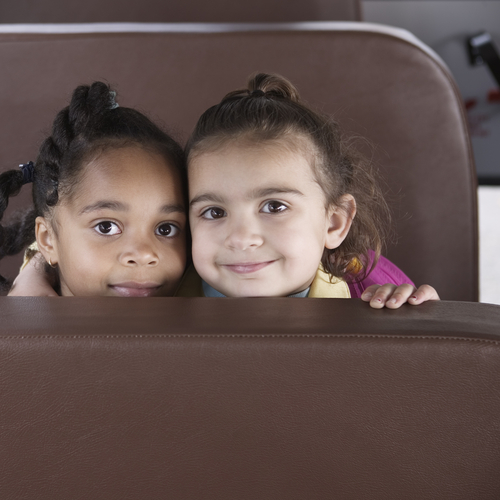
Two young girls on a bus. Image courtesy Blend Images/shutterstock.com.
Two young girls on a bus.    Image courtesy Blend Images/shutterstock.com.

The town mayor, Alan Long, said the children posed a threat to his community and that he was “proud” of the demonstrators. One hundred-and-fifty protesters waved American flags, chanted “USA! USA!” and shouted to the scared children, "Go home—we don't want you here." Totally blocked from reaching the processing center, the buses turned around and left for another Border Patrol Station, where some of the children were reportedly taken to a hospital for unspecified treatment.  
More than 52,000 unaccompanied children from Guatemala, El Salvador, and Honduras have walked across the U.S. border since last October—some, unfortunately, by way of human trafficking networks though Mexico. Thousands more have come with their parents. The surge has overwhelmed the system and become a very serious humanitarian crisis to which U.S. officials are scrambling to respond. But this is being politicized in Washington.
Incredibly, some Republicans have used this tragic situation as an excuse for why they scuttled immigration reform—when having a smart, fair, and humane immigration system in place would have helped avoid this crisis.
This horrible scene in California reminds me of an interaction during a talk I gave a few months ago on immigration.
It turned out to be the most important immigration talk I’ve given this year—and it was to my son’s fifth grade class. They were studying the subject and invited me to speak about it. First, we went through the long history of immigration in this country. All the children in my son’s class are part of our national history of people who chose to come to America (with the exception of those families forced by the chains of slavery). Next I told the students about our current problem of 11 million undocumented people living in uncertainty and fear for years and even decades, of families being separated, fathers and mothers from torn away from their children, and hardworking and law-abiding people being deported every day.
Looking very surprised, these students asked the obvious question, “Why don’t we fix that? Why doesn’t Congress change the system?”
I answered, “They say they’re afraid.”
The students looked even more confused and asked, “What are they afraid of?”
I paused to consider their honest question and looked around the room—the classroom of a public school fifth grade class in Washington D.C. I looked at their quizzical and concerned faces, a group of African-American, Hispanic, Asian-American, Native American, European, African children. Then it hit me.
“They are afraid of you,” I replied.
“Why would they be afraid of us?” the students asked, shocked. I had to tell them.
“They are afraid you are the future of America. They are afraid their country will someday look like this class—that you represent what our nation is becoming.”
This multiracial, multi-cultural, and multi-national group of 11-year-olds now looked more confused than ever.
“They are afraid this won’t work,” I said. “Does it work?”
The children looked at each other, then responded with many voices, saying, “Yeah…Sure…Of course it works…It works great…It’s really cool!”
Together we decided that our job was to show the rest of the country that this new America coming into being is, in fact, really cool.
Our long battle for comprehensive immigration reform was recently officially ended in Congress by Speaker John Boehner. The leader of the Republican House of Representatives told the President that he would not allow a vote for reform to be brought up—even though it is widely believed that a vote to fix this broken system would pass were it to come up in the House and the Senate.
Speaker Boehner and his Republican leaders themselves admit this is only about politics. Most Americans of every political stripe believe the current system is untenable and must be fixed. A large coalition from the faith community, the business community, and law enforcement officials says that reform makes common sense, is good for the economy, is good for national security and public safety, is good for keeping families together—in short, is a moral imperative. But that is being obstructed by a vocal group of white conservative lawmakers who are motivated by political and racial fear and hatred. Many conservative Republicans have more or less admitted that those feelings are very present in the constituencies they represent. And the Republican leadership is unwilling to stand up to their fear of a more diverse American future.
This is political obstruction of the common good, and it is a moral failure. This week, in a meeting with President Barack Obama, faith leaders asked the President to do everything he can, within his Constitutional authority, to “relieve the suffering” of all the families and children who will continue to be devastated. Let me say this very clearly: Those who have morally failed to fix this broken system must dare not now try to prevent executive orders to protect the people we love, who have become part of “us,” and whom Christ asks us to protect. If Republicans continue to ignore and cause the suffering of all “the strangers” among us, they will have to answer to the faith community.

Jim Wallis is president of Sojourners. His book, The (Un)Common Good: How the Gospel Brings Hope to a World Divided, the updated and revised paperback version of On God’s Side, is available now. Follow Jim on Twitter @JimWallis.

Labels: , , ,