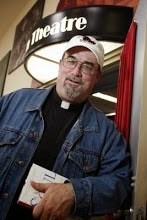
2011 Undergraduate Commencement address by Rev. Scott R. Pilarz, S.J.
05/29/11
Fellow trustees, distinguished guests, parents, families, friends and most importantly members of the Class of 2011. Welcome to this auspicious event in the life of The University of Scranton.
It is a rare privilege to be here today. The assembly in this arena epitomizes Scranton’s pride, passion and promise. The pride especially belongs to parents and families. Your love for your daughters and sons is palpable and contagious. You are rightly exuberant in celebrating their success. How wonderfully you have raised them and nurtured them down the path that leads to this commencement. For more than 20 years, these graduates have been graced by your love. And now look what love has done. Parents and families thank you for sharing these remarkable women and men with The University of Scranton. Members of the Class of 2011 take a moment now to acknowledge your first, best teachers, the people who have made all of this possible.
My friends in the Class of 2011, your education here at Scranton introduced you to high ideals and aspirations. Yours is a formation that elicits great desires – desires that direct your days and works to the glory of God and the well-being of humankind. Today your class is enhanced by the addition of three members whom we’ve honored with doctorates honoris causa.
These three exemplary individuals have lead lives that clearly mirror qualities that have been prized by Jesuit educators since the 16th century. Ignatius and the first Jesuits gave pride of place in their work to what they called the intellectual apostolate. Freda Adler has devoted her life to this work. Throughout her distinguished career, she has shaped her discipline as well as the lives of and careers of her students, including three University of Scranton professors. She was among the first women in the United States to earn a Ph.D. in sociology with an emphasis in criminology, and she has been a pioneer ever since, pushing the limits of her discipline with a special regard for the promotion of justice.
Early Jesuits also encouraged their companions and collaborators to be outwardly focused, always aware of the needs of others around them. Carl Kuehner epitomizes this attribute. His outstanding service to his alma mater is matched by his generosity to others around the world in need of assistance. I have had the privilege of witnessing firsthand the work that Carl has done, not only here in Scranton as chair of the Board of Trustees, but also in his native Florida, Haiti and missions sponsored by the Knights of Malta. Under Carl’s leadership as board chair, the University benefited from his sagacity and entrepreneurial spirit, embarking on some of the most substantial projects in our history. Members of the Class of 2011, if there is any person mostly responsible for the sweet sound of construction that was the theme song of your four years here, it is Carl Keuhner.
As you know, Jesuits early on embraced the apostolate of education, understanding intuitively that there is nothing quite like a school when it comes to shaping souls. Monsignor Andy Martin is a shaper of souls. Catholic secondary education in his native New Jersey has no greater champion. For more than a quarter century, Andy served as principal and then as president of Camden Catholic High School. On a personal note, I had the honor of serving as board chair at Camden Catholic, my alma mater. I can attest that during Andy’s years, he left his mark not only on the institution but on thousands of individuals who benefited from his pastoral care, commitment to excellence and lived conviction that Catholic education should be accessible and affordable.
As you steer the course of your lives, let people such Freda, Carl and Andy be an ever fixed mark and a measure of success.
Members of the Class of 2011, coincident with your arrival here, the Jesuits experienced a change in leadership and new direction when Father Adolpho Nicolas was elected as Father General, the religious superior of all the Jesuits around the world. In this role, he has brought great energy and enthusiasm to Jesuits and their colleagues, and he is particularly committed to the work of higher education.
Last spring, Hal Baillie and I had the privilege of participating in a gathering of leaders from Jesuit institutions across the globe held in Mexico City. In his keynote address, the Father General displayed a keen sense of contemporary culture, noting that he is the first Jesuit General to use email and surf the Web. In doing the latter, he is far more tech savvy than I. As he looks out on our world and reads the signs of the times, he sees both the potential and pitfalls characteristic of your generation. He rightly worries for you about what he terms the “globalization of superficiality.” By that phrase he means a willingness to settle for snappy answers to complicated questions. As an antidote, he urges young to follow the advice of his predecessor to “... let the gritty reality of this world into [your] lives, so [you] can learn to feel it, think about it critically, respond to its suffering, and engage it constructively.”
Hearing his call for action against this tide, my mind went quickly to you, students of The University of Scranton. I was filled with pride and confidence on account of the education your received here that you are ready to meet this challenge. As women and men educated at The University of Scranton, you are able to reach deep down things and discover there the dearest freshness. Let me expand.
While I acknowledge that we at Scranton are not immune to the “globalization of superficiality” there is something about this place that defies the post-modern predicament in which we find ourselves. In short, this community, and you especially, are unapologetically authentic and are blessed with the capacity to start and sustain friendship.
Let me address your authenticity – the reality that I have come to love in my years at Scranton. From the day that your class arrived, for example, you have exhibited a fresh-faced openness and genuine warmth. I have rarely seen a class so readily embrace one another and the University. You brought with you an unbridled energy. Now let me be the first to say, as a resident of the corner of Mulberry and Quincy who was regularly on the early morning receiving end of that energy, that it has its downsides. In a weird way, I will miss my window onto the wacky world of Mulberry Street as I watched – and more frequently heard – you make your way home – from so many – shall we call them – celebrations. While you weren’t always at your best in the wee hours, you sure as heck were real. No pretense, no posing. Good college friends enjoying each other’s company.
I will also never forget your engagement with the real world around you, and celebrations such as the 2008 presidential election when you voted in record numbers, and how the campus erupted upon the announcement of the results. Then there was the 2009 Phillies-Yankees World Series – the equivalent of civil war on campus. As a native of the Delaware Valley, I was disappointed in the outcome, but happy when game six ended.
I don’t mean to suggest that your authenticity and talent for friendship only manifested itself in the best of times. You stretched and struggled together in your years at Scranton. You learned the enduring lesson that friendship is hard work. There is nothing easy about engaging authentically with another, really engaging. While you certainly leveraged technology to stay in touch, Tweeting, Linking In, and all those postings on “You Face” or whatever you call it, it was obvious in day-by-day ways, in real time, that you let one another in. That takes a willingness to be vulnerable.
One of my greatest pleasures in my years here was teaching some of you. In an experience that I am sure my faculty colleagues would find familiar, I was moved again and again by your intellectual honesty and your ability to admit what you didn’t know. Such an admission is where learning begins and it too speaks of your openness to embrace what is different, what is new, foreign and unfamiliar.
So many of you did this kind of embracing in the thousands of hours of service to which you committed yourselves. Father General is unwavering in his belief that such service is integral to your Jesuit education. You went across the city, the nation and the globe with open hands and open minds and returned with broken hearts. You will never be the same nor will you ever imagine your place in the world as you once did.
Imagining one’s place in the world is also an important aspect your Jesuit education. For Saint Ignatius Loyola discovering the power of imagination, especially in the context of prayer, was akin to discovering spiritual dynamite. By using his imagination, he equivalently blew the lid off old ways of conceiving God and God’s work in the world. Imagination enabled him to feel God’s love in his own life and in the life of the Church in the world. In his Spiritual Exercises, the foundational expression of Ignatian spirituality, imagination is the tool that equips and inspires us to discern the work God most wants us to do.
In your years at Scranton, you have been equipped and inspired this way. Our incomparable faculty, so dedicated to your success, has labored tirelessly to call out the best in you. They are learned liberators sharing with you their wisdom and expertise so that you might be freed from constraining boxes of thought. Others on campus, administrators, the staff, coaches, moderators and mentors, shared in this sacred work. Always remember the gratitude that you owe them. I am convinced that the longer and further you go from this campus this gratitude will deepen all the more. It is hard, if not impossible, today to estimate the changes worked in you these past four years. Only time and distance will provide you that perspective.
So, what can you know today, poised to receive a Scranton degree? You know now that you inherit a nearly 500-year-old spiritual and educational tradition that sets you apart and sets you on fire. Phrases such as ‘cura personalis’ and ‘magis’ are, I hope, more than rhetorical flourishes for you now. As women and men educated in the Ignatian tradition, you know God’s unconditional love for you in your uniqueness. You understand that the right response to such love is profound gratitude. Grateful for all that God has done for you, you respond by striving for God’s greater glory and the well-being of humankind.
Your education at Scranton has been about so much more than the accumulation of information. In fact, the word education, as we commonly use it, doesn’t really capture what happens on this sacred ground. Your time here has been formative, transformative. A word inscribed on the statue of St. Ignatius on campus expresses it best – metanoia – a time of turning. Turning toward new ideas, new methodologies, new paradigms, and, most importantly, new people.
Take time to count the ways in which you are different than you were four years ago. Take stock of the new you – the person who was been shaped in ways subtle and dramatic, the person who now welcomes what is to come.
Eight years ago, I came here as an English professor. Let me end where I began by sharing a favorite poem that aptly expresses my appreciation for you and for all that you have done for one another and for the University.
It is by a favorite poet, Mary Oliver, and is entitled “What is the greatest gift?”
"Could it be the world itself-the oceans, the meadowlark,
the patience of the trees in the wind?
Could it be love, with its sweet clamor of passion?
Something else-something else entirely holds me in thrall.
That you have a life that I wonder about
more than I wonder about my own.
That you have a life-courteous and intelligent-that
I wonder about more than I wonder about my own.
That you have a soul-your own, no one else's-that
I wonder about more than I wonder about my own.
So that I find my soul clapping its hands for yours more than my own."
Today, my soul is clapping its hands for you, and it always will.
Thank you.
Labels: catholic, education, jesuit, marquette, mary oliver, pilarz, scranton, universities