What Would Jesus Do and Say About Occupy Wall St?


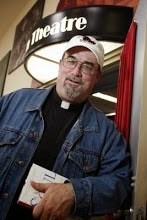
Fr. Malloy asks, ‘What would Jesus do and say about Occupy Wall Street?’
What does Jesus say about Occupy Wall Street? In the final chapters of Matthew’s Gospel we hear Jesus’ ringing calls for justice in our economic relationships.
“The greatest among you must be your servant. Whoever exalts himself will be humbled; but whoever humbles himself will be exalted,” according to Matt 23:11-12.
“And the king will say to them in reply, ‘Amen, I say to you, whatever you did for one of the least brothers of mine, you did for me.’ ” according to Matt 25: 40.
On Oct. 16, 2011, Nick Kristof reported the following in The New York Times:
• The top one percent of Americans possesses more wealth than the entire bottom 90 percent.
• In the Bush expansion from 2002 to 2007, 65 percent of economic gains went to the richest one percent.
Here are some more facts to get us thinking.
• 22 percent of children in America live in poverty.
• 15.1 percent of Americans live in poverty. That’s 46.2 million people.
• Globally, 80 percent of Earth lives on less than $10 a day.
• Across our planet, 21,000 children die each day from preventable causes.
“The Pew Research Center said its recent polling shows that a majority of Americans — for the first time in 15 years of being surveyed on the question — oppose more government spending to help the poor. The deep budget cuts by the U.S. House earlier this year included programs that helped the poor,” Business Week noted.
This concern about the common good and justice for our seven billion brothers and sisters across the planet is not some Jesuit spin on Catholic morality. For years, Catholic social teaching has said much of what many in the Occupy Wall Street movement are saying today.
“There also exist sinful inequalities that affect millions of men and women. These are in open contradiction of the Gospel,” the Catechism states.
The Catechism also discusses the dignity of human beings. “The equal dignity of human persons requires the effort to reduce excessive social and economic inequalities,” the Catechism states.
Economic Justice for All, a publication by the United States Conference of Catholic Bishops also weighs in on Catholic social teaching.
“The needs of the poor take priority over the desires of the rich; the rights of workers over the maximization of profits; the preservation of the environment over uncontrolled industrial expansion; the production to meet social needs over production for military purposes,” “Economic Justice for All” reads.
“The way society responds to the needs of the poor through its public policies is the litmus test of its justice or injustice.”
The Vatican recently called for the reform of the international financial system. Oct. 24, 2011, a division of the Vatican, the Pontifical Council for Justice and Peace, released a document on the
“Reform of the international financial system with a view toward a general public Authority.”
The church is calling for more sane and loving controls and organization of our ever-increasing and accelerating processes of globalization. The processes that result in horrific inequities and the destabilization of peace.
“In its annual Report of in 2007, the International Monetary Fund recognized the close connection between an inadequately managed process of globalization on the one hand, and the world’s great inequalities on the other. Today the modern means of communication make these great economic, social and cultural inequalities obvious to everyone, rich and poor alike, giving rise to tensions and to massive migratory movements.
“Nonetheless, it should be reiterated that the process of globalisation with its positive aspects is at the root of the world economy’s great development in the twentieth century. It is worth recalling that between 1900 and 2000 the world population increased almost fourfold and the wealth produced worldwide grew much more rapidly, resulting in a significant rise of average per capita income. At the same time, however, the distribution of wealth did not become fairer but in many cases worsened.
“What has driven the world in such a problematic direction for its economy and also for peace?
“First and foremost, an economic liberalism that spurns rules and controls. Economic liberalism is a theoretical system of thought, a form of economic apriorism that purports to derive laws for how markets function from theory, these being laws of capitalistic development, while exaggerating certain aspects of markets. An economic system of thought that sets down a priori the laws of market functioning and economic development, without measuring them against reality, runs the risk of becoming an instrument subordinated to the interests of the countries that effectively enjoy a position of economic and financial advantage,” according to the Vatican’s article.
The Vatican is calling people of good will (and institutions of higher education?) to “get smart” and figure out how to organize the global economic system in ways that recognize the inherent dignity of the person and the rights all enjoy as human beings.
One of the more controversial aspects of this document is the call to create and inaugurate “a true world political authority,” an idea first promulgated by Pope John XXIII in his 1963 encylical “Pacem en Terris”, or “Peace on Earth”.
Those who are engaged in the Occupy Wall St. movement, like the Vatican, realize the global economy is operating in ways that leave billions out in the cold, hungry and hurting. The goal of Occupy Wall Street is justice, the righting of relationships between various players in our global economic system. Jesus would support that, too. Would you?
Commentary By
Richard G. Malloy, S.J., Ph. D.
Vice President University Ministries
“The greatest among you must be your servant. Whoever exalts himself will be humbled; but whoever humbles himself will be exalted,” according to Matt 23:11-12.
“And the king will say to them in reply, ‘Amen, I say to you, whatever you did for one of the least brothers of mine, you did for me.’ ” according to Matt 25: 40.
On Oct. 16, 2011, Nick Kristof reported the following in The New York Times:
• The top one percent of Americans possesses more wealth than the entire bottom 90 percent.
• In the Bush expansion from 2002 to 2007, 65 percent of economic gains went to the richest one percent.
Here are some more facts to get us thinking.
• 22 percent of children in America live in poverty.
• 15.1 percent of Americans live in poverty. That’s 46.2 million people.
• Globally, 80 percent of Earth lives on less than $10 a day.
• Across our planet, 21,000 children die each day from preventable causes.
“The Pew Research Center said its recent polling shows that a majority of Americans — for the first time in 15 years of being surveyed on the question — oppose more government spending to help the poor. The deep budget cuts by the U.S. House earlier this year included programs that helped the poor,” Business Week noted.
This concern about the common good and justice for our seven billion brothers and sisters across the planet is not some Jesuit spin on Catholic morality. For years, Catholic social teaching has said much of what many in the Occupy Wall Street movement are saying today.
“There also exist sinful inequalities that affect millions of men and women. These are in open contradiction of the Gospel,” the Catechism states.
The Catechism also discusses the dignity of human beings. “The equal dignity of human persons requires the effort to reduce excessive social and economic inequalities,” the Catechism states.
Economic Justice for All, a publication by the United States Conference of Catholic Bishops also weighs in on Catholic social teaching.
“The needs of the poor take priority over the desires of the rich; the rights of workers over the maximization of profits; the preservation of the environment over uncontrolled industrial expansion; the production to meet social needs over production for military purposes,” “Economic Justice for All” reads.
“The way society responds to the needs of the poor through its public policies is the litmus test of its justice or injustice.”
The Vatican recently called for the reform of the international financial system. Oct. 24, 2011, a division of the Vatican, the Pontifical Council for Justice and Peace, released a document on the
“Reform of the international financial system with a view toward a general public Authority.”
The church is calling for more sane and loving controls and organization of our ever-increasing and accelerating processes of globalization. The processes that result in horrific inequities and the destabilization of peace.
“In its annual Report of in 2007, the International Monetary Fund recognized the close connection between an inadequately managed process of globalization on the one hand, and the world’s great inequalities on the other. Today the modern means of communication make these great economic, social and cultural inequalities obvious to everyone, rich and poor alike, giving rise to tensions and to massive migratory movements.
“Nonetheless, it should be reiterated that the process of globalisation with its positive aspects is at the root of the world economy’s great development in the twentieth century. It is worth recalling that between 1900 and 2000 the world population increased almost fourfold and the wealth produced worldwide grew much more rapidly, resulting in a significant rise of average per capita income. At the same time, however, the distribution of wealth did not become fairer but in many cases worsened.
“What has driven the world in such a problematic direction for its economy and also for peace?
“First and foremost, an economic liberalism that spurns rules and controls. Economic liberalism is a theoretical system of thought, a form of economic apriorism that purports to derive laws for how markets function from theory, these being laws of capitalistic development, while exaggerating certain aspects of markets. An economic system of thought that sets down a priori the laws of market functioning and economic development, without measuring them against reality, runs the risk of becoming an instrument subordinated to the interests of the countries that effectively enjoy a position of economic and financial advantage,” according to the Vatican’s article.
The Vatican is calling people of good will (and institutions of higher education?) to “get smart” and figure out how to organize the global economic system in ways that recognize the inherent dignity of the person and the rights all enjoy as human beings.
One of the more controversial aspects of this document is the call to create and inaugurate “a true world political authority,” an idea first promulgated by Pope John XXIII in his 1963 encylical “Pacem en Terris”, or “Peace on Earth”.
Those who are engaged in the Occupy Wall St. movement, like the Vatican, realize the global economy is operating in ways that leave billions out in the cold, hungry and hurting. The goal of Occupy Wall Street is justice, the righting of relationships between various players in our global economic system. Jesus would support that, too. Would you?
Commentary By
Richard G. Malloy, S.J., Ph. D.
Vice President University Ministries
Labels: catholic social teaching, global poverty, occupy wall street
posted by A Jesuit's Jottings at
Sunday, November 06, 2011
|
81 Comments