Monday, January 23, 2023


January is Poverty Awareness Month

Fr. Malloy’s Midweek Message.  January 18, 2023

Friends,

January is Poverty Awareness Month.  The Catholic Bishops of the USA Campaign for Human Development provides a great deal of information on their website . 

We all need to hear the cry of the poor (Psalm 34) and respond to the needs of those suffering in poverty.

Poverty Facts:  37 million live in Poverty in the USA.  In 2020, 11.4% (37 million persons) of the USA lived in poverty.  Use our interactive map to take a closer look at poverty statistics in the United States.

According to the US Government, a family of three with $19,985 a year is poor.  For four people, the poverty line is set at $25,701.  Even with those low thresholds, 5.3% of the population—or 17.3 million people—live in deep poverty, with incomes below 50% of their poverty thresholds.  And 29.9% of the population—or 93.6 million—live close to poverty, with incomes less than two times that of their poverty thresholds.

Median family income in the USA is $65,712 (half are above that, half below that).  Median rent is $1,062 a month.

Who Lives in Poverty?  http://www.povertyusa.org/ 


Listen to Jesuit Fr. John Foley’s beautiful song, The Cry of the Poor

Peace,

Fr. Rick Malloy, S.J.

Keep Safe.    Keep Sane.    Keep Smiling


Enero es Mes de Concienciación Sobre La Pobreza

El Miercoles Mensaje del Padre Malloy, S.J.  18 de Enero, 2023

Amigos y Amigas,

Enero es el mes de la concienciación sobre la pobreza.  La Campaña de los Obispos Católicos de EE.UU. para el Desarrollo Humano ofrece mucha información en su sitio web. 

Todos debemos escuchar el clamor de los pobres (Salmo 34) y responder a las necesidades de quienes sufren la pobreza.

Datos sobre la pobreza:  37 millones de personas viven en la pobreza en Estados Unidos.  En 2020, el 11,4% (37 millones de personas) de EE.UU. vivía en la pobreza.  Utilice nuestro mapa interactivo para echar un vistazo más de cerca a las estadísticas de pobreza en Estados Unidos.

Según el Gobierno de EE.UU., una familia de tres personas con 19.985 dólares al año es pobre.  Para cuatro personas, el umbral de pobreza está fijado en 25.701 dólares.  Incluso con esos umbrales tan bajos, el 5,3% de la población -o 17,3 millones de personas- vive en la pobreza extrema, con ingresos inferiores al 50% de los umbrales de pobreza.  Y el 29,9% de la población (93,6 millones) vive cerca de la pobreza, con ingresos inferiores al doble del umbral de pobreza.

La renta familiar media en Estados Unidos es de 65.712 dólares (la mitad está por encima y la otra mitad por debajo).  El alquiler medio es de 1.062 dólares al mes.

¿Quién vive en la pobreza?   http://www.povertyusa.org/


Eschuca La Canción del Padre Jesuita John Foley El Grito de Los Pobres

La Paz,

P. Ricardo Malloy, S.J.

Sigamos Seguro.    Sigamos Sano.    Sigamos Sonriendo


Labels: , , , , , , ,

Sunday, January 25, 2015

Cardinal O'Malley Links Pro Life Movement and Struggle to End Poverty


To change people's hearts we must love them and they must realize that we care about them. They need the witness of our love and our joy. To evangelize is to be a messenger of joy, of good news.   Cardinal Seán P. O'Malley
Below is the prepared text of the homily Cardinal Seán P. O'Malley delivered at the March for Life Vigil Mass celebrated at the Basilica of the immaculate Conception in Washington D.C. Jan. 21, 2015.
There is a popular diner near the Cathedral of the Holy Cross. One of the items on the menu is called "The Emergency Room" consisting of bacon, sausages, eggs, pancakes, french toast, hash browns. The clientele are people from the hood, a few Archie and Edith Bunkers, Ralph and Alice Kramdens, cops and priests. It's the kind of place you could invite Pope Francis to. Juke box music from the 50's and 60's adds to the atmosphere. While having dinner there last week with Fr. O'Leary and Fr. Kickham, the phone rang. I presumed it was a telemarketer. It was Oprah Winfrey. I almost had to order "the emergency room". She called to tell me she was reading cardinalseansblog.org and wanted to thank me for the comments I had published on the blog.
You have to feed the blog. I had shared some reflections about the film Selma. To me, one of the very moving aspects of the film is to see how people of faith came together to witness to the dignity of every human being made in the image and likeness of God. They were Protestant, Catholics, Jews, Greek Orthodox, standing together courageously. One of the ministers from Boston, a 38 year old white man, Reverend James Reel, was beaten to death leaving behind a wife and four small children. He had served for four years here in Washington D.C. at All Souls Church on 16th Street, just across from my offices at the Spanish Catholic Center. At the time of his death he was working for the Quakers in Boston as director of a housing program focusing on desegregation. Martin Luther King called him the defense attorney of the innocent in the court of public opinion. Today that is our job.
The quest for human rights and solidarity brought together people of faith to try to repair the world --to use the Jewish expression. In Evangelii Gaudium, Pope Francis says, "No one should demand that religion should be relegated to the inner sanction of personal life without influence on societal and national life... The Church cannot and must not remain on the sidelines in the fight for justice."
We are called upon to build a better world. "The Church's social thought", says Pope Francis, "offers proposals, works for change and constantly points to the hope born of the loving heart of Jesus Christ."
In the history of our country, people of faith have worked together to overcome racism and injustice. Now we come together to be the defense attorney for the innocent unborn and the vulnerable elderly and all those whose right to life is threatened. We shall overcome.
As a matter of fact, we are overcoming, but it is a well kept secret.
We have all heard of Greek Mythology and Roman Mythology. I want to talk about some American Mythology.
There are many myths that are circulating and cause a lot of harm, especially since our politicians often espouse them. First of all, you will hear that abortion is a woman's issue; secondly, that most Americans are pro-choice, pro abortion; and thirdly, that young people are overwhelmingly in favor of the pro-choice position.
Earlier this month in an op-ed on the editorial page of the New York Times entitled, The Abortion Stereotype, Razib Kahn observes that in polling done over the last 20 years, women have been consistently more pro-life than men.
Despite the impression that a solid majority of Americans back legal abortions, the Gallup polls indicate that about the same number of Americans identify as pro-choice as do pro-life, but in fact 58% of Americans oppose all or most abortions. If abortion depended on the ballot box rather than an activist court, it would be greatly reduced.
Studies have shown that women are more pro-life than men. Certainly the maternal instincts and closeness to the source of life, dispose women to be more protective of children. So, despite the talk about "the woman's body" and the "woman's choice", oftentimes the big supporter of abortion is the man who is quite happy to invest all reproductive responsibility in the woman. This creates a situation in which men can easily rationalize their irresponsibility towards women who opt not to have an abortion.
According to the Allan Gutmacher Institute, 80% of all abortions are sought by single women. With abortion as an option, a man can compel a woman to have an abortion by denying his responsibility or threatening to abandon her if she "chooses" to give birth. For the unwilling father, an abortion is a bargain compared to monthly child support payments.
Even a majority of so-called pro-choice Americans actually favor informed consent for mothers, abortion bans in the third trimester, bans on partial-birth abortions, required parental consent for minors, 24 hour waiting periods and even abortion bans in the second trimester. These are polls by Gallup, CBS and the New York Times, not by EWTN, Catholic University and the Vatican.
Another myth proclaims young people are more pro-choice, to use the terminology. Once again the polls are unanimous in showing that young Americans are the most pro-life segment of the American people.
Upon her resignation in 2012, NARAL (National Abortion Rights Action League) President Nancy Keegan stated that there is a large "intensity gap" among young people on the subject of abortion. We have already seen that the majority of young people are pro-life. An internal poll by NARAL shows that 51% of pro-life young people see abortion as an important electoral issue, while only 20% of pro-choice young people see abortion as an important electoral issue.
Gallup in 2010 declared that "pro-life is the new normal". Congratulations, you are normal.
But you know there are some people who are using these American myths: that the majority of women, the majority of Americans, the majority of young people are pro-choice. It is a lie that is being foisted on the American people to try to convince people to embrace abortion with the flag and apple pie. We need to make sure that our political leaders are brought up to date and begin to take the pro-life ideals of Americans seriously.
It is good to recall that even if all the myths were true that the American people, women and youth were overwhelmingly in favor of abortion, that would not alter the sacredness of human life and our absolute obligation to protect and defend this most precious gift that is life.
In the first reading from the book of Exodus we heard about the two midwives, Shiphrah and Puah, who resisted the orders of the Pharaoh to kill the babies. They were convinced of the sacredness of each and every life and were willing to submit themselves to the wrath of the Pharaoh rather than abort one innocent child.
Recently, addressing a group of Catholic doctors in Rome, the Holy Father, Pope Francis stated: "If the Hippocratic Oath commits you to always be servants of life, the Gospel pushes you further: to love life no matter what, especially when it is in need of special care and attention. The Holy Father warns the health care workers that "The dominant thinking sometimes suggests a 'false compassion,' that which believes that it is helpful to women to promote abortion; and act of dignity to obtain euthanasia; a scientific breakthrough to 'produce' a child and to consider it to be a right rather than a gift to welcome.
The compassion of the Gospel is that which accompanies in times of need, that is, the compassion of the Good Samaritan who "Sees, has compassion, approaches and provides concrete help."
The Holy Father tells the doctors: "Your mission puts you in daily contact with many forms of suffering. Fidelity to the Gospel of Life and respect for life as a gift from God sometimes requires choices that are courageous and go against the current, which may become points of conscientious objection."
The Holy Father is reminding our Catholic Healthcare workers that they must be like the valiant midwives who refused to kill the Hebrew babies at the behest of the Pharaoh.
One of the greatest challenges to people of faith in our culture is the erosion of conscience rights, the space we need as a Catholic community to carry on our ministries and works of mercy without violating God's law and our conscience.
In a certain way the Rich Young Man in today's Gospel reminds us of many young people today, who are asking serious questions about the meaning of our existence, why we are here and what we should do with our lives? What is true success? What is happiness?
Not only does the Rich Young Man ask the right questions, but he is asking the right person, Jesus Christ: "Good teacher, what must I do to inherit eternal life?"
When I ask confirmation candidates or classrooms I visit: How did Jesus answer the Rich Young Man? Invariably, I am told: Jesus said: "Go sell what you have, give the money to the poor and come and follow me." That is correct, but it is not the first thing Jesus says. Jesus says if you want to inherit eternal life, keep the commandments. And the first commandment Jesus mentions is: "Thou shall not kill."
This story of the Rich Young Man appears in all the synoptic Gospels. And Jesus' answer always begins with: "Thou shall not kill."
We are all here today because we are convinced that human happiness and inheriting eternal life require us to embrace this commandment: "Thou shall not kill or to express it positively, "Thou shall protect human life."
The second command Jesus mentions: "Thou shall not commit adultery." To express this positively, "practice chastity in your life."
We know that unwanted pregnancies often end in abortion. Many unwanted pregnancies are the result of a culture that is always encouraging promiscuity.
People who favor legal abortion claim they want to reduce the number of abortions. One of the logical ways to reduce the number of abortions would be to discourage the promiscuous behavior that is rampant in our culture. There are many instances of positive social changes that have been brought about by public consensus reinforced in advertising, educational efforts and use of mass media.
The campaigns against smoking and the public backlash against the promotion of tobacco in movies and on TV has done much to curb smoking and has contributed much to a healthier America.
The glamorization of promiscuity needs to be reversed by having people speak out against it the way people object to demeaning media portrayals of women and African-Americans. Like these, it is not a matter of passing laws but of changing what we deem as acceptable in society.
So Jesus' first two instructions for happiness are: "Thou shall not kill, Thou shall not commit adultery." Protect innocent human life, embrace the discipline of chastity which protects the transmission of life.
Jesus goes on to tell the Young Man to honor his mother and father. An important part of discipleship is respecting the family, nurturing relations, preserving the Family as the sanctuary of Life.
The Rich Young Man proudly proclaims that he had observed the commandments from his youth. That is really impressive. Not every Catholic can say that. Unfortunately, the Rich Young Man was so busy congratulating himself that he was totally unprepared for what followed. Jesus says thanks for keeping the commandments, but that is not enough. Jesus tells him: "You are lacking in one thing. Go, sell everything that you have and give to the poor, and you will have treasure in heaven; then come and follow me."
The young man said to himself: I am keeping the commandments, Thou shall not kill -- I'm pro-life. Thou shall not commit adultery --I follow the discipline of chastity, and now I have to help the poor with my money? It is too much.
The Rich Young Man thought it was either/or, but Jesus is telling us it is both/and. We follow the commandments, we are pro-life and we help the poor.
The Gospel says he went away sad for he had many possessions. How dangerous money can be when it becomes our master. Jesus said: "How hard it is to enter the Kingdom. It is easier for a camel to pass through the eye of a needle than for a rich man to enter the Kingdom of God."
Chesterton once said that ever since Jesus made this statement, scientists have been trying to breed smaller camels and engineers are trying to make bigger needles!
Part of the Gospel of Life has to be about loving and helping the poor. Indeed, reducing poverty will also reduce the number of abortions. Poor and low income women account for more than half of the abortions performed each year in our country.
Pope Francis in Evangelii Gaudium says that just as the commandment "Thou shall not kill" sets a clear limit in order to safeguard the value of human life, today we also have to say "thou shall not kill" to an economy of exclusion and inequality. Such an economy kills. Human beings are themselves considered consumer goods to be used and then discarded. We have a throw away culture that is now spreading.
The Holy Father warns us both at Lampedusa and in Evangelii Gaudium about the globalization of indifference. He says, "Almost without being aware of it, we end up being incapable of feeling compassion at the outcry of the poor as though they were someone else's responsibility and not our own."
The Pro Life movement in the Catholic Church is about overcoming that indifference, indifference to the suffering of a woman in a difficult pregnancy, indifference to the voiceless child who is destined to be part of the statistic of a million killed in the womb each year, indifferent to the poverty and suffering of so many.
Indifference is our greatest enemy. We see the antidote in today's Gospel. The Lord looks at the confused young man, and St. Marks writes: "And he loved him." The confused young man went away sad because he did not realize how much the Lord loved him. Had he even suspected I am sure he would have given the money away gladly, but in his insecurity and fear, he leaves. He goes away sad.
Christ has given us the formula for joy in the Gospel. We must learn to look on people with love. An attitude of judgmental self righteousness is not going to change peoples' attitudes and save babies. We need to be the field hospital not Judge Judy. We need to be the merciful face of Christ in the way we promote adoption, aware of how difficult it is for birth mothers to choose that option. We also need to expand our outreach in Project Rachel to those whose lives have been devastated by abortion.
To change people's hearts we must love them and they must realize that we care about them. They need the witness of our love and our joy. To evangelize is to be a messenger of joy, of good news.
The rich young man went away sad. He needed to meet someone like St. Francis, another rich young man who was filled with joy after kissing the leper and giving all his money and clothes to the poor.
As Pope Francis reminds us: "When St. Paul approached the apostles in Jerusalem to discern whether he was running or had run in vain", the key criterion of authenticity which they presented was that he should not forget the poor. This important principle, namely that the Pauline communities should not succumb to the self-centered life style of the pagans, remains timely today when a new self-centered paganism is growing. We may not always be able to reflect adequately the beauty of the Gospel, but there is one sign which we should never lack: the option for those who are least, those whom society discards."
To me, Mother Teresa is the model of the pro-life movement because she witnessed to the preciousness of life by her care for the poor. Her first ministry was collecting the dying people on the streets of Calcutta to take them to an old abandoned Hindu temple so that she and her sisters could take care of them so that they could die with dignity, surrounded by love. She called this "doing something beautiful for God."
What must characterize the pro-life movement is a special love for the poor, the marginalized, the suffering, and especially human life that is in danger of being discarded.
When Helen Alvaré worked our Pro-life office she always told the Bishops: "Be positive. We are not against anything, we are for something. We are for life."
At times we might be tempted to curse those who advocate for abortions and promote and defend this barbaric practice. But Paul tells us: "Do not repay anyone evil for evil. Do not be conquered by evil, but conquer evil with good."
One of the wisest pieces of advice in Evangelii Gaudium is found in Paragraph 168. As for the moral component of catechesis, which promotes growth in fidelity to the Gospel way of life, it is helpful to stress again and again the attractiveness and the ideal (of the Gospel Way of Life). In light of that positive message, our rejection of the evils which endanger that life can be better understood. Rather than experts in dire predictions, dour judgments bent on routing out every threat and deviation, we should appear joyful messengers of challenging proposals, guardians of the goodness and beauty which shine forth in a life of fidelity to the Gospel.
We shall overcome the indifference only by love. A love that will allow us to see in every unborn child a precious gift, a fellow human being.
We must direct our love and attention to wherever life is most threatened and show by our attitudes, words and actions that life is precious, and we must not kill.
We must work tirelessly to change the unjust laws, but we must work even harder to change hearts, to build a civilization of love. Solidarity and community are the antidotes to the individualism and alienation that lead people on the path of abortion and euthanasia.
The rich young man left in discouragement because what Christ asked of him was difficult. The challenges we face are great and discouragement is our greatest enemy.

But know that Jesus is looking on us with love. His love should energize and unite us. No sacrifice is too great. We must not count the cost, but press on with the full assurance that we shall overcome.

Labels: , , , , , ,

Thursday, July 17, 2014

Poverty's perduring effects in Baltimore and Other places

http://www.cnn.com/2014/07/11/opinion/alexander-olson-poor-urban-whites/index.html?iid=article_sidebar

Urban poverty, in black and white

By Karl Alexander and Linda Olson
updated 9:20 AM EDT, Fri July 11, 2014
Discoveries revealed from a 25-year study in Baltimore may hold truths for other urban areas, such as the South Bronx.
 
STORY HIGHLIGHTS
  • Authors: "Urban poor" is not just black men, single moms; many whites fit the category
  • For 25 years, authors studied poor children through their adulthood in Baltimore
  • Authors: Hardly any poor children, black or white, went on to finish college
  • They say white privilege won out as they got more and better-paying jobs
Editor's note: Karl Alexander is the academy professor and sociology research professor at Johns Hopkins University. Linda Olson is a research scientist at the Baltimore Education Research Consortium and the Hopkins Center for Social Organization of Schools. They are co-authors, with Doris Entwisle, of the book "The Long Shadow: Family Background, Disadvantaged Urban Youth, and the Transition to Adulthood," published by the Russell Sage Foundation. The opinions expressed in this commentary are solely those of the writers.
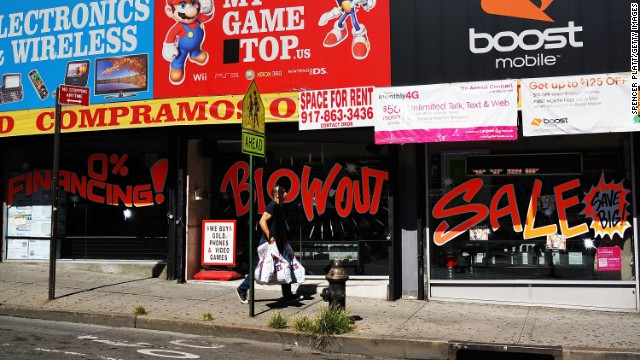
(CNN) -- Say "urban poor," and the image that most likely comes to mind is one of young black men caught up in a swirl of drugs and violence and irresponsible single women having babies. But this pervasive stereotype overlooks a surprising reality: Many whites live side by side African-Americans in some of the country's poorest urban neighborhoods.
Because white poverty is less expected, less recognized and less studied, we often exclude poor whites from our discussions. That masks a fundamental truth about economic inequality: Poverty is colorblind. But neither is it the same for everyone, as the white poor benefit from a lifetime of the hidden perks of white privilege.
As our nation continues down the road of economic recovery, this is a reality our local and national policymakers cannot afford to ignore as they seek to address employment and income inequality.
We traced the experience of nearly 800 children in Baltimore for more than 25 years, from the time they entered first grade in the fall of 1982 in 20 Baltimore public schools to well into their third decade. Half their families were low income, according to school records, and the typical low-income parent hadn't finished high school. What might be surprising is that of that half, 40% are white.
Karl Alexander
Karl Alexander
Linda Olson
Linda Olson
Looking at where these children started in life and where they ended up, the study results are troubling but clear: At 28, hardly any of the children from a disadvantaged background, black or white, had finished college.
But even without the benefit of a college degree, whites, and white men especially, had vastly better employment outcomes. At every age, the white men experienced shorter spells of unemployment, were more likely to be working full-time and earned more.
Baltimore, like so many other American cities, suffered immensely under the ravages associated with de-industrialization: the loss of industry, population and wealth. Under such circumstances, many of the city's disadvantaged youths stumbled along the way.
But the consequences have been especially dire for African-Americans. As young adults, African-American men had fared much worse than whites in the job market, even though they and their white counterparts had about the same levels of education and the whites reported higher rates of marijuana and heavy drug use and binge drinking.
Take, for example, the types of jobs the men in our study held. At 28, nearly half of the white men who had not attended college were employed in the industrial and construction trades, the highest-paying sector of blue-collar employment. By contrast, only 15% of African-American men worked in these sectors, and even within that small group, annual earnings were less than half that of whites -- $21,500 versus $43,000.
This disparity is no accident.
It fits a broader pattern evident as far back as high school: About one-fifth of white men who grew up in disadvantaged families had after-school and summer jobs in these industries -- important experience that can help secure a full-time job -- while not a single African-American person did.
Indeed, throughout the course of our study, it was clear that African- Americans face greater barriers to employment. Having an arrest record or failing to complete high school were less consequential for white men than for African-American men: 84% of whites without a high school degree were employed at 22; among African Americans, just 40% were.
Racial inequality also is embedded in hidden ways in other spheres of life, including discrimination in housing and banking practices that have kept white and black Baltimore substantially separate and cut off working class African-Americans from potentially valuable social contacts.
Why do differences in employment track so sharply with color lines?
The race-based privilege that benefits working-class whites over working-class African-Americans has its origins in the discriminatory practices that excluded African-Americans from the skilled trades during Baltimore's booming World War II and post-war industrial economy.
Although overt racial discrimination has lessened since then, the deep structural inequalities these barriers helped establish continue today through word-of-mouth hiring, employer attitudes that limit opportunities for African-Americans and segregated social networks.
The differences in how these young people found jobs illustrate the invisible ways race-based privilege is institutionalized in the job market.
When asked at age 22 how they found their current jobs, whites more often mentioned help from family and friends, while more African-Americans found jobs "on their own." The white job seekers in our study had family, friends and neighbors who could help them access good-quality, higher-paying jobs.
And what of those women having babies?
Most of the women of disadvantaged background, white and African-American, became mothers as teenagers, worked sporadically and when working, their employment was concentrated in the low-pay clerical and service sectors.
The difference, though, is that many more white women were married or in a stable co-habiting relationship. An additional earner in the household makes a vast difference in economic well-being, which means that white men's workplace advantages benefit white women as well.
As Americans, we like to think that we are all on a level playing field. Our society treasures rags-to-riches stories of individuals overcoming their humble origins to achieve the American Dream. But, the harsh reality we witnessed in Baltimore is that race and class place severe limitations on a child's ability to achieve that dream.
Too often, our policymakers focus on colorblind solutions, such as the Earned Income Tax Credit, to help the urban poor. Such programs only help those who already have jobs and fail to address chronic unemployment among African-Americans.
Amid the growing national conversation on economic inequality, now is the time for our leaders to recognize that race matters and develop creative programs, such as President Barack Obama's "My Brother's Keeper" initiative, to address the different challenges facing poor African-Americans.
Tracking the lives of Baltimore children for 25 years, we witnessed all too clearly how family conditions and poverty early in life cast a shadow that follows children into adulthood and how that shadow extends much further if you are African-American.
Only by facing this reality head on with proactive programs and policies can we offer young African-Americans a fair shot at achieving the American dream.

Labels: , , , , , ,

Tuesday, January 31, 2012

Bishop says reduce poverty; bring about God's Kingdom. See U.S. Catholic Magazine


Reducing poverty will help bring about the kingdom of God, bishop says

Tuesday, January 31, 2012

YOUNGSTOWN, Ohio (CNS) -- While Jesus said we will "always have the poor" with us, "if each of us stops on his or her own journey to help a neighbor in need, the kingdom of God will come closer to realization each day," said Bishop George V. Murry of Youngstown, Ohio, in a pastoral letter on poverty.

Click here for pdf. of full pastoral letter

With his words, Jesus "provides a sad reminder that due to the way we think about and react with each other, we will 'always have the poor' with us," added Bishop Murry.

But Jesus also called upon his followers, he said, "to see and love our neighbors as ourselves."

"There is a sense that we have lost our historic concern for the poor among us. Sometimes we hear language and share attitudes that deride persons living in poverty," said the bishop, who also is secretary of the U.S. Conference of Catholic Bishops.

The pastoral, "Who Is My Neighbor?" was dated January 2012 to coincide with National Poverty Awareness Month.

Poverty "is not a simple problem" because it "involves family dynamics, minimal material resources, missed opportunities, personal fears, complex relationships, cultural norms, geographic locations, isolation and lack of understanding," Bishop Murry said.

"Some who are poor are embarrassed to admit they have lost their jobs, their homes, and sometimes even their identity. Feeling hopeless and abandoned adds to the fear that their lives will never be what they were because they are too old for the job market and possess skills that are out of date," he added.

"Despite all of that complexity and regardless of the causes, the church continues to respond in numerous ways," he said.

"The church alone, however, cannot solve the problem of poverty. To succeed at first reducing and eventually eliminating poverty, everyone must be involved including the private and governmental sectors, along with religious and community agencies, and each one of us individually."

Bishop Murry added, "The church has no specific technical plan of action tailored to this present economic downturn. But what it does have is two thousand years of experience of hat policies and programs offer the best hope and practical means to help families move beyond poverty. That experience is rooted in the Scriptures."

One instance Bishop Murry used was the parable of the good Samaritan in the Gospel of Luke, who took a risk and helped a man abandoned on the side of the road. The story, he said, "reminds us of our dual obligation to love God and neighbor."

Poverty in Ohio, lower than that of the United States in 2000, grew at a faster rate than the nation as a whole by 2010. And in almost every instance, the counties and major cities within the Youngstown Diocese have higher poverty rates than Ohio overall, topped by the cities of Youngstown, Canton and Warren, each with poverty rates of 30 percent and up.

"Trade-offs are made each day by families living in poverty: Do they eat, pay rent, buy gas for the car, purchase prescriptions, or buy clothes? Trying to plan and manage a budget on a very limited income is a process that few can master," Bishop Murry said.

"We as the church in northeastern Ohio must remain committed to respond both in charity and in justice to the needs and hopes of those who struggle while living in poverty."

He praised the work of the U.S. bishops' Catholic Campaign for Human Development, saying it has "helped large numbers of low-income and middle/upper-income persons work in solidarity to find common and just solutions to economic problems and better their lives. The campaign deserves our support."

Bishop Murry also pointed to the seven corporal works of mercy -- feed the hungry, give drink to the thirsty, clothe the naked, shelter the homeless, visit the sick, visit those in prison, bury the dead -- as touchstones for dealing with their neighbor.

"We, the church, are given many resources to care for each other. We, therefore, must act with works of charity and works of justice deeply rooted in our faith and life of prayer."

************

FULL DISCLOSURE. Bishop Murray is/was a Jesuit of the Maryland Province. I too am a Jesuit of the Maryland Province. When a Jesuit is asked to be a Bishop, he technically "leaves" his religious order so he can 1) control property, and 2) not be under a vow of obedience to a Jesuit Superior. Many Bishops "re-enter" their religious communities on retiring from their episcopal responsibilities. - Fr. Rick


Labels: , ,

Sunday, January 22, 2012

Really Hard to Believe: PA Kicks 88,000 Kids Off Health Insurance Rolls

Lots of talk these days from some politicians who want to put kids to work. In previous eras, kids worked. Here's a picture of Pennsylvania Breaker Boys, the little boys who worked in the coal mines in NE Pennsylvania, providing the nation's energy in the early 20th century.

Chris Kelly at the
Scranton Times Tribune reveals the ugly truth of our times:

"Despite his serial attacks on the state's most vulnerable citizens, Gov. Tom Corbett's recent call for $160 million in new budget cuts and an asset test for food stamp recipients was breathtaking in its cowardice. Once again, he "stood up" to Pennsylvania's poorest while lying down for out-of-state corporations getting filthy rich at our expense."

"The reaction of Monsignor Joseph P. Kelly, executive director of Catholic Social Services for the Diocese of Scranton, was universal among observers possessed of even an ounce of Christian charity: 'My immediate reaction was, 'Who is advising the governor on this?' " he said. "I mean, this is terrible public policy. Do we really not want to feed people in the United States of America?" ...

"Well, since August, 88,000 kids whose only sin was being born poor in Pennsylvania lost their health insurance while scores of corporations hauled billions in profits out of this state while giving next to nothing in return."

[It's crazier than you can imagine. [ click to read full article] Published: January 22, 2012

Ex-Welfare Department adviser published controversial views on women, sex and Medicaid.

God help the Outcasts. God help us all.


Labels: , , ,

Friday, October 28, 2011

Not Enough to Go Around?


There are those who would have you think there is not enough to go around. Truth is, out global community, which will hit 7 billion any day now, does produce enough for all. We must learn how to better share our resources (or we'll end up like these pups, waiting for the one tree...)

Our Faith and Economic Realities: What is Jesus Asking of Us?

Fr. Rick Malloy, S.J., Ph.D.


In the next few weeks, as we near the end of this liturgical Year A, we will hear the great challenges to Love and do Justice that appear in the final Chapters of Matthew’s Gospel. “The greatest among you must be your servant. Whoever exalts himself will be humbled; but whoever humbles himself will be exalted.” (Matt 23:11-12). And the king will say to them in reply, 'Amen, I say to you, whatever you did for one of the least brothers of mine, you did for me.' ” (Matt 25: 40).


What moves in our hearts and minds when we hear these words of Jesus and then ponder the economic realities of our age?


On Oct 16 2011, Nick Kristof reported in the New York Times that:


* The 400 wealthiest Americans have a greater combined net worth than the bottom 150 million Americans.


* The top 1 percent of Americans possess more wealth than the entire bottom

90 percent.


* In the Bush expansion from 2002 to 2007, 65 percent of economic gains went to the richest 1 percent.


Here are some other factoids to get us thinking.


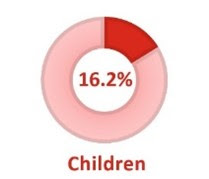
* 22% of children in America live in poverty.


* 15.1% of Americans live in poverty. That’s 46.2 million people.


* According to the U.S. Government, the poverty line is $22,314 for a family of four.


* Business Week noted: “The Pew Research Center said its recent polling shows that a majority of Americans -- for the first time in 15 years of being surveyed on the question -- oppose more government spending to help the poor. The deep budget cuts by the U.S. House earlier this year included programs that helped the poor.”


* Globally, 80% of Planet earth lives on less than $10 a day.


* Across our planet, 21,000 children die each day from preventable causes


SOME SELECTIONS FROM CATHOLIC SOCIAL TEACHING.


“There also exist sinful inequalities that affect millions of men and women. These are in open contradiction of the Gospel” (Catechism of the Catholic Church, #1938).


“The equal dignity of human persons requires the effort to reduce excessive social and economic inequalities” (Catechism of the Catholic Church, #1947).


“The needs of the poor take priority over the desires of the rich; the rights of workers over the maximization of profits; the preservation of the environment over uncontrolled industrial expansion; the production to meet social needs over production for military purposes” (Economic Justice for All, #94)


“The way society responds to the needs of the poor through its public policies is the litmus test of its justice or injustice” (Economic Justice for All, #123).


“Those who are more influential because they have greater share of goods and common services should feel responsible for the weaker and be ready to share with them all they possess... the church feels called to take her stand beside the poor, to discern the justice of their requests and to help satisfy them, without losing sight of the good of groups in the context of the common good” (On Social Concern, #39)

Labels: , , , ,