Friday, November 18, 2011

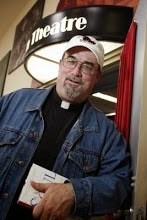
Br. Guy Consolmagno, S.J., wows The University of Scranton


Br. Guy Consolmagno, S.J., wowed a crowd of 250, the vast majority students, at The University of Scranton Thurs night Nov 17 2011. His provocative and entertaining talk about his work as an astronomer for the Vatican Observatory helped students understand the wonders of creation and the wonders of God. Here's a clip he played of his appearance on Colbert.
http://www.colbertnation.com/the-colbert-report-videos/257718/december-01-2009/gold--frankincense-and-mars---guy-consolmagno

Labels: , , ,

Thursday, August 11, 2011

Ilia Delio on Science and Catholic Universities


Delio's book The Emergent Christ (Orbis 2011) is one of the best books I've read this year. She synthesizes evolution and science with Catholic theological reflection with the best in the business (e.g., Haught), and knows and communicates Teilhard's thought better than just about anyone. Here she challenges Catholic Universities to get with the program. - Rick
**************************************************

Faith and The Cosmos

Can Catholic universities foster dialogue between religion and science?


Ilia Delio | APRIL 4, 2011 AMERICA MAGAZINE


http://www.americamagazine.org/content/article.cfm?article_id=12793


When I started teaching in 1996, I was hired by Trinity College in Hartford, Conn., to teach a course on science and religion. With degrees in both areas, I felt well prepared; but I soon learned that the amount of literature on the relationship between these two topics had swelled enormously. The growth rate of scientific progress in our time is astounding. Rapid advances in technology make it difficult to keep abreast of progress in such areas as genetics, robotics, molecular biology and neuroscience. Discoveries in cosmology, astronomy and physics continue to disclose a universe that is ancient, dynamic, interconnected and expanding.

As technology advances at an exponential rate, it drives other areas of modern life to accelerate exponentially as well. The rapidity of technological change, writes the philosopher Nick Bostrom, suggests that continued innovation will have an even larger impact on humanity in future decades. With these changes come new moral and religious questions, and the Catholic Church needs theologians willing to address them. Unfortunately, few Catholic universities have devoted resources to educating theologians willing to engage with the scientific world. This is a loss for both academic disciplines.

If the secular, scientific culture behaves like a rabbit, leaping across vast areas of discovery and invention, the Catholic Church too often behaves like a turtle, crawling up from behind, hesitant to accept new scientific discoveries. The slow pace of the church’s embrace of science is not because of a hesitant pope. Benedict XVI has worked to connect the two disciplines, establishing within the Vatican, under the Pontifical Council of Culture, a department dedicated to dialogue between science and theology. The pope has issued various statements on the sciences and their impact on humanity and the earth and has expressed to Catholic youth his support of new computer technologies, when used correctly, to connect with others. Overall, though, many theologians are reluctant to engage developments in science. It does not help that within the universities theology has been isolated from the sciences.

The mechanization and specialization of higher education has rendered the university a multiversity. Instead of educating students to know the universe and stars “turning together as one,” academic disciplines, including theology and philosophy, have become highly specialized, competitive fields. If the modern church is reluctant to embrace insights from modern science as integral to revelation, part of the hesitancy may be due to the place theology holds within the academy.

In his book The Soul of America, the historian George Marsden recounts how and when higher education in general became hostile to religion. By the 1920s many universities, despite their religious roots, had grown increasingly secular, sidelining or even scorning religion. The separation of science from such humanistic fields as religion, history and literature created a model of university life that did not allow any positive role for religious people, institutions or ideas on campus. One had to leave religion at the door or privatize it. As a result, students did not learn how to connect science with areas of meaning and value. Elaine Ecklund, a sociologist at Rice University and the author of Science vs. Religion: What Scientists Really Think, suggests that by separating religion from the rest of university education, the American university lost its soul.

An Uneasy Relationship

The church has been a patron of the sciences throughout the ages, although not consistently. Major events like the Galileo affair and the rise of Protestantism “caused a psychic trauma for the church,” write Peter Hess and Paul Allen in their excellent book, Catholicism and Science. Although the church did not shut the door to scientific research, events like these also stifled openness to scientific innovations.

Theology, however, entered the 20th century as a closed set of neo-Thomistic discourses with questions and rules set by neo-scholastic philosophy with few, if any, other intellectual or cultural sources, says Paul Crowley, S.J., the chair of religious studies at Santa Clara University, that did not cohere with existing papal efforts to support scientific research. Still, in the 1930s the Vatican had moved its astronomical observatory out of the city of Rome to Castel Gandolfo and outfitted it with modern equipment and in 1979 established the Pontifical Academy of Sciences to demonstrate the church’s commitment to scientific research. “The Pontifical Academy,” declared Pope John Paul II, “is a visible sign, raised among the people of the world, of a profound harmony that can exist between the truths of science and the truths of faith.”

Some theologians have worked to connect these truths. Karl Rahner, S.J., did not shy away from exploring connections between matter and the soul or from considering the theological implications of life on other planets. Another Jesuit priest, Bernard Lonergan, drew on the scientific method to develop a method of theology. Today, some Catholic theologians (like John F. Haught) engage the sciences to illuminate areas of systematic theology like divine action; others (like Denis Edwards) are trying to deepen theological insight on questions in ecology, such as climate change. But on the whole, Catholic theology remains a product of Augustinian, Thomistic and Aristotelian ideas. Few Catholic theologians are grappling with the sciences on their own terms as a means of theological reflection.

In the late 20th century, as theology entered into dialogue with the cultural pluralities of gender, race, history and philosophy, it nonetheless settled into the university system as an academic silo, just as the sciences sequestered themselves into specialized disciplines. Religion and science grew more estranged.

Theology students are trained in departments independent of a broader integration with the sciences in the university. As a result, according to William Stoeger, S.J., of the Vatican observatory, “there are few theologians or theologically interested philosophers at universities where the most significant scientific work is done.” Even the annual meeting of the Catholic Theological Society of America, where attention is given to major currents in theology, does not show much engagement with the sciences. Of its 16 topical areas of discussion, only one is devoted to theology and the natural sciences.

In his book Religion and Science, Ian Barbour laid out four types of relationships between science and religion: conflict, independence, dialogue and integration. While scientists tend to see the relationship between the two disciplines as one of either conflict or independence, theologians, when they are interested, tend toward dialogue and integration. Undoubtedly, science and religion are independent disciplines, each with its own language, methods and tools of analysis, but the academic structure has kept them intellectually as well as spatially apart.

Reforming this structure to promote dialogue is key, since scientific language is technical and objective, and the descriptions of scientific findings do not readily invite theology-minded students into discussion without a teacher. Both disciplines present unique challenges, but it is not difficult to see why a theologian may more readily delve into the familiar theses of St. Thomas Aquinas over the unfamiliar formulas of Albert Einstein, or why the reverse might be true for scientists. Scientists who are interested in religion or express religious belief often have little opportunity in the academy to discuss religion as it relates to their work. Some universities, like Santa Clara, are making a concerted effort to engage scientists and theologians in discussion on meaning and value, but such initiatives are rare.

The Role of the Catholic University

The term “Catholic sacramental imagination” has long been used for the typically Catholic view that the material world can bring people into intimate relationship with God. The term captures the heart of the Catholic intellectual tradition, which is rooted in the richness of the material cosmos as a fit dwelling for the divine. While the church recognizes the importance of science for the development of faith, it also recognizes the limits of science as the ultimate horizon of meaning. The value of science, Pope John Paul II wrote, is that it can “purify religion from error and superstition,” just as “religion can purify science from idolatry and false absolutes.”

Although the church continues to bridge science and religion, the significance of this dialogue for the life of faith cannot be left to the institutional church alone. Theologians are needed to reflect on the big questions of meaning and purpose in light of evolution, ecology and technology, as well as to comment on the moral questions raised, especially by the biomedical sciences. Science and religion make their best contributions when each can speak to the other of the truth of reality. As Paul Crowley, S.J., observes, “If theology cannot engage a culture that has been framed by the paradigms of science, then theology itself risks self-marginalization.” It has “no voice at the table concerning the significant issues facing humanity today” and becomes an exercise in history and hermeneutics. On the other hand, unbridled science can become “scientism,” making broad philosophical claims without the development of philosophical foundations.

Catholic universities must become leaders in integrating science and religion. John Haughey, S.J., writes that the Catholic intellectual tradition is one of making wholes. Yet few Catholic universities offer courses or programs in science and religion, and those that do attract relatively few students, not all of whom are adequately prepared for such discussions.

Several years ago, a colleague and I initiated a certificate program in religion and science at Washington Theological Union, a graduate school of theology and ministry in Washington, D.C., but the program was eventually discontinued for lack of student interest. At the Gregorian University in Rome, Gennaro Auletta and colleagues have developed a program called Science and the Ontological Quest, which is responsible for coordinating science and religion courses in six Roman pontifical universities. Although only a small number of seminarians are taking such courses, the engagement of seminarians in the dialogue between science and religion may be one of the most crucial pastoral needs of our time.

Catholic universities need an invigoration of the Catholic imagination, for which dialogue between science and religion is a rich source. Theology cannot continue to develop apart from 21st-century cosmology and ecology, nor can science substitute for religion. The dialogue between science and religion has been developing in the last few decades, but Catholic universities have been slow to support this mutual enrichment. Developing collaborative structures of interaction between science and religion on the university level can benefit students and faculty alike, not only academically but also spiritually. While the current structure of academic specialization makes dialogue difficult as an integral part of university life and thought, universities must support existing centers of dialogue, like the Woodstock Theological Center at Georgetown University. Centers like these serve as bridge-builders and integrators, bringing together faculty, students and professionals across the disciplines.

To restore soul to the university may require a re-imagining of education, including a search for new ways to develop dialogue between science and religion. Development of this relationship can enrich personal life, community life and the life of the planet. As John Paul II wrote, “The things of the earth and the concerns of faith derive from the same God,” for it is one and the same Love “which moves the sun and the other stars.” Both the light of faith and the insights of science can help humanity evolve toward a more sustainable future

Labels: , , , , ,

Sunday, September 05, 2010

NY Times Opinionator: Mystery and Evidence (Religion in relation to Science)


September 5, 2010, 5:30 pm

Mystery and Evidence

By TIM CRANE

The Stone is a forum for contemporary philosophers on issues both timely and timeless.

http://opinionator.blogs.nytimes.com/2010/09/05/mystery-and-evidence/?hp

There is a story about Bertrand Russell giving a public lecture somewhere or other, defending his atheism. A furious woman stood up at the end of the lecture and asked: “And Lord Russell, what will you say when you stand in front of the throne of God on judgment day?” Russell replied: “I will say: ‘I’m terribly sorry, but you didn’t give us enough evidence.’ ”

This is a very natural way for atheists to react to religious claims: to ask for evidence, and reject these claims in the absence of it. Many of the several hundred comments that followed two earlier Stone posts “Philosophy and Faith” and “On Dawkins’s Atheism: A Response,” both by Gary Gutting, took this stance. Certainly this is the way that today’s “new atheists” tend to approach religion. According to their view, religions — by this they mean basically Christianity, Judaism and Islam and I will follow them in this — are largely in the business of making claims about the universe that are a bit like scientific hypotheses. In other words, they are claims — like the claim that God created the world — that are supported by evidence, that are proved by arguments and tested against our experience of the world. And against the evidence, these hypotheses do not seem to fare well.

Religion commands and absorbs the passions and intellects of hundreds of millions of people, many more people than science does. Why is this?

But is this the right way to think about religion? Here I want to suggest that it is not, and to try and locate what seem to me some significant differences between science and religion.

To begin with, scientific explanation is a very specific and technical kind of knowledge. It requires patience, pedantry, a narrowing of focus and (in the case of the most profound scientific theories) considerable mathematical knowledge and ability. No-one can understand quantum theory — by any account, the most successful physical theory there has ever been — unless they grasp the underlying mathematics. Anyone who says otherwise is fooling themselves.

Religious belief is a very different kind of thing. It is not restricted only to those with a certain education or knowledge, it does not require years of training, it is not specialized and it is not technical. (I’m talking here about the content of what people who regularly attend church, mosque or synagogue take themselves to be thinking; I’m not talking about how theologians interpret this content.)

What is more, while religious belief is widespread, scientific knowledge is not. I would guess that very few people in the world are actually interested in the details of contemporary scientific theories. Why? One obvious reason is that many lack access to this knowledge. Another reason is that even when they have access, these theories require sophisticated knowledge and abilities, which not everyone is capable of getting.

Yet another reason — and the one I am interested in here — is that most people aren’t deeply interested in science, even when they have the opportunity and the basic intellectual capacity to learn about it. Of course, educated people who know about science know roughly what Einstein, Newton and Darwin said. Many educated people accept the modern scientific view of the world and understand its main outlines. But this is not the same as being interested in the details of science, or being immersed in scientific thinking.

Taken as hypotheses, religious claims do very badly. Yet the striking fact is that this does not worry Christians.

This lack of interest in science contrasts sharply with the worldwide interest in religion. It’s hard to say whether religion is in decline or growing, partly because it’s hard to identify only one thing as religion — not a question I can address here. But it’s pretty obvious that whatever it is, religion commands and absorbs the passions and intellects of hundreds of millions of people, many more people than science does. Why is this? Is it because — as the new atheists might argue — they want to explain the world in a scientific kind of way, but since they have not been properly educated they haven’t quite got there yet? Or is it because so many people are incurably irrational and are incapable of scientific thinking? Or is something else going on?

Some philosophers have said that religion is so unlike science that it has its own “grammar” or “logic” and should not be held accountable to the same standards as scientific or ordinary empirical belief. When Christians express their belief that “Christ has risen,” for example, they should not be taken as making a factual claim, but as expressing their commitment to what Wittgenstein called a certain “form of life,” a way of seeing significance in the world, a moral and practical outlook which is worlds away from scientific explanation.

This view has some merits, as we shall see, but it grossly misrepresents some central phenomena of religion. It is absolutely essential to religions that they make certain factual or historical claims. When Saint Paul says “if Christ is not risen, then our preaching is in vain and our faith is in vain” he is saying that the point of his faith depends on a certain historical occurrence.

Theologians will debate exactly what it means to claim that Christ has risen, what exactly the meaning and significance of this occurrence is, and will give more or less sophisticated accounts of it. But all I am saying is that whatever its specific nature, Christians must hold that there was such an occurrence. Christianity does make factual, historical claims. But this is not the same as being a kind of proto-science. This will become clear if we reflect a bit on what science involves.

The essence of science involves making hypotheses about the causes and natures of things, in order to explain the phenomena we observe around us, and to predict their future behavior. Some sciences — medical science, for example — make hypotheses about the causes of diseases and test them by intervening. Others — cosmology, for example — make hypotheses that are more remote from everyday causes, and involve a high level of mathematical abstraction and idealization. Scientific reasoning involves an obligation to hold a hypothesis only to the extent that the evidence requires it. Scientists should not accept hypotheses which are “ad hoc” — that is, just tailored for one specific situation but cannot be generalized to others. Most scientific theories involve some kind of generalization: they don’t just make claims about one thing, but about things of a general kind. And their hypotheses are designed, on the whole, to make predictions; and if these predictions don’t come out true, then this is something for the scientists to worry about.

For the religious, mysteries are accepted as a consequence of what makes the world meaningful.

Religions do not construct hypotheses in this sense. I said above that Christianity rests upon certain historical claims, like the claim of the resurrection. But this is not enough to make scientific hypotheses central to Christianity, any more than it makes such hypotheses central to history. It is true, as I have just said, that Christianity does place certain historical events at the heart of their conception of the world, and to that extent, one cannot be a Christian unless one believes that these events happened. Speaking for myself, it is because I reject the factual basis of the central Christian doctrines that I consider myself an atheist. But I do not reject these claims because I think they are bad hypotheses in the scientific sense. Not all factual claims are scientific hypotheses. So I disagree with Richard Dawkins when he says “religions make existence claims, and this means scientific claims.”

Taken as hypotheses, religious claims do very badly: they are ad hoc, they are arbitrary, they rarely make predictions and when they do they almost never come true. Yet the striking fact is that it does not worry Christians when this happens. In the gospels Jesus predicts the end of the world and the coming of the kingdom of God. It does not worry believers that Jesus was wrong (even if it causes theologians to reinterpret what is meant by ‘the kingdom of God’). If Jesus was framing something like a scientific hypothesis, then it should worry them. Critics of religion might say that this just shows the manifest irrationality of religion. But what it suggests to me is that that something else is going on, other than hypothesis formation.

Religious belief tolerates a high degree of mystery and ignorance in its understanding of the world. When the devout pray, and their prayers are not answered, they do not take this as evidence which has to be weighed alongside all the other evidence that prayer is effective. They feel no obligation whatsoever to weigh the evidence. If God does not answer their prayers, well, there must be some explanation of this, even though we may never know it. Why do people suffer if an omnipotent God loves them? Many complex answers have been offered, but in the end they come down to this: it’s a mystery.

Science too has its share of mysteries (or rather: things that must simply be accepted without further explanation). But one aim of science is to minimize such things, to reduce the number of primitive concepts or primitive explanations. The religious attitude is very different. It does not seek to minimize mystery. Mysteries are accepted as a consequence of what, for the religious, makes the world meaningful.

This point gets to the heart of the difference between science and religion. Religion is an attempt to make sense of the world, but it does not try and do this in the way science does. Science makes sense of the world by showing how things conform to its hypotheses. The characteristic mode of scientific explanation is showing how events fit into a general pattern.

Religion, on the other hand, attempts to make sense of the world by seeing a kind of meaning or significance in things. This kind of significance does not need laws or generalizations, but just the sense that the everyday world we experience is not all there is, and that behind it all is the mystery of God’s presence. The believer is already convinced that God is present in everything, even if they cannot explain this or support it with evidence. But it makes sense of their life by suffusing it with meaning. This is the attitude (seeing God in everything) expressed in George Herbert’s poem, “The Elixir.” Equipped with this attitude, even the most miserable tasks can come to have value: Who sweeps a room as for Thy laws/ Makes that and th’ action fine.

None of these remarks are intended as being for or against religion. Rather, they are part of an attempt (by an atheist, from the outside) to understand what it is. Those who criticize religion should have an accurate understanding of what it is they are criticizing. But to understand a world view, or a philosophy or system of thought, it is not enough just to understand the propositions it contains. You also have to understand what is central and what is peripheral to the view. Religions do make factual and historical claims, and if these claims are false, then the religions fail. But this dependence on fact does not make religious claims anything like hypotheses in the scientific sense. Hypotheses are not central. Rather, what is central is the commitment to the meaningfulness (and therefore the mystery) of the world.

I have suggested that while religious thinking is widespread in the world, scientific thinking is not. I don’t think that this can be accounted for merely in terms of the ignorance or irrationality of human beings. Rather, it is because of the kind of intellectual, emotional and practical appeal that religion has for people, which is a very different appeal from the kind of appeal that science has.

Stephen Jay Gould once argued that religion and science are “non-overlapping magisteria.” If he meant by this that religion makes no factual claims which can be refuted by empirical investigations, then he was wrong. But if he meant that religion and science are very different kinds of attempt to understand the world, then he was certainly right.


Tim Crane is Knightbridge Professor of Philosophy at the University of Cambridge. He is the author of two books, “The Mechanical Mind” (1995) and “Elements of Mind” (2001), and several other publications. He is currently working on two books: one on the representation of the non-existent and another on atheism and humanism.

Labels: , ,

Tuesday, September 16, 2008

Great Article on Evolution and Catholicism


An Intelligent, Catholic Scientist shows that Catholic Faith and Evolution do not conflict.


Teaching Evolution: A Catholic scientist frames a national debate.

By Paul Cottle SEPTEMBER 15, 2008

http://www.americamagazine.org/content/article.cfm?article_id=11034

There is no issue more visible and emotional in the field of science education today than evolution, and no state where the issue has been more hotly debated than Florida. For much of the last year, a committee of educators and scientists worked with officials from the state’s Department of Education to hammer out new standards for science education. Their decision to designate evolution one of the “big ideas” in the state’s science curriculum was opposed by groups like the Florida Family Policy Council and conservative lawmakers who objected to the teaching of evolution in the classroom. In the end a compromise was reached, and new standards were passed requiring the teaching of evolution, but the wording of the law was changed to call it a “scientific theory” (see sidebar for details).
I was a member of the standards committee. At the outset, we spent little time worrying about the potential controversy over the teaching of evolution. Instead, our goal was to apply the results of recent research on how children learn science to the state science education standards. Yet when we made public a draft of the new standards in October 2007, it quickly became clear that the debate over teaching evolution would dominate the process.

I am an “evolutionist,” as the opponents of evolution education would say. More to the point, I am a naturalistic scientist in that I believe that my mission as a scientist is to explain scientific observations within the framework of the laws of nature. Yet I am also a Christian, and as such I do not reject the supernatural. I believe in Christ’s resurrection.

The Debate in Florida

The debate over evolution education in Florida was rancorous and presented particular ethical dilemmas for me. For one, a majority of my fellow Christians were on the opposite side of the argument from me—indeed, most Americans are. As an evolution education advocate, I am on the same side as many atheists, including militant “new atheists” like Richard Dawkins, who see evolution education as an opportunity to beat back religion in our society. As a result, I found that I was self-consciously vetting my own statements—both public and private—to make sure I was not denying my faith. I made several brief public professions of my faith during prepared statements, including during my talk before the State Board of Education on Feb. 19 and in an op-ed piece published by The Tallahassee Democrat. I was not alone: many of the other Christians on the standards committee also made their faith known during public meetings and to the media. Members of the public who followed the debate learned that there were several church officers and Sunday school teachers among the advocates of evolution education.
Unfortunately, I was in the minority among Catholics in my defense of evolution. It came as no surprise that according to a St. Petersburg Times poll published this February, a few days before the State Board of Education vote, 91 percent of evangelicals in Florida oppose evolution education. Yet that same poll reported that 79 percent of Catholics also took the anti-evolution education position. This is particularly disappointing given the church’s well-established position in favor of the teaching of evolution. David M. Byers, executive director of the U.S. bishops’ Committee on Science and Human Values from 1984 to 2003, noted this stunning separation between the beliefs of the American faithful and church teaching in an article in America (“Religion and Science in Dialogue,” 2/7/05). He said that the Catholic Church “properly recognizes evolutionary theory as firmly grounded in fact,” but noted that the church’s “educational leadership has been very slow to correct the anti-evolution biases that Catholics pick up from prominent elements in contemporary culture.”

The fact that my opponents in the evolution education debate were almost exclusively my brothers and sisters in the Christian faith imposed certain responsibilities. To quote one of several scriptural injunctions on this topic, “So then, as often as we have the chance, we should do good to everyone, and especially to those who belong to our family in the faith” (Gal 6:10). This meant that my comments—both private and public—had to remain civil at a minimum, and respectful whenever possible. My working assumption was that my opponents were acting on the basis of their deepest convictions, even though there seemed to be a few cynical opportunists on both sides of the debate. Overall my evangelical opponents displayed both a deep commitment to their cause and a basic decency. One of the first people to congratulate me after my talk to the State Board of Education was John Stemberger, president of the Florida Family Policy Council and a fervent opponent of evolution education. Only moments before I spoke, Stemberger had loudly warned the board that thousands of evangelical parents would withdraw their children from the public schools if the proposed standards on evolution were adopted.

In the end, the religious dimensions of the debate made it impossible to craft a resolution that satisfied everyone. Many Christians who were not committed to “young earth creationism” were attracted by the ideas of the intelligent design movement, which holds “that certain features of the universe and of living things are best explained by an intelligent cause, not an undirected process such as natural selection,” according to the New World Encyclopedia, quoted on the Web site of the Discovery Institute, a well-funded think tank formed to support the movement.

Intelligent Design

Some Catholics in Florida are among those intrigued by the notion of intelligent design. In the weeks following the board of education vote, I heard homilies by two priests who, in addressing the nature and meaning of God’s creation, acknowledged that parishioners held a variety of beliefs about the origin and development of life. But they did not mention the church’s acceptance of modern evolutionary biology. Meanwhile, as of this writing, no Catholic priests in Florida have signed a public letter endorsing the teaching of evolution in public schools, an initiative known as the Clergy Letter Project that has drawn 11,000 signatures nationwide.
This reluctance to take a public stand on evolution is not limited to Catholics in Florida. In June, I was stunned when Governor Bobby Jindal of Louisiana, a devout Catholic and holder of a bachelor’s degree in biology from Brown University, voiced his support during an appearance on CBS’s “Face the Nation” for teaching intelligent design alongside evolution in public schools. It is clear that despite Byers’s urging, the Catholic Church in the United States has not fully addressed the widely held misconceptions regarding church teaching on evolution.

In Florida, as elsewhere, the evolution education debate featured strongly worded volleys between vocal minorities at both extremes, between those who see the scientific clarity of evolution and religious conservatives who claim that evolution promotes moral decay. (If that sounds a little strong, consider this quote from the Truth Project, an educational initiative of James Dobson’s Focus on the Family: “Darwinian theory transforms science from the honest investigation of nature into a vehicle for propagating a godless philosophy.”)

The Discovery Institute has framed the evolution education debate as a struggle over academic freedom—in particular the freedom of teachers to challenge and even disregard the naturalistic approach to science and to argue that the existence of unanswered scientific questions on the origin and development of life provides proof of the existence of God. Politically, it seems prudent for supporters of evolution education to frame a competing vision for teaching science in public schools, one that appeals to many parents and voters in the vast middle ground. These include individuals (and many Catholics) who are neither committed to an anti-evolution position nor convinced by arguments for evolution.

Even though this group does not have strong opinions on evolution, I think they would endorse an educational approach that focuses on two principles: tolerance for students from a variety of backgrounds, including religious backgrounds; and the accountability of teachers and administrators for their adherence to state educational standards and their performance in helping their students learn science. Such a vision of the science classroom might provide a potent moral and political antidote to the dubious assertion that academic freedom should apply to the teaching of science in the K-12 classrooms.

Educating Catholics

Catholics not convinced by this argument might consider the words of Pope Benedict XVI, who recently called the debate over evolution “an absurdity because on one hand there is much scientific proof in favor of evolution, which appears as a reality that we must see and which enriches our understanding of life and being as such.” Catholics in Florida can also look to the guidance of their bishops. In February, Bishop Thomas Wenski of Orlando published an op-ed piece in The Orlando Sentinel endorsing the teaching of evolution while at the same time rejecting the notion that “evolution requires a materialistic or an atheistic understanding of the human person or of the entire universe.” “The Catholic Church does not have to reject the theory of evolution in order to affirm our belief in our Creator,” Bishop Wenski concluded. “As Catholics, we can affirm an understanding of evolution that is open to the full truth about the human person and about the world.”

Still, the task of educating Catholics on this issue remains a tricky one, not least because it could threaten the strong partnership the church has forged with evangelical groups to advance pro-life causes. (One need only recall the controversy surrounding Terri Schiavo in Florida to remember how powerful the partnership between Catholics and evangelicals can be.) Indeed, when during one of my prepared statements I read a quotation from a church source defending the teaching of evolution, my evangelical opponents expressed great surprise that the church held a position different from theirs.

Evolution education is a national issue, with heated debates taking place in legislatures and state education departments all over the country. The Catholic Church in the United States has an opportunity to lead the nation to a resolution of this matter by educating its own followers about the church’s embrace of modern science. They can also point out to their Christian brothers and sisters, as Bishop Wenski did, that the teaching of evolution need not go hand in hand with a materialistic atheism.

As a physicist and a Christian, I have learned that faith and science need not be antithetical, that a deeper understanding of the natural world can inspire awe at the workings of God’s creation. Yet I have come to this understanding by working within the intellectual framework widely accepted by the scientific community, a framework that includes the tenets of evolution. This framework should also guide the teaching of young people, in Florida and elsewhere. The Catholic Church and its partners in the faith have no reason to fear the results.

Paul Cottle is a professor of physics at Florida State University and a member of the committee appointed by the Florida Department of Education to draft new science standards for the state’s primary and secondary public schools.

Labels: , , , ,