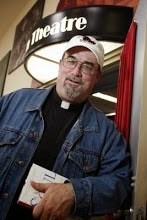
Tuesday, April 11, 2023

He is Risen! He is Truly Risen!


He is Risen!  He is Truly Risen!

Fr. Malloy’s Midweek Message.  April 12, 2023

Friends,

This week we celebrate the event that changes all of human history, the event that gives meaning and hope to our world, a world so mired in despair, destruction and death.  Resurrection means the triumph of good over evil, the truth that in the end, love wins: love always wins.  After the resurrection, all of human history is bathed in the new light of peace, the new trust in our God who saves us.

Bishop N. T. Wright, the world’s leading scripture scholar, was interviewed by The New York Times about the reality of the resurrection.  He enthusiastically and cogently teaches that the resurrection is a real event.  https://www.nytimes.com/2023/04/09/opinion/jesus-rise-from-the-dead-easter.html

N.T. Wright: I’m well aware that many people — including some in churches — have treated the resurrection and Easter as a general way of talking about the rebirth of hope or a spiritual metaphor. Indeed, in the New Testament, the idea of resurrection is sometimes used metaphorically to talk about a new moral life, a life where everything is going to be different. But in the New Testament, that’s always rooted in the claim that when they’re talking about resurrection, they’re talking about something that actually happened.

In the first century, the word for resurrection, the Greek word “anastasis,” was never about a vague sense of possibility or the rebirth of hope or anything like that. It was always about people who had been bodily dead now discovered to be bodily alive. I’ve shown in great detail in the book that all the early Christians for whom we have any evidence, right through until around 150 years after the time of Jesus, when they’re talking about resurrection, that’s what they’re talking about.

It’s beyond question that when the first followers of Jesus used that language about him, they intended to say something definite about his being bodily alive, albeit in a whole new way. He seemed to have gone through death and out the other side, but into a new world in which he was emphatically embodied. Unless we are prepared to acknowledge that, we’re simply not taking their words seriously.

Then, as now, claiming that somebody was alive again — particularly somebody who made the sort of claims that Jesus made or were made about him — was revolutionary. It was dangerous talk. So if people don’t like dangerous talk, then stay away from Easter is my advice.

These days let’s get close to this “dangerous talk” of resurrection.  Let’s realize how revolutionary the proclamation of the resurrection was, and still is.  Jesus risen means we have to get busy building a world of peace and justice for all.  We must, as followers of the risen Christ, live the way he told us to live.  We need to forgive.  We must serve the poor and work to eradicate poverty.  We will be filled with peace and joy as we carry on the mission Jesus began, the mission God radically blessed through the Holy Spirit given at Pentecost. 

Alleluia!   Alleluia!! Alleluia!!!  Sing Alabaré

https://www.youtube.com/watch?v=sNi3lRWqWK4

Peace,

Fr. Rick Malloy, S.J.

Keep Safe.    Keep Sane.    Keep Smiling


Ha resucitado!  

Ha resucitado de verdad! 

El Miercoles Mensaje del Padre Malloy, S.J.  12 de Abril, 2023

Amigos y Amigas,

Esta semana celebramos el acontecimiento que cambia toda la historia de la humanidad, el acontecimiento que da sentido y esperanza a nuestro mundo, un mundo tan sumido en la desesperación, la destrucción y la muerte.  La resurrección significa el triunfo del bien sobre el mal, la verdad de que, al final, vence el amor: el amor siempre vence.  Tras la resurrección, toda la historia humana se baña en la nueva luz de la paz, la nueva confianza en nuestro Dios que nos salva.

El obispo N. T. Wright, el principal biblista del mundo, fue entrevistado por el New York Times sobre la realidad de la resurrección.  Con entusiasmo y contundencia enseña que la resurrección es un acontecimiento real.   https://www.nytimes.com/2023/04/09/opinion/jesus-rise-from-the-dead-easter.html

N.T. Wright: Soy muy consciente de que mucha gente -incluidos algunos en las iglesias- ha tratado la resurrección y la Pascua como una forma general de hablar del renacimiento de la esperanza o una metáfora espiritual. De hecho, en el Nuevo Testamento, la idea de resurrección se utiliza a veces metafóricamente para hablar de una nueva vida moral, una vida en la que todo va a ser diferente. Pero en el Nuevo Testamento, eso siempre se basa en la afirmación de que cuando se habla de resurrección, se está hablando de algo que sucedió realmente.

En el siglo I, la palabra resurrección, la palabra griega "anastasis", nunca se refería a una vaga sensación de posibilidad o al renacimiento de la esperanza ni nada por el estilo. Siempre se refería a personas que habían estado muertas corporalmente y ahora se descubría que estaban vivas corporalmente. He demostrado con gran detalle en el libro que todos los primeros cristianos de los que tenemos alguna evidencia, hasta alrededor de 150 años después de la época de Jesús, cuando hablan de resurrección, eso es de lo que están hablando.

Es incuestionable que cuando los primeros seguidores de Jesús utilizaron ese lenguaje sobre él, tenían la intención de decir algo definitivo sobre su vida corporal, aunque de una manera totalmente nueva. Parecía haber pasado por la muerte y haber salido por el otro lado, pero a un mundo nuevo en el que se había encarnado. A menos que estemos dispuestos a reconocerlo, sencillamente no estaremos tomando en serio sus palabras.

Entonces, como ahora, afirmar que alguien estaba vivo de nuevo -especialmente alguien que hacía el tipo de afirmaciones que Jesús hizo o se hicieron sobre él- era revolucionario. Era un discurso peligroso. Así que si a la gente no le gustan las palabras peligrosas, mi consejo es que se mantenga alejada de la Pascua.

Acerquémonos estos días a esta "charla peligrosa" de la resurrección.  Démonos cuenta de lo revolucionaria que fue, y sigue siendo, la proclamación de la resurrección.  Jesús resucitado significa que tenemos que ponernos manos a la obra para construir un mundo de paz y justicia para todos.  Debemos, como seguidores de Cristo resucitado, vivir como él nos dijo que viviéramos.  Debemos perdonar.  Debemos servir a los pobres y trabajar para erradicar la pobreza.  Nos llenaremos de paz y alegría al continuar la misión que Jesús comenzó, la misión que Dios bendijo radicalmente mediante el Espíritu Santo dado en Pentecostés. 

¡Aleluya!   ¡Aleluya! ¡¡¡Aleluya!!!  Canta Alabaré

https://www.youtube.com/watch?v=sNi3lRWqWK4

La Paz,

P. Ricardo Malloy, S.J.

Sigamos Seguro.    Sigamos Sano.    Sigamos Sonriendo


Labels: , , , , , ,

Saturday, April 08, 2023

Holy Saturday: Be Amazed and Amazing


Holy Saturday  “… And They Were Utterly Amazed”

There’s an old joke about a guy walking in New York City.  As he passes a manhole cover, all of a sudden there’s a massive explosion underground.  The earth trembles and the manhole cover flies straight up, flipping over and over.  The New Yorker, not fazed in the least, looks up and observes the spinning 150 pound disc as it reaches its apex and starts flipping downward.  He looks intently and, without missing a beat, pronounces, “Heads.”  Nothing amazes a real New Yorker.  They’ve seen it all.

Too many of us today find it hard to be amazed.  Life becomes routine.  Marriage feels like a comfortable old coat.  Nothing our spouses say can surprise us.  Some feel they can predict what their better half will say before they say it.  Notice I didn’t take sides one which is the better half, the husband or the wife.  After a few years in a Jesuit community, it’s even worse.  At least you only have to listen to your spouse tell the same old stories over and over.  I live with twenty Jesuits who keep telling the same old stories over and over and over and over.  And they can probably predict what I will say on most topics.  And certainly nothing I say will amaze them.

This evening we heard Matthew’s Gospel.  But take a look at Mark.  Mark has a telling detail.  Mark’s Gospel tells us, “They were amazed.”  This resurrection is a new story.  This hasn’t been told before.  Nothing, I mean nothing, like this has ever happened before.  It begins to dawn on the disciples that the crucified one has risen.  The women are the first witnesses.  They proclaim: The Lord Jesus lives!  Hopes, dashed and broken, reignite. 

Can we allow ourselves to be amazed?  Can we open our minds and hearts and let in the joyous news that what happens to Jesus happens to us?  Can we believe it?  Will we live it?

But the angel immediately tells them, “Don’t be amazed!”  Get going.  The risen Jesus is heading to Galilee, the region where God among us began his annunciation of the new dawn, the reign of God’s breaking through into our time and space.  Get going.  It’s time to begin to live the way of life he articulated.  Don’t be amazed.  Be amazing.  Start forming the Body of Christ.  Be the Jesus who conquers death and gives us life and life eternal.  Be the Jesus who calls us to love everyone, even our enemies.  Get going and build with God the Kingdom of truth and trust, justice and joy, peace and prosperity, hope and healing, faith and freedom, love and life.

All the readings tonight speak the story of our God.  From the opening words of Genesis to the call of Abraham, to the freedom song of Exodus through the consoling words of the prophets Isaiah, Baruch and Ezekiel, we have a “Top Ten” of scripture readings.  The Psalms are the actual greatest hits of Israel, King David having been the world’s first Rock Star.  St. Paul reminds us we have died with Christ.  And Mark takes us back to the earliest accounts of the moment that changed all of human history, the resurrection of Jesus.

Let’s allow ourselves to be amazed by all this.  And let’s get moving.  Let’s be amazing.  Let’s live as disciples of Jesus.  When we see the equivalent of manhole covers flipping in the air like coins tossed by schoolchildren, let’s realize that something awesome and magnificent is happening.  When we see water poured on heads and lives transformed for eternity, let’s be stunned and astonished.  And then, let’s get moving.  Let’s allow the Holy Spirit to invigorate our lives and get us doing the deeds God needs done to make the reign of God real in our lives and in the lives of our contemporaries.

How?  By responding to those hurt, suffering, and crucified in our days.  Sr. Linda Stilling, SSND, a great apostle to the people of Camden, NJ, for over twenty five years used to say, “You have to stay with people in their pain, until you begin to feel the joy of resurrection.”

Holy Saturday is the time between the cross and the resurrection.  We wait for God’s response to the crucifixion.  Mary Magdalene, Mary and Salome are responding to the horror of his murder.  They want to prayerfully anoint the body of the one they listened to and came to love, the one they had hoped would be the Messiah of Israel.  They find an empty tomb and it begins to dawn on them; the Lord of Life has risen.  The Lord of Life has risen.  Wait, really, the Lord of Life has risen.  This Jesus, their Rabbi and Lord, has overcome death.  They begin to hear again the words of the beatitudes and the parables.  The teachings of the Beatitudes and Matthew 25, feed the hungry, visit those in prison, begin to amaze them.  And they realize it’s time to get moving, to tell the world we are to pray the Our Father, reconcile with those from whom we are estranged, and take up our cross and follow Christ.

The great Jesuit preacher John Kavanaugh, S.J., writes of Holy Saturday: “Jesus entered the deeps of death, a plunge he need not have made, had he not loved us in our sorry state. But he went to death with a “yes,” with the utter trust of Abraham, the constancy of Moses, the bright reliance of Isaiah. In Easter’s vigil, we plunge with him: “Are you not aware that we who were baptized into Christ Jesus were baptized into his death? Being like him through likeness to his death, so shall we be through a like resurrection” (THE WORD ENGAGED: Meditations on the Sunday Scriptures, Orbis Books, Maryknoll, New York (1997), pp. 53-55.)

Chicago’s former Cardinal George tells a story of being in Africa visiting missionary priests of his order.  Several African tribesmen came into the parish center to learn of Jesus.  One man refused to enter.  Cardinal George engaged him in conversation and gently asked him why he did not want to listen to the lessons about Jesus the others wanted to hear.  The man replied, “I’ve decided that it makes no sense when I look at my life - that God would love us, that God would sacrifice himself for us, that God is stronger than the spirits who harm us.  I don’t believe it.  It’s too good to be true” (Francis Cardinal George.  2009.  The Difference God Makes. New York, NY: Crossroads. Pp. 259-260)

That guy is unable to be amazed.  For him, the world is what it’s always been. 

For us who have been given the gift of faith and have opened our minds and hearts to the radical realities of our Triune God, the world changes again this night.  The dawn brings the power of the love of God, the God we experience in the community of the church, the God we receive in the Eucharist.  Let’s allow ourselves to be amazed.  Let’s get going.  And Let us pray.


Sábado Santo "... Y Quedaron Totalmente Asombrados"

Hay un viejo chiste sobre un tipo que pasea por Nueva York.  Al pasar junto a una tapa de alcantarilla, de repente se produce una gran explosión bajo tierra.  La tierra tiembla y la tapa de alcantarilla sale volando por los aires.  El neoyorquino, sin inmutarse lo más mínimo, levanta la vista y observa el disco de 150 libras que gira, llega a su cúspide y empieza a voltear hacia abajo.  Mira atentamente y, sin perder un instante, pronuncia: "Cara".  Nada sorprende a un auténtico neoyorquino.  Lo han visto todo.

A demasiados de nosotros hoy nos cuesta asombrarnos.  La vida se convierte en rutina.  El matrimonio se siente como un viejo y cómodo abrigo.  Nada de lo que digan nuestros cónyuges puede sorprendernos.  Algunos creen que pueden predecir lo que dirá su media naranja antes de que lo diga.  Fíjense que no he tomado partido por cuál es la media naranja, si el marido o la mujer.  Después de unos años en una comunidad jesuita, es aún peor.  Al menos sólo tienes que escuchar a tu cónyuge contar las mismas viejas historias una y otra vez.  Yo vivo con veinte jesuitas que no paran de contar las mismas viejas historias una y otra vez.  Y probablemente pueden predecir lo que voy a decir sobre la mayoría de los temas.  Y ciertamente nada de lo que diga les sorprenderá.

Esta tarde hemos escuchado el Evangelio de Mateo.  Pero echemos un vistazo a Marcos.  Marcos tiene un detalle revelador.  El Evangelio de Marcos nos dice: "Estaban asombrados".  Esta resurrección es una historia nueva.  No se había contado antes.  Nada, quiero decir nada, como esto ha sucedido antes.  Los discípulos empiezan a darse cuenta de que el crucificado ha resucitado.  Las mujeres son los primeros testigos.  Proclaman: ¡El Señor Jesús vive!  Las esperanzas, defraudadas y rotas, vuelven a encenderse. 

¿Podemos dejarnos sorprender?  ¿Podemos abrir nuestras mentes y nuestros corazones y dejar entrar la alegre noticia de que lo que le sucede a Jesús nos sucede a nosotros?  ¿Podemos creerlo?  ¿Lo viviremos?

Pero el ángel les dice inmediatamente: "¡No los asombreen!".  Ponganse en marcha.  Jesús resucitado se dirige a Galilea, la región donde Dios entre nosotros comenzó su anuncio del nuevo amanecer, el reino de Dios que irrumpe en nuestro tiempo y espacio.  En marcha.  Es hora de empezar a vivir la forma de vida que él articuló.  No te asombres.  Sé asombroso.  Empieza a formar el Cuerpo de Cristo.  Sé el Jesús que vence a la muerte y nos da vida y vida eterna.  Sé el Jesús que nos llama a amar a todos, incluso a nuestros enemigos.  Ponte en marcha y construye con Dios el Reino de la verdad y la confianza, la justicia y la alegría, la paz y la prosperidad, la esperanza y la curación, la fe y la libertad, el amor y la vida.

Todas las lecturas de esta noche hablan de la historia de nuestro Dios.  Desde las palabras iniciales del Génesis hasta la llamada de Abraham, pasando por el canto de libertad del Éxodo y las palabras consoladoras de los profetas Isaías, Baruc y Ezequiel, tenemos un "Top Ten" de lecturas bíblicas.  Los Salmos son los grandes éxitos de Israel, ya que el rey David fue la primera estrella de rock del mundo.  San Pablo nos recuerda que hemos muerto con Cristo.  Y Marcos nos remonta a los primeros relatos del momento que cambió toda la historia de la humanidad, la resurrección de Jesús.

Dejémonos asombrar por todo esto.  Y pongámonos en marcha.  Seamos asombrosos.  Vivamos como discípulos de Jesús.  Cuando veamos el equivalente de tapas de alcantarilla volteando en el aire como monedas lanzadas por escolares, démonos cuenta de que algo asombroso y magnífico está sucediendo.  Cuando veamos agua derramada sobre las cabezas y vidas transformadas para la eternidad, quedémonos atónitos y asombrados.  Y entonces, pongámonos en marcha.  Dejemos que el Espíritu Santo vigorice nuestras vidas y nos ponga a hacer las cosas que Dios necesita que hagamos para que el reino de Dios sea real en nuestras vidas y en las vidas de nuestros contemporáneos.

¿Cómo?  Respondiendo a los heridos, a los que sufren y a los crucificados en nuestros días.  La Hna. Linda Stilling, SSND, gran apóstol de la gente de Camden, NJ, durante más de veinticinco años solía decir: "Tienes que quedarte con la gente en su dolor, hasta que empieces a sentir la alegría de la resurrección".

El Sábado Santo es el tiempo entre la cruz y la resurrección.  Esperamos la respuesta de Dios a la crucifixión.  María Magdalena, María y Salomé responden al horror de su asesinato.  Quieren ungir en oración el cuerpo de aquel a quien escucharon y llegaron a amar, aquel que esperaban que fuera el Mesías de Israel.  Encuentran una tumba vacía y empiezan a darse cuenta de que el Señor de la Vida ha resucitado.  El Señor de la Vida ha resucitado.  Espera, de verdad, el Señor de la Vida ha resucitado.  Este Jesús, su Rabí y Señor, ha vencido a la muerte.  Empiezan a oír de nuevo las palabras de las bienaventuranzas y las parábolas.  Las enseñanzas de las bienaventuranzas y de Mateo 25, dar de comer al hambriento, visitar a los encarcelados, empiezan a sorprenderles.  Y se dan cuenta de que es hora de ponerse en marcha, de decirle al mundo que debemos rezar el Padrenuestro, reconciliarnos con aquellos de los que estamos distanciados, y tomar nuestra cruz y seguir a Cristo.

El gran predicador jesuita John Kavanaugh, S.J., escribe sobre el Sábado Santo: "Jesús entró en las profundidades de la muerte, una zambullida que no habría tenido que hacer si no nos hubiera amado en nuestro lamentable estado. Pero fue a la muerte con un "sí", con la confianza absoluta de Abraham, la constancia de Moisés, la brillante confianza de Isaías". En la vigilia pascual, nos sumergimos con él: "¿No sabéis que los que fuimos bautizados en Cristo Jesús, fuimos bautizados en su muerte? Siendo semejantes a él por la semejanza a su muerte, lo seremos también por la semejanza a su resurrección" (LA PALABRA COMPROMETIDA: Meditations on the Sunday Scriptures, Orbis Books, Maryknoll, Nueva York (1997), pp. 53-55.)

El antiguo cardenal George de Chicago cuenta una anécdota de cuando estaba en África visitando a sacerdotes misioneros de su orden.  Varios miembros de tribus africanas entraron en el centro parroquial para conocer a Jesús.  Un hombre se negó a entrar.  El cardenal George entabló conversación con él y le preguntó amablemente por qué no quería escuchar las lecciones sobre Jesús que los demás querían oír.  El hombre respondió: "He decidido que no tiene sentido cuando miro mi vida: que Dios nos ame, que Dios se sacrifique por nosotros, que Dios sea más fuerte que los espíritus que nos hacen daño.  No me lo creo.  Es demasiado bueno para ser verdad" (Cardenal Francis George.  2009.  La diferencia que marca Dios. Nueva York, NY: Crossroads. Pp. 259-260)

Ese tipo es incapaz de asombrarse.  Para él, el mundo es lo que siempre ha sido. 

Para nosotros, que hemos recibido el don de la fe y hemos abierto nuestras mentes y nuestros corazones a las realidades radicales de nuestro Dios Trino, el mundo vuelve a cambiar esta noche.  El amanecer trae el poder del amor de Dios, el Dios que experimentamos en la comunidad de la Iglesia, el Dios que recibimos en la Eucaristía.  Dejémonos asombrar.  Pongámonos en marcha.  Y recemos.

Labels: , , , , , , , ,

Wednesday, April 01, 2015

Karl Rahner's Cosmic View of Easter

A Cosmic View of Easter

 Karl Rahner highlights some of the ways that the Resurrection is significant for the entirety of creation
By Karl Rahner

earth_sun_space

In an Easter reflection titled, "A Faith that Loves the Earth," Karl Rahner highlighted some of the ways that the Resurrection is significant for the entirety of creation. Like Sts. Paul and Irenaeus before him, Rahner had a rich notion of salvation as the recapitulation of the whole world or, put another way, all of creation’s return back to God. Rahner does a number of interesting things in this meditation, including recalling what it means to be ha-adamah — created “from the earth” — as the Book of Genesis reminds us, understanding the centrality of death in the pilgrimage of life, and the importance of remembering that Easter isn’t just about humanity. Here are just a few snippets of what he has to say on these few themes.

On Being Creatures
“We are children of this earth. Birth and death, body and earth, bread and wine are our life; and the earth is our homeland…We are of the earth. We can become disloyal to it because of our stubbornness or self-aggrandizement, which would not be proper for the children of this humble, serious Mother Earth; or we can be loyal because, after all, we have to be who we are, meaning that we are united with earth’s secret pain, which we feel deep inside our own being.”

On the Significance of Christ’s Death
“He who is both the son of God and a human being has died … The one who has died is, therefore, both the son of God’s perfected nature and the child of earth’s poverty … We may say that he died, but we need to add immediately that he also descended to the dead and rose. We need to add this in order to free his death from overtones of fleeing the world, overtones that we are inclined to add. Jesus himself said that we would descend into the heart of the earth (Mt 12:40), namely to the heart of all earthly things, where everything is interconnected and one, to the seat of death and earth’s impermanence … Especially because he died, he belongs to the earth, for putting someone’s body into earth’s grave means that the person (or the soul, as we would say) who has died enters not only into relationship with God but also into that final union with the mysterious ground of being, where all space-time elements are tied together and have their point of origin … He is risen in order to reveal that by his death there remains forever implanted into earth’s narrowness and pain, within her heart, the life of freedom and blessedness.”

On the Cosmic View of Easter
“[Christ] also has to burst open the grave of our heart, to rise from the center of being where he is the power and the promise. There he is still in the process of doing this.  There it is still Holy Saturday until the last day, which will be the day of Easter for the entire cosmos. Such a resurrection happens in the freedom of our faith.  Even there it is his deed.  But it is his deed occurring as ours: as loving faith that allows us to be brought along on this unimaginable journey of all earthly reality headed toward its own glory, a journey that started with the resurrection of Christ.”

SOURCE: http://www.renewedpriesthood.org/ca/page.cfm?Web_ID=1850 


Labels: , , , , ,