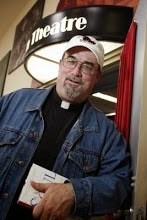
Monday, March 27, 2023

Fifth Sunday of Lent. Jesus raises Lazarus


5th Week of Lent.  

“Lazarus, Come Out”

Fr. Malloy’s Midweek Message.  March 29, 2023

Friends,

What do we think about death?  Do we believe that Jesus has power over death?  Do we know deep in our hearts that Jesus saves us from death?  Do we relish and realize that Jesus will give us eternal life?

Many years ago, as an undergraduate at Lafayette College, in a philosophy course, it dawned on me: either I would someday cease to exist, or I would continue to live forever.  Either I would someday just go poof and not be anymore, or I would be given the gift of existence forever.  Those are the only options.  I choose to believe the second alternative.  It makes no sense to me to think that whoever causes me to exist will cease keeping me in existence when this body gives out.  My body replaces all its cells every seven years or so.  But I continue to exist.  I am not just my body.  I am more than my physical existence.  My soul perdures. 

This question of death hit me hard recently.  My college roommate has been diagnosed with brain cancer.  I went up to Philly and visited him 10 days ago.  He’s had one operation and they are also treating the cancer with radiation.  He’s doing OK.  His wife and children support him.  But there is a very good chance he may not be with us a year or two from now. 

We can say that of all of us.  Who knows if we will be alive next week, or next year, or ten years from now?  The only thing that is certain is that no one escapes death.  We all will die.

That is why on Ash Wednesday we hear proclaimed “You are dust and to dust you shall return.”

But we don’t simply stay as dust.  We will be given resurrected bodies and live in “a new heavens and a new earth” in which “every tear will be wiped away” (cf. Is 25; Rev 21).

This is the great promise of our faith.  This is the great hope we have in Christ.  This is the consolation that counters all desolation in our lives.

At the memorial acclimation at Mass, we respond to the Real Presence of Jesus in the Eucharist by saying, “Save us savior of the world, for by your cross and resurrection you have set us free.”  That is our hope.  That is our prayer.

These days of Lent, let’s ponder the mystery and promise of Christ’s cross.  We can go to confession and be forgiven our sins.  We can pray the stations of the cross.  We can meditate on the mysteries of the Rosary.

Most of all, we can be stunned and grateful for the miraculous gifts of life and life eternal.

Peace,

Fr. Rick Malloy, S.J.

Keep Safe.    Keep Sane.    Keep Smiling


Quinta Semana de Cuaresma.  

Lázaro, Sal Fuera!

El Miercoles Mensaje del Padre Malloy, S.J.  29 de Marzo, 2023

Amigos y Amigas,

Qué pensamos de la muerte?  ¿Creemos que Jesús tiene poder sobre la muerte?  ¿Sabemos en el fondo de nuestro corazón que Jesús nos salva de la muerte?  ¿Nos alegramos y nos damos cuenta de que Jesús nos dará la vida eterna?

Hace muchos años, cuando estudiaba en Lafayette College, en un curso de filosofía, me di cuenta de que o bien algún día dejaba de existir, o bien seguiría viviendo para siempre.  O algún día desaparecería y dejaría de existir, o se me concedería el don de existir para siempre.  Ésas son las únicas opciones.  Elijo creer en la segunda alternativa.  Para mí no tiene sentido pensar que quienquiera que sea la causa de mi existencia dejará de mantenerme en ella cuando este cuerpo se agote.  Mi cuerpo reemplaza todas sus células cada siete años aproximadamente.  Pero yo sigo existiendo.  No soy sólo mi cuerpo.  Soy más que mi existencia física.  Mi alma perdura. 

Esta cuestión de la muerte me afectó mucho hace poco.  A mi compañero de universidad le han diagnosticado cáncer cerebral.  Fui a visitarle a Filadelfia hace 10 días.  Le han operado una vez y también están tratando el cáncer con radiación.  Está bien.  Su mujer y sus hijos le apoyan.  Pero hay muchas posibilidades de que no esté con nosotros dentro de uno o dos años. 

Podemos decir lo mismo de todos nosotros.  ¿Quién sabe si estaremos vivos la semana que viene, o el año que viene, o dentro de diez años?  Lo único cierto es que nadie escapa a la muerte.  Todos moriremos.

Por eso el Miércoles de Ceniza oímos proclamar: "Polvo eres y en polvo te convertirás".

Pero no nos quedaremos simplemente como polvo.  Recibiremos cuerpos resucitados y viviremos en "un cielo nuevo y una tierra nueva" en los que "se enjugará toda lágrima" (cf. Is 25; Ap 21).

Esta es la gran promesa de nuestra fe.  Esta es la gran esperanza que tenemos en Cristo.  Este es el consuelo que contrarresta toda desolación en nuestras vidas.

En la aclamación memorial de la Misa, respondemos a la Presencia Real de Jesús en la Eucaristía diciendo: "Sálvanos salvador del mundo, porque por tu cruz y resurrección nos has liberado".  Esa es nuestra esperanza.  Esa es nuestra oración.

En estos días de Cuaresma, reflexionemos sobre el misterio y la promesa de la cruz de Cristo.  Podemos confesarnos y recibir el perdón de nuestros pecados.  Podemos rezar el Vía Crucis.  Podemos meditar los misterios del Rosario.

Sobre todo, podemos estar atónitos y agradecidos por los dones milagrosos de la vida y la vida eterna.

La Paz,

P. Ricardo Malloy, S.J.

Sigamos Seguro.    Sigamos Sano.    Sigamos Sonriendo

Labels: , , , , ,

Sunday, December 25, 2022

Christmas 2022: Homily offered by Rick Malloy, S.J.


Christmas Homily 2022

Rick Malloy, S.J.

“The Logos was God, and the Logos was in communication with God.” -  Benedict XVI

Little kids’ Christmas play.  Cool 7-year-old Billy trumpets: “I bring Gold.”  Bobby, six, yells: “I bring myrrh.”  Barney, five, and always a little discombobulated, says “Frank sent this.”

What is brought to us as Jesus is born again in our lives and in our World?  What will we send as a result of the Incarnation?  To whom shall we send it?

First, Let me say something about the WORD, the LOGOS.  Second, Something about a Christmas Song.  And Third, something about The Letter, the documentary that aired on PBS the other night. It’s about the encyclical letter, Laudato Si, on the climate crisis.  Pope Francis sent Laudato Si in 2015.  He addressed it to the whole world.  We all must find ways to respond to this crisis. Finally, there will be a final suggestion….

1.  LOGOS.  This Christmas, we need truth and hope more than ever.  THE WORD, THE LOGOS, is truth.  THE WORD is not just in touch with reality, or just corresponding to reality. THE WORD creates and sustains reality, permeates, and penetrates all the pulsating beauty and bodacious being of existence.  The Logos might better be translated “the reason for existence.”  The “Purpose of our lives.”  The “Why we are here” is born in the baby in the manger.  We are born to praise reverence and serve God and be happy with God and all our loved ones forever.  This life is a prelude to life eternal. 

THE WORD has become human, and we see the glory, the glory of the Lord and the glory of “the human person fully alive.”  THE WORD takes on our human being and transforms us, giving us grace upon grace upon grace (John 1:16).  In Greek, grace is charis, from which we get the word charism, meaning a divine gift, a transcendent power.  Thomas Aquinas says grace is the ability to do what we could not do before.

And in this grace, the gift of God, we find hope.  We find purpose.  We find love.  And we and our worlds are transformed.  With this grace we are gifted with Peace.  We need to accept and actualize the gift of grace, this ability to make Peace in our world, in our communities and families and in our hearts.

2: Christmas Songs:  Now the Today show reported the other day that the most played Christmas songs are:  #5 It’s the Wonderful time of year  #4 Jingle bell Rock #3 Rudolph  #2 Rock christmas tree  #1 All I want is You.  But the song we really need to hear is “Do You Hear What I Hear.”

“Do you hear What I hear” was written in 1962 by a husband-and-wife song writing team.  They wrote it in response to the Cuban Missile Crisis of October 1962.  As we watch the horrors and atrocities happening right now in the Ukraine, we have to ask the first question of the song.  Do you see what I see?  Do we see what’s happening on our Southern Border as Central American countries descend into chaos. 

Do we hear what the lamb says to the shepherd boy, that there is a song high above the trees with a voice as big as the sea?  That song sends the shepherd boy to the mighty king.  The boy tells the King of a child who shivers in the cold.  He calls for the king to bring silver an gold, the wealth of the kingdom to the aid of the poor.  And the King hears and calls the people to pray for peace everywhere.  Let the child bring us goodness and light.

So much to hear in this song.  Peace.  Care for the poor.  Listen and pay attention to the deeper meanings of the Christmas story, the gift and grace of the LOGOS among us.  The call to care for everyone, and the images of nature in the song.  Night wind.  The voice as big as the sea. 

3.  THE LETTER:  We need to pray for peace.  We need to call those who control our political economy to care for the poor and desperate among us.  Even more as we listen this Christmas, we need to hear the cry of the earth. That cry is expressed in a documentary which aired on PBS.

The Letter is a beautiful meditation on people from all over the earth who Pope Francis invited to the Vatican for a conversation about how climate change is impacting their lives.  A woman from Ireland, a indigenous chief from the Amazon, a kid from India, a man from Senegal who breaks down weeping when telling about flood and rising tides destroying the village where he and his family and friends live.  The Letter brings home the impact of climate change on peoples lives. 

What can we do?  This year I suggest we all investigate the problems and challenges of climate change.  Maybe think about changing our diet and living a more planet friendly way of eating.  Maybe find small ways to lessen our global footprint.  Buy stuff from eco friendly corporations. 

Dan Berrigan, S.J., the anti-war activist during the Vietnam war and throughout his life once said: “No one can do everything, but everyone can do something.  And the moral difference between doing something and doing nothing is monumental indeed.”

Finally, one other suggestion.  Let’s Forgive.  This year, as Jesus comes to reconcile us to one another, let’s forgive one another.  Greg Boyle is a well know Jesuit who runs Homeboys Industries in LA helping gang members escape the gang life, and helping the incarcerated get reintegrated into society after serving prison sentences.  His new book is Forgive Everybody. 

Maybe get to the sacrament of reconciliation, confession.  It’s good for the soul, and the world.

Jesus told us to “do this in memory of me” and we celebrate Eucharist daily.  Jesus also taught us to pray and the only command in the prayer is to “forgive those who trespass against us.”

Arnold Schwarzenegger’s daughter, Katherine Schwarzenegger Pratt (I think her husband is a movie star) has a wonderful book, The Gift of Forgiveness: Inspiring stories from those who have overcome the unforgivable.  She tells of people like Sara Klebold, the mother of one of the Columbine Killers.  Imacullée Ilibagiza here tells of how she overcame he hatred for those who killed her family and millions of others with machetes in the Rwandan genocide of April 1994.  Hate filled rhetoric built into a holocaust with horrific consequences.  We need to tone down the truly alarming increase of hate speech in our society.  We need to listen to Christ’s call, “that we all be one.”

The Eucharist, the Mass, is the miracle and mystery of our faith.  When we take bread and wine and pray, the awesome reality of the power of God in our lives, the power to save us is present.  The power to rescue us from all sin and suffering.  The power to open ourselves and our world to transformation in Christ. 

“Frank” didn’t send this.  God sent this.  God becomes one of us, baby bald and vulnerable in the manger where animals munch their meals.  This Lord and savior remains among us as Eucharist, love incarnate, Emmanuel, God with us.  Let us realize and relish once again this amazing and loving God.  God is love.  Let’s forgive and love one another.  Let us pray.

Do You Hear What I Hear?
Said the night wind to the little lamb,
do you see what I see
Way up in the sky, little lamb,
do you see what I see
A star, a star, dancing in the night
With a tail as big as a kite

Said the little lamb to the shepherd boy,
do you hear what I hear
Ringing through the sky, shepherd boy,
do you hear what I hear
A song, a song, high above the trees
With a voice as big as the sea


Said the shepherd boy to the mighty king,
do you know what I know
In your palace warm, mighty king,
do you know what I know
A Child, a Child shivers in the cold
Let us bring Him silver and gold

Said the king to the people everywhere,
listen to what I say
Pray for peace, people everywhere!
listen to what I say
The Child, the Child, sleeping in the night
He will bring us goodness and light


Labels: , , , , , , , , , ,

Thursday, December 22, 2022

The Present of Presence: All is Gift

 The Present of Presence: All Is Gift

(Here's an article I wrote for Christmas time years ago... Enjoy) 

BustedHalo.com  an online magazine for spiritual seekers in their 20s and 30s


All is Gift: Some thoughts on Christmas presence

by Richard G. Malloy, S.J.


HAVERTOWN, PA

December 1958

When I was little, I was small. At the age of four, my brother Timmy is a year older and can reach things I can’t.  One morning, he climbs up on a chair he’s put in the closet we’re not supposed to open, and sees toys on the shelf, new toys, still in their packages.  Fun!  He yanks down a set of blocks and a bunch of other stuff.  Soon I’m busy playing with a new set of beautiful, blond, wooden blocks, putting them one on top of another, and then immediately knocking them down.  Fun!  All of a sudden, our Mom, seeing that we’ve discovered the Christmas stash early, pulls us into the kitchen.  “Time for breakfast, boys.  I’m making chocolate chip pancakes and Maypo.”  I love chocolate chip pancakes and Maypo.  Forget the blocks.


A few days later, it’s Christmas morning.  I rip the bright, colored paper off a new set of beautiful, blond, wooden blocks.  Fun!  I start stacking them and knocking them down.  Fun!  My mother looks to see if I recognize the blocks.  I’m clueless.  The blocks also come in pretty handy as objects to throw at my brother.  Fun!  Mom stops that action.  Not fun!  Pretty soon, I’m sleepy.  Time for a nap.  As I drift off, I hear my brother asking, “Hey, aren’t these the toys we were playing with before?”  “I don’t think so, Timmy,” answers Mom.  “Santa brought these in his sleigh last night.”  “Wow,” my brother replies. 


PHILADELPHIA, PA

December 2005

When we are young, all is accepted as gift.  We rarely question why and how all the good things of life appear.  We believe whatever we are told.  Santa comes down the chimney.  Reindeer fly.  At the North Pole, elves make the toys.  The magic of Christmas is carried in the glow of the Christmas tree lights and the strong scent of pine in the living room.  Brightly wrapped packages appear during the night.  It’s all so miraculous when seen through the eyes of a little child.

Sing Christmas Carols and

drink hot

chocolate with marshmallows... Sled...Sit late

in the quiet

glow of the

tree's lights

and let God

be with you...

Most of all, pray.


As we mature, we come to realize that God gives even greater gifts at Christmas.  We discern and celebrate the reality and meaning of Christ’s birth.  His present to us is presence.  In a stable is born a baby, the savior of the world.  God lies in a manger, is warmed by the breath of oxen and ass, and makes his home among us.  This Christmas, once again, the miracle occurs.  We are reminded that the life of grace--the reality that God is present in the depths of our hearts and all that we love--is the center of our lives.  God becomes one of us, and we are God’s family.  God makes his home among us.


Christ’s birth reveals God’s love for us and promises that we will “come to share in the divine nature” (II Peter 1:4).  In the third century, St. Athanasius proclaimed, “The Son of God became man, so that we might become God.”  We become human-unto-God, as was Jesus, and participate in the mystery of creation’s transformation, “so that God may be all in all” (I Cor 15:28).


To Do…

This Christmas, be present to the reality and meanings of God’s gifts to us.  Eat hearty.  Party wisely and well.  Don't work too hard.  Read Charles Dickens' A Christmas Carol and Oscar Hijuelos' Mr. Ives' Christmas, a short, remarkable novel of faith and reconciliation.  Watch It’s a Wonderful Life and “A Charlie Brown Christmas.” Laugh and cry watching While You Were Sleeping, the story of an achingly lonely young woman without family, who falls in love with a goofy Irish clan in the week between Christmas and New Years.  Listen to "Christmas in the Trenches" by John McCutcheon, an amazing ballad that poetically retells the historically true event when, for a few fleeting hours, peace broke out in the frozen trenches of France, Christmas Eve 1914.  The singing of Christmas carols on both sides of the lines gave the men the inspiration and courage to lay down their guns.


Click Here  Christmas in the Trenches 


Take a child to see Santa.  Give generously to the poor.  Sing Christmas Carols and drink hot chocolate with marshmallows.  Sled.  Sit late in the quiet glow of the tree’s lights and let God be with you.


Most of all, pray.  Walk outside at 2:00 AM on a freezing cold, stunningly starlit night, and experience the awesomeness of the universe.  Go to Midnight Mass.  Read the first chapters of Matthew and Luke.  Engage the beautiful rhythms of the Liturgy of the Hours.  Sit in still silence, breath and realize life is a miracle and mystery. 


Know that Christmas is the time of year when we remember and ponder the birth of our God who loves us so much that he becomes one of us.  Vulnerable and wrapped in swaddling clothes, appears the one who saves the world.  Realize that Jesus is real and wants to be reborn again in our hearts.  The Lord has a mission for us.  Worship him these days and listen to that inner voice of your imagination where God communicates.  The presence of God confirms for us that St. Ignatius was right: All is gift.  Jesus again gifts us with his presence this Christmas.  O come, let us adore.


Rev. Richard G. Malloy, S.J., Ph.D., was an Assistant Professor of Anthropology and Sociology at Saint Joseph’s University in Philadelphia, PA. From 2010-2019 he served as Vice President for Mission and University Chaplain at the University of Scranton.  Since 2019 he has served as Director of Mission Integration at Cristo Rey Jesuit High School in Baltimore, MD.


©2005 Bustedhalo.com.  All rights reserved.


Labels: , , , , , , , , , ,

Monday, December 12, 2022

"It's a Wonderful Life" and Frank Capra's Catholicism

https://www.ncregister.com/features/frank-capra-earned-his-wings-with-it-s-a-wonderful-life 

National Catholic Register provides us with Jay Copp's wonderful article on "It's a Wonderful Life"

******************************


Frank Capra ‘Earned His Wings’ With ‘It’s a Wonderful Life’

Director’s name might not ring a bell with younger viewers, but his timeless movies are full of themes and plots close to his Catholic heart.

Top row: L to R: Donna Reed, Jimmy Stewart and Karolyn Grimes star in the beloved classic.                                                                                
Bottom row: Henry Travers portrays Clarence Odbody alongside Jimmy Stewart as George Bailey.
Top row: L to R: Donna Reed, Jimmy Stewart and Karolyn Grimes star in the beloved classic. Bottom row: Henry Travers portrays Clarence Odbody alongside Jimmy Stewart as George Bailey. (photo: RKO Pictures)

This December, millions of Americans once again will gather in front of their TVs to watch It’s a Wonderful Life. The poignant dramatization of an earnest, kindhearted small-town banker saved by a grandfatherly angel is a beloved staple of the Christmas season. On the surface, the 1946 film has all the trappings of a religious movie. It opens with a flurry of disembodied prayers heard in the heavens by celestial beings. “I owe everything to George Bailey. Help him, dear Father.” 

“Joseph, Jesus and Mary, help my friend, Mr. Bailey.” 

“George is a good guy, God. Give him a break.”

Played wonderfully by Jimmy Stewart, George is falsely accused of misappropriating the funds of the “broken-down Building and Loan.” Drowning his sorrows in a bar, he prays desperately to God. That moment of pleading gets him, as he ruefully recounts, “a bust in the jaw.” He could not be more mistaken. To his rescue comes the white-haired Clarence Odbody, Angel Second Class, eager after hundreds of years to at last “get his wings.” The movie is celebrated for its wholesome virtues and old-fashioned American values. Bedford Falls is a stereotypical small town where people know one another and don’t lock their doors. Hard work enables you to buy a home, raise a family and build a community. 

Virtue is ultimately rewarded, and when you are down and out, friends and family rally around you. Even on Christmas Eve. It’s not a film seen as steeped in religion or even as a morality tale. Instead, it’s the story of a decent man who loves his family and Bedford Falls as he faces off against a ruthless business tycoon, Mr. Henry Potter, “a warped, frustrated old man,” as George calls him. Clarence is not set forth as proof of God, but as a fanciful plot device in the drama of an honorable man driven to a suicide attempt before recognizing the value of his life. But the movie actually is steeped in spirituality. 

It’s a Wonderful Life is not only a Christian film — it essentially unfolds a Catholic vision of life.

Capra’s faith was hard-won. Born in 1897, he was a self-described “Christmas Catholic” as a younger man. His brother was a priest, but Capra felt he needed God only when he perceived he needed him. Early in his career, failing to establish himself, he knelt alone in a back pew of a cathedral. He was there “to remind the Almighty here was another sacred sparrow needing help,” as recalled in Catholic Digest’s “I Remember Frank Capra,” from January 1992, based on his autobiography. His career breakthrough came when he directed the highly successful It Happened One Night, starring Clark Gable and Claudette Colbert, in 1934. Strangely, certainly to him, his triumph left him anxious as a director and hollowed out as a man. Success brought despair. He was lost and bereft. His conversion, as both an artist and as a person, came after he was told by an anonymous man, “The talents you have, Mr. Capra, are not your own, not self-acquired,” as he recounted years later in his autobiography (and as noted in the same article in Catholic Digest). “God gave you those talents. They are his gifts to you, to use for his purpose. When you don’t use the gifts God blesses you with, you are an offense to God and to humanity.”

If that sounds like a George Bailey-type revelation, well, Capra’s movies unspooled themes and plots close to his Catholic heart. In Mr. Deeds Goes to Town, in 1936, Gary Cooper plays a small-town tuba player who outwits his enemies. It’s one of his many films that shows the power of goodness to change hearts and prompt conversion, according to film critic Maria Elena de las Carreras Kuntz.

Mr. Smith Goes to Washington, in 1939, similarly depicts an idealistic young senator who overcomes villainous political operatives. In the climactic scene, Stewart, playing the fresh-faced senator, stages a one-man filibuster. Sweating and talking for 24 hours, pleading for justice and the American way, he reads from the Constitution, the Declaration of Independence and the famous “love passage” from 1 Corinthians.

You Can’t Take It With You, in 1938, is an offbeat comedy about a free-spirited family threatened by a rapacious banker. The film closes with a reconciliation. The movie was a “golden opportunity to dramatize ‘Love Thy Neighbor,’” Capra said, as chronicled in Catholic Digest. “Christ’s spiritual law can be the most powerful sustaining force in anyone’s life.”

Meet John Doe, in 1941, is about a man (Cooper) down on his luck who is turned into a hero by an ambitious newspaperwoman and used as a pawn by big business. It’s a dark movie. Yet the power of faith is asserted. “The ‘meek can inherit the earth’ when John Does start loving their neighbor,” Doe says on a radio show during the film.

It’s a Wonderful Life is Capra’s deepest and most artistically satisfying expression of the Catholic faith. The movie opens with prayer, and an angel is a central character. More religion comes when Bedford Falls residents “wept and prayed” on V-E Day and “wept and prayed” on V-J Day. People in Bedford Falls do a lot of praying in Catholic-like churches with grand exteriors and sweeping interiors, too. Still, Capra doesn’t wear his faith on his sleeve in his films. Art conveys truths and values through story. Meanings are embedded in characters and their choices, circumstances and crises. 

Spiritual messages undergird It’s a Wonderful Life. Potter may not believe it, but the people of Bedford Falls, even and especially the lowly and humble, possess inherent dignity. Goodness transforms people and communities. Love, a gift freely given, graces our lives through the lives of others. God is present and active in our ordinary lives. He works through us. 

An instrument of God, George Bailey’s desperate prayer is his “Gethsemane moment.” He finds his way to salvation only when he fully realizes his utter powerlessness. Capra knew what he was up to. He often said that the Sermon on the Mount drove his movies. “Movies should be a positive expression that there is hope, love, mercy, justice and charity,” he said in a 1960 interview.

It’s a Wonderful Life was a commercial and critical failure when it was released after World War II. Americans were in no mood for an uplifting parable. His masterpiece at last began to get its due in the late 1970s, when it entered the public domain, belonging to no one and, as it turned out, to everyone, as matters of faith do. The director’s film legacy continues to speak of God’s love, including in the very last scene of his great Christmas classic, highlighting the love of family and community — and angelic aid. 

Jay Copp is the author of 150 People, Places and Things You Never Knew Were Catholic, published by OSV. This article was adapted from his book.


Labels: , , , , , , , , , , , , ,

Tuesday, December 06, 2022


Ignatian Spirituality: Advent II

Fr. Malloy’s Midweek Message.   December 7, 2022

(Next week we'll talk about the Immaculate Conception and Guadalupe)

Friends,

These darker, quieter days of December sooth our souls and calm our Christmas preparations.  Let’s try and resist the frenetic impulse these days, and instead find time for prayer.

GRACE: Praying gives us grace.  And grace is the ability to do what we could not do before.  One grace we can ask for in these Advent days is the grace of faith, the ability to believe in goodness and hope, even when things seem out of whack and off kilter.

Pain and Suffering:  Recently, I heard of two horrific traffic accidents.  In both accidents, a small child’s life was ended.  The pain parents and siblings are feeling right now!  How hard Christmas will be to celebrate in the wake of such tragedy! 

“One of the great challenges of life is the task of bearing pain.  We suffer and those whom we love suffer.  We instinctively flee from pain, yet it is a fact of life that spiritual, bodily, and emotional suffering is inevitable.  In the Ignatian perspective, our graced response to pain is called compassion.  The English word compassion is drawn from two Latin words meaning “to suffer” and “with.”  Authentic Christian compassion is a virtue that enables us to share the suffering of others, as well as to bear our own pain.  It is a grace another gift from God” (David Fleming, S.J., What is Ignatian Spiritualty? p. 83).

FAITH: Faith can give us the ability to bear suffering.  “Faith is the assurance of things hoped for, the evidence of things not seen” (Heb 11:1).  Faith is more a response than an answer to the question of life.  Faith is placing our Trust in God and knowing that God is with us in good times and in bad.

CONSOLATION and DESOLATION:  In our living lives of faith, St. Ignatius teaches us to monitor experiences of desolation and consolation.  Consolation is when we feel energized, when we realize that God exists, when we know God loves us.  We feel on fire with the desire to love others, to serve others.  We want to make a world of peace and justice.  Desolation is when we think or feel God isn’t there, life isn’t worth the effort, all seems filled with despair and hopelessness.  Ignatius points out that we will have alternating times of consolation and desolation in our lives.  He urges us to “go with” consolation, and “push against” desolation.  Check out some other Ignatian ways of living our faith: Ignatian.info — Office of Ignatian Spirituality (jesuitseastois.org).  And let’s pray these days, “O Come, O Come Emmanuel.”

O Come, O Come Emmanuel

Peace,

Fr. Rick Malloy, S.J.

Keep Safe.    Keep Sane.    Keep Smiling


La Espiritualided Ignaciana: Adviento II

El Miercoles Mensaje del Padre Malloy, S.J.    

7 de Noviembre, 2022

(La semana que viene, conversamos sobre La Immaculada y La SENORA de Guadalupe)

Amigos y Amigas,

Estos días más oscuros y tranquilos de diciembre sosiegan nuestras almas y calman nuestros preparativos navideños.  Intentemos resistir el impulso frenético de estos días y, en su lugar, encontremos tiempo para la oración.

GRACIA: Rezar nos da gracia.  Y la gracia es la capacidad de hacer lo que antes no podíamos hacer.  Una gracia que podemos pedir en estos días de Adviento es la gracia de la fe, la capacidad de creer en la bondad y la esperanza, incluso cuando las cosas parecen estar fuera de lugar y desviadas.

Dolor y sufrimiento:  Hace poco me enteré de dos terribles accidentes de tráfico.  En ambos accidentes, un niño pequeño perdió la vida.  ¡Qué dolor sienten ahora los padres y los hermanos!  ¡Qué difícil será celebrar la Navidad después de semejante tragedia! 

"Uno de los grandes retos de la vida es la tarea de soportar el dolor.  Sufrimos y sufren los que amamos.  Instintivamente huimos del dolor, pero es un hecho de la vida que el sufrimiento espiritual, corporal y emocional es inevitable.  En la perspectiva ignaciana, nuestra respuesta de gracia al dolor se llama compasión.  La palabra inglesa compassion procede de dos palabras latinas que significan "sufrir" y "con".  La auténtica compasión cristiana es una virtud que nos capacita para compartir el sufrimiento de los demás, así como para soportar nuestro propio dolor.  Es una gracia, otro don de Dios" (David Fleming, S.J., ¿Qué es la Espiritualidad Ignaciana? p. 83).

FE: La fe puede darnos la capacidad de soportar el sufrimiento.  "La fe es la certeza de lo que se espera, la prueba de lo que no se ve" (Heb 11,1).  La fe es más una respuesta que una respuesta a las preguntas de la vida.  La fe es poner nuestra confianza en Dios y saber que Dios está con nosotros en los buenos y en los malos momentos.

CONSOLACIÓN Y DESOLACIÓN: En nuestra vida de fe, San Ignacio nos enseña a controlar las experiencias de desolación y consolación.  Consolación es cuando nos sentimos llenos de energía, cuando nos damos cuenta de que Dios existe, cuando sabemos que Dios nos ama.  Nos sentimos ardiendo en deseos de amar a los demás, de servir a los demás.  Queremos hacer un mundo de paz y justicia.  Desolación es cuando pensamos o sentimos que Dios no está ahí, que la vida no vale la pena, que todo parece lleno de desesperación y desesperanza.  Ignacio señala que en nuestras vidas se alternarán tiempos de consolación y desolación.  Nos exhorta a "ir con" la consolación y a "empujar contra" la desolación.  Echa un vistazo a otras formas ignacianas de vivir nuestra fe: Ignatian.info - Oficina de Espiritualidad Ignaciana (jesuitseastois.org).  Y recemos estos días: "Ven, ven Emmanuel".

O Come, O Come Emmanuel

La Paz,

P. Ricardo Malloy, S.J.

Sigamos Seguro.    Sigamos Sano.    Sigamos Sonriendo

Labels: , , , , , , ,