Sunday, December 20, 2015

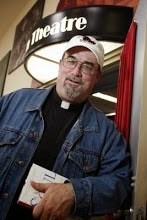
Br. / Fr. Rick Curry, S.J. requiescat in pace


Br. / Fr. Rick Curry, S.J., a great Jesuit and a tremendous human being, died yesterday.  He's probably up in Heaven now, teaching Jesus how to act!


Labels: , , , , , ,

Thursday, June 13, 2013

Former Student Defends Georgetown

Georgetown is accused of not being ‘Catholic,’ but it may be the best of example of what the church is supposed to be

(Simon Brubaker/THE WASHINGTON POST)
Wiliam Blatty, author of The Exorcist and well-known Georgetown alum, recently grabbed media attention when he filed a petition calling for the Archdiocese of Washington, DC to discipline his alma mater. The Jesuit university, the ‘Exorcist’ author claims, no longer merits its Catholic designation due to long-standing patterns of dissent against church teaching. The petition’s Web site names a litany of offenses the university has committed in contradiction to its Catholic identity, including Georgetown’s refusal to submit to the Vatican’s canonical norms for Catholic universities, hosting controversial student-led plays such as The Vagina Monologues, and inviting pro-choice speakers such as Kathleen Sebelius to speak at commencement.  So far, the petition’s Web site claims that some “1200 alumni, students, faculty, (and) parents” have signed on to “address repeated scandals, dissidence and non-compliance with church law.”
While Blatty freely names the controversies that offend his sensibilities, he neglects to mention the groups and activities on campus that uphold traditional Catholic teaching. Thus, while H*yas for Choice has a tolerated, but not official, presence on campus, the Georgetown Right to Life is one of the most active and influential pro-life groups in the country, host to the annual Cardinal O’Connor Conference on Life, which draws thousands of students during the yearly commemoration of Roe v. Wade. While Blatty singles out Georgetown’s non-compliance with Ex Corde Ecclesia, the Vatican’s 1990 set of guidelines for Catholic universities, he fails to mention the vibrant spiritual life in campus ministry and countless theology courses that inculcate deep love for Roman Catholic religious traditions.
Georgetown is, ultimately, a university of political, religious, and intercultural dialogue. It was there that, nearly 10 years ago, I arrived as a naïve freshman from rural Ohio, where I had grown up in a world governed by religious and political fundamentalism. At Georgetown, my friendships with other students, the challenges of critical coursework, and the open-minded atmosphere on campus challenged my uncritical assumptions about the nature of truth and life with others in a pluralistic world. It was this process of spiritual, intellectual, and social questioning that first led me to a dialogue with, and then embrace of, the Roman Catholic Church.
The church, Georgetown showed me, is not an exclusive society of like-minded individuals closed in on itself. It does not retreat into a world of its own making, but rather engages humanity through conversation with diverse cultures and current concerns. At Georgetown, Catholic faith is a lively and dynamic force that interrogates the presuppositions of all those who are willing to engage it. Religion’s role in the modern world is everywhere questioned and tried: in the theology department, the simple mischaracterizations of other religions are deconstructed through work in comparative theology and pluralism; at the Berkley Center, the relationship between faith and public life is considered in terms of ethical responsibility and the contemporary situation; campus ministries and programs for members of all religious backgrounds give students the chance to engage questions of social justice in service to the poor and vulnerable. All of these university functions, along with many others, exemplify Georgetown’s mission to form women and men in service to others for the greater glory of God.
Christianity, indeed, has a long history of interaction with the world that challenges the status quo. From the first Church Council of Jerusalem, where the earliest generation of Christian leaders decided to open the faith to non-practitioners of Judaism, to the proclamation of Vatican II, where,  in its Constitution on the Sacred Liturgy, Catholic bishops called for the church to preserve and encourage the “genius and talents of the various races and peoples,” Christianity is a faith that continuously evaluates its message in relationship to the world and the experiences of ordinary people. The church’s original mission, given by Christ in Mark 16:15, is to “Go into all the world and preach the gospel to all creation.” The spirit of the Gospel sends Christians to interact with and to transform the world, not to reject and condemn it.
In order to effectively accomplish this task, Christians employ a wide variety of charisms, or gifts of faith, that God gives them. Saint Paul writes in 1 Corinthians 12:4-6 how, “There are different kinds of gifts, but the same Spirit distributes them. There are different kinds of service, but the same Lord. There are different kinds of working, but in all of them and in everyone it is the same God at work.” Paul likens the church to a body: when all of its individual parts work together, it can effectively spread the good news of faith. To function properly, however, each part of the church must recognize and accept the right functioning of other parts. Christians and their many roles in the faith are not uniform.
William Blatty’s petition does not recognize the value of diversity within the church. His understanding of Catholicism rejects its catholicity—that is, its universal nature—by rejecting engagement with the world and a plurality of spiritual charisms. His characterization of the faith as an internally-focused religious system does not reflect Christian commitments to diversity and the need for dialogue with others. The Catholic faith that I have come to know—a faith that Georgetown gave me—is far more broad, open-minded, and able to reach out the world in service. It is this Catholicism, beautiful and charismatic in its diversity, that fulfills Christ’s call to change the world with the love of God.
 Jason Steidl is a PhD student in Systematic Theology at Fordham University.

Labels: , , , ,

Sunday, March 24, 2013

This Week on Jesuits. Good Article

http://theweek.com/article/index/241733/the-jesuits-gods-marines

The Jesuits: 'God's marines'
Cardinal Jorge Mario Bergoglio has become the first Jesuit pope in Catholic Church history. How will that influence him?
Pope Francis at his Inauguration Mass in St Peter's Square on March 19.
Franco Origlia/Getty Images
W
ho are the Jesuits?
Formally called the Society of Jesus, they are the largest single religious order in the Catholic Church. The society was founded in Paris in 1534 by St. Ignatius Loyola, a Basque soldier who discovered his faith while recuperating from a cannonball wound. He and six fellow students at the University of Paris, including St. Francis Xavier, dedicated themselves to serving the pope as missionary soldiers of Christ. The order was originally organized along military lines, under the leadership of a "Father General." Early followers named themselves "The Company of Jesus," and were nicknamed "God's Marines," for their willingness to go anywhere in the world at the pope's command. Pope Paul III recognized them as an order in 1540; today there are over 20,000 Jesuits, including missionaries, teachers, and scholars.
What are they known for?
Primarily, for their missionary zeal and love for education. Inspired by the Renaissance, Loyola believed the best way of spreading God's word was through establishing Catholic schools. The huge success of a college in Messina, Sicily, prompted him to send members of the order out into Europe and beyond to inaugurate schools, universities, and seminaries. By the time he died, in 1556, the Jesuits had founded 74 colleges in Ireland, Germany, Poland, Egypt, India, and Japan. Today, they run 189 colleges across the globe, with 28 in the United States, including Georgetown University and Boston College. Jesuit colleges emphasize free-thinking and theological debate, which is why more-conservative Catholics consider the order to be dangerously independent. Vincent O'Keefe, an American Jesuit and a former acting Father General, used to joke that Catholics believe "the Jesuits know everything — but nothing else."
Are they respected?
They haven't always been. The Jesuits certainly were well regarded during the 16th and 17th centuries, when they were viewed as the most pious and most intellectual of priests. Kings of France chose Jesuit confessors for 200 years. But as Catholic Europe disintegrated amid much palace intrigue, the Jesuits' obedience to the papacy made them many enemies. Jesuits were widely viewed as conniving manipulators, and Father Generals were dismissively known as "Black Popes" for their supposed control of the Vatican. Anti-Catholics suspected the order of plotting to overturn governments at the pope's command. The order was eventually dissolved by Pope Clement XIV in 1773, at the urging of anti-clerical kings of Europe. The Jesuits survived in Russia and Prussia, until the pope's edict was rescinded in 1814. But suspicion lingered. "If ever there was a body of men who merited eternal damnation on Earth and in hell, it is this society of Loyola's," wrote John Adams to Thomas Jefferson in 1816. Adams feared the Jesuits would try to undermine the new republic's separation of church and state.
What's their current reputation?
The Jesuits are still viewed within the church as the most liberal of the clerical orders, with a rebellious bent. Because of their missionary work, particularly in Latin America, the Jesuits developed strong sympathy for desperately poor people subjugated by colonial or military governments. In 1974, the society decreed that its mission was the "service of faith, of which the promotion of justice is an absolute requirement." For some priests, this led naturally to a leftist movement called "liberation theology," which champions a revolutionary class struggle pitting the people against the powerful and wealthy. Some Jesuits actually fought alongside communist guerrillas in Guatemala, Honduras, and El Salvador. In 1981, Pope John Paul II, aghast at the political direction the order was taking, overrode the Jesuits' nominee for Father General and appointed a pontifical delegate of his own. That created a split between Jesuits and the Vatican that has not been fully repaired.
Will Francis be a Jesuit pope?
On matters of sexual morality and the role of women, Bergoglio is first and foremost a traditionalist, and not a reformer. In Argentina, he also distanced himself from the liberation theology movement, warning priests it was far too political. Still, Francis shares the Jesuits' intense identification with the poor and powerless; he has called "the unjust distribution of goods" a "social sin that cries out to Heaven." There's little doubt that Bergoglio's Jesuit concern for social inequality will guide the Vatican's direction in coming years. Like other Jesuits, he also has little regard for hierarchy in itself and the trappings of power; he traveled to work in Buenos Aires by public transport. Those who know him say that the new pope will use his position to do what Jesuits have always done — evangelize, especially in the church's new center of gravity in the Southern Hemisphere. The election of a Jesuit as pope sends a powerful message, said Father Kevin O'Brien, a Jesuit who is vice president for mission and ministry at Georgetown University. "The church has been sidetracked by sexual and financial scandals. Now, it's about getting back to the basics. It's about preaching the gospel and helping the poor."
The Jesuits' worldly achievements
Jesuits have been among the most fervent missionaries in history, evangelizing across the globe — and in the process, making a huge impact on the secular world. Jesuit explorers founded the city of São Paulo, located the source of the Blue Nile, and charted the Amazon and Mississippi rivers. Jesuit missionaries brought rhubarb, quinine, vanilla, and ginseng back from Asia and South America, and are believed to have introduced the umbrella to the West. The order's emphasis on learning has also helped it make significant strides in human knowledge. A Jesuit mathematician, Christopher Clavius, created the modern Gregorian calendar, while Jesuit scientist Athanasius Kircher was the first to discover that the bubonic plague was spread by microorganisms. There are 35 craters on the moon named after Jesuit scientists and astronomers. Less well known, perhaps, is their contribution to the theater: A 17th-century Jesuit teacher is thought to have invented the trap door.

Labels: , , , , ,

Wednesday, March 06, 2013

Catholic Schools' Salvation: Basketball....

This puts a whole new twist on the old joke about the definition of Jesuits as an order of priests who found schools with good basketball teams.  -  Fr Rick


NPR

Frank Deford
http://www.npr.org/2013/03/06/173533196/catholic-universities-see-true-path-to-salvation-basketball

I've always felt it's no coincidence that some basketball powerhouses — let us say, off the top of my head, Duke, Kentucky, Kansas and Indiana — get a few better players because those hoops museums don't do very well with football.
I mean, if I were a big-deal high school recruit, I might very well say to myself, "You know, I'd rather be a Hoosier or a Wildcat or a Jayhawk than I would go someplace where I'm just gonna be a lounge act for the glamorous Mr. Touchdowns."
No, I'm not suggesting that cagey old Coach K whispers to prospects, "Hey, be a Dookie, Son, and get all the glory, 'cause our football team is dog meat." But, year in and year out, there must be just enough public relations-savvy blue-chippers who realize they've got a better chance of being a hero at a place where the football players are regularly unpopular losers.
And as this spirit moves us, so too is a powerful Roman Catholic leadership group stepping forward, heading in a bold new direction. Of course, as Dick Vitale might say, "I'm not talking about the Vatican, babee." No, this is the so-called "Catholic Seven" — and if that gives off a hint of martyrdom, well, just so.
The seven are colleges: DePaul, Georgetown, Marquette, Providence, St. John's, Seton Hall, Villanova — who, you see, have been discriminated against. That's because they're the outcast members of the Big East Conference who do not play big-time football.
When the Big East was created, it was absolutely basketball first, but the league was seduced by football money, and basketball atrophied. Now the Catholic Seven want to get out of the Big (football) East and once again make basketball the one blessed athletic faith.
This new league will probably expand, too, even adding Butler, which would be the token heathen member — proving that while there is only one true path to salvation, anybody can find a way into the NCAA tournament.
This development is a lovely loop back to a time when Roman Catholic schools were pre-eminent in the sport. So many, like the Catholic Seven, had started in urban areas to serve the immigrant faithful, but could not afford to maintain football teams as that sport became too expensive. So, they concentrated on basketball. Seventeen different Catholic colleges have made the Final Four, but only three since the 1980s.
But now, never mind the Catholic Seven. There is white smoke rising over the polls, for little Jesuit Gonzaga University, with less than 5,000 undergraduates, is the new No. 1 in all of college basketball.
Maybe more of those blue-chip high school players will even skip over colleges with merely bad big-time football teams and go star for colleges with no big-time football teams. May the saints be praised.

Labels: , , , , , , , , , ,