Tuesday, December 06, 2022


Ignatian Spirituality: Advent II

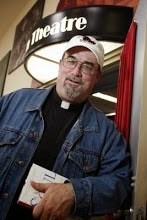
Fr. Malloy’s Midweek Message.   December 7, 2022

(Next week we'll talk about the Immaculate Conception and Guadalupe)

Friends,

These darker, quieter days of December sooth our souls and calm our Christmas preparations.  Let’s try and resist the frenetic impulse these days, and instead find time for prayer.

GRACE: Praying gives us grace.  And grace is the ability to do what we could not do before.  One grace we can ask for in these Advent days is the grace of faith, the ability to believe in goodness and hope, even when things seem out of whack and off kilter.

Pain and Suffering:  Recently, I heard of two horrific traffic accidents.  In both accidents, a small child’s life was ended.  The pain parents and siblings are feeling right now!  How hard Christmas will be to celebrate in the wake of such tragedy! 

“One of the great challenges of life is the task of bearing pain.  We suffer and those whom we love suffer.  We instinctively flee from pain, yet it is a fact of life that spiritual, bodily, and emotional suffering is inevitable.  In the Ignatian perspective, our graced response to pain is called compassion.  The English word compassion is drawn from two Latin words meaning “to suffer” and “with.”  Authentic Christian compassion is a virtue that enables us to share the suffering of others, as well as to bear our own pain.  It is a grace another gift from God” (David Fleming, S.J., What is Ignatian Spiritualty? p. 83).

FAITH: Faith can give us the ability to bear suffering.  “Faith is the assurance of things hoped for, the evidence of things not seen” (Heb 11:1).  Faith is more a response than an answer to the question of life.  Faith is placing our Trust in God and knowing that God is with us in good times and in bad.

CONSOLATION and DESOLATION:  In our living lives of faith, St. Ignatius teaches us to monitor experiences of desolation and consolation.  Consolation is when we feel energized, when we realize that God exists, when we know God loves us.  We feel on fire with the desire to love others, to serve others.  We want to make a world of peace and justice.  Desolation is when we think or feel God isn’t there, life isn’t worth the effort, all seems filled with despair and hopelessness.  Ignatius points out that we will have alternating times of consolation and desolation in our lives.  He urges us to “go with” consolation, and “push against” desolation.  Check out some other Ignatian ways of living our faith: Ignatian.info — Office of Ignatian Spirituality (jesuitseastois.org).  And let’s pray these days, “O Come, O Come Emmanuel.”

O Come, O Come Emmanuel

Peace,

Fr. Rick Malloy, S.J.

Keep Safe.    Keep Sane.    Keep Smiling


La Espiritualided Ignaciana: Adviento II

El Miercoles Mensaje del Padre Malloy, S.J.    

7 de Noviembre, 2022

(La semana que viene, conversamos sobre La Immaculada y La SENORA de Guadalupe)

Amigos y Amigas,

Estos días más oscuros y tranquilos de diciembre sosiegan nuestras almas y calman nuestros preparativos navideños.  Intentemos resistir el impulso frenético de estos días y, en su lugar, encontremos tiempo para la oración.

GRACIA: Rezar nos da gracia.  Y la gracia es la capacidad de hacer lo que antes no podíamos hacer.  Una gracia que podemos pedir en estos días de Adviento es la gracia de la fe, la capacidad de creer en la bondad y la esperanza, incluso cuando las cosas parecen estar fuera de lugar y desviadas.

Dolor y sufrimiento:  Hace poco me enteré de dos terribles accidentes de tráfico.  En ambos accidentes, un niño pequeño perdió la vida.  ¡Qué dolor sienten ahora los padres y los hermanos!  ¡Qué difícil será celebrar la Navidad después de semejante tragedia! 

"Uno de los grandes retos de la vida es la tarea de soportar el dolor.  Sufrimos y sufren los que amamos.  Instintivamente huimos del dolor, pero es un hecho de la vida que el sufrimiento espiritual, corporal y emocional es inevitable.  En la perspectiva ignaciana, nuestra respuesta de gracia al dolor se llama compasión.  La palabra inglesa compassion procede de dos palabras latinas que significan "sufrir" y "con".  La auténtica compasión cristiana es una virtud que nos capacita para compartir el sufrimiento de los demás, así como para soportar nuestro propio dolor.  Es una gracia, otro don de Dios" (David Fleming, S.J., ¿Qué es la Espiritualidad Ignaciana? p. 83).

FE: La fe puede darnos la capacidad de soportar el sufrimiento.  "La fe es la certeza de lo que se espera, la prueba de lo que no se ve" (Heb 11,1).  La fe es más una respuesta que una respuesta a las preguntas de la vida.  La fe es poner nuestra confianza en Dios y saber que Dios está con nosotros en los buenos y en los malos momentos.

CONSOLACIÓN Y DESOLACIÓN: En nuestra vida de fe, San Ignacio nos enseña a controlar las experiencias de desolación y consolación.  Consolación es cuando nos sentimos llenos de energía, cuando nos damos cuenta de que Dios existe, cuando sabemos que Dios nos ama.  Nos sentimos ardiendo en deseos de amar a los demás, de servir a los demás.  Queremos hacer un mundo de paz y justicia.  Desolación es cuando pensamos o sentimos que Dios no está ahí, que la vida no vale la pena, que todo parece lleno de desesperación y desesperanza.  Ignacio señala que en nuestras vidas se alternarán tiempos de consolación y desolación.  Nos exhorta a "ir con" la consolación y a "empujar contra" la desolación.  Echa un vistazo a otras formas ignacianas de vivir nuestra fe: Ignatian.info - Oficina de Espiritualidad Ignaciana (jesuitseastois.org).  Y recemos estos días: "Ven, ven Emmanuel".

O Come, O Come Emmanuel

La Paz,

P. Ricardo Malloy, S.J.

Sigamos Seguro.    Sigamos Sano.    Sigamos Sonriendo

Labels: , , , , , , ,

Saturday, December 19, 2020


      The Man Behind the Chair and George Bailey's Advent: 

An Advent Reflection on It’s a Wonderful Life

Richard G. Malloy, S.J. 

Author of Being on Fire Top Ten Essentials of Catholic Faith (Orbis 2014,  pp 137-139)


GEORGE:  “I’ve misplaced $8,000.  I can’t find it anywhere.”

POTTER: “You’ve misplaced it?”

God is working in our lives, even when we cannot see it.  It’s a Wonderful Life is a great story evidencing that faith fact.  A staple of the Christmas season, I’ve found this film to be fodder for faith reflection throughout the year, especially Advent.  George’s life is Christ like, even though he is unaware of the salvation God works through and for him. 

Saving his little brother Harry, George loses his hearing in one ear.  He saves Mr. Gower from a prison sentence.  George’s dreams of traveling the world, building bridges and skyscrapers, disappear in the long years of nine to five days when he takes over the Bailey Building and Loan rather than let the board vote with Potter to dissolve the small lending institution, so needed by Bedford Falls’ working classes (N.B. Especially for the immigrant, Catholic Italians, like the Martini family.  Providing for newcomers was not a popular political opinon in the 1940s).

George sacrifices his life so others may live in a small home with four walls and a bath, thus saving many from Potter’s slums.  He even helps out Iris Bick, risking his own reputation as small town tongues wag.  And through it all, he fails to realize what is really going on. 

The habits of a lifetime kick in, and, rather than blame befuddled Uncle Billy, George is ready to assume responsibility for the missing money.  In the moment of crisis, he is told by the malicious Potter, “You’re worth more dead than alive,” and George contemplates suicide.  It is then, as George approaches death, that the divine intervention occurs in the person of Clarence Oddbody, angel second class.  George’s outlook on life is revolutionized as he sees what the world would be like had he never lived.  Without George, the lovely, peaceful hamlet of Bedford Falls would have devolved into Potterville, a tawdry, bar-filled, hard town, filled with unhappy and sullen people.

The movie starts with prayers storming heaven, and one filmed ending had the entire cast kneeling and reciting the Lord’s Prayer together.  Director Frank Capra tells a tale of good versus evil, with a curious twist for 1940s Hollywood: The bad guy gets away with the money.  Potter is never brought to justice, and wheels away with the stolen $8,000. 

The only other person in the story who knows the truth is the man behind the chair.  He remains silent as Potter, his boss, rakes George over the coals.  With a word, this unknown, unnamed man could have saved George a great deal of anguish, pain and suffering.  But, like Pilate, he washes his hands of the matter, and George heads for the bridge.

First, George stops at Martini’s restaurant, and voices a prayer (Annie Lamott says the best two prayers are, “Help!” and “Thank You”).  George, not a praying man, asks God to show him the way.  George mistakenly thinks the answer to his prayer is the immediate response, a punch in the jaw.  He heads out into the blinding snow, crazed and a bit drunk, planning to end his life in the dark, cold swirling waters.

Again the habits of a lifetime of helping others inspire George to dive in to save Clarence.  And in helping one another, all is saved.  George goes through a period of uncomfortable growth in self awareness.  He struggles to comprehend the gift he’s been given, the chance to see the world as if he had not been born.  The truth explodes in his consciousness, and from Clarence’s mouth, “You really had a wonderful life.”

Mary Hatch-Bailey is the real hero of the story.  As a child she swore she would love George forever, and that love sustains and saves her husband.  Instead of descending into self pity and anger as her husband breaks down, she scatters all over town, telling people George is in trouble, and all those George has helped over the years come to his aid. 

Our spiritual journeys often parallel the outline of George and Mary Bailey’s story.  Advent is a good time to ask ourselves some questions the movie raises, questions that we may ask while waiting for the days of Christmas when we bask in the late winter glow of tree lights reflected in frosted window panes, our inner selves comforted by warm whiskeys and potent egg nogs.   It is more during the blustery and cold Advent days of late December, as the days shorten, that can we examine our souls and our attitudes toward our lives.

Are we grateful for our existence, even those parts of it that range from the mundane to difficult?  Do we realize our work in some way is being utilized by God for the furthering of the Kingdom Jesus inaugurated and for which he died?  Do we trust our lives, the lives God has given us, or are we too often dreaming and yearning for the unreality of some impossible existence, e.g., 100 lbs lighter or $1 million richer?  

Do we appreciate and cherish the loved ones close to us?  Are we willing to ask for help for our loved ones who are in trouble?  Where would George have been without Mary?  Where would Uncle Billy have been without George?  Where would we all be if some organizations and institutions like the Bailey Savings and Loan did not look out for, and care for, our well being and the common good?

Do we live our lives seeking power and prestige as Potter did?  Do we cooperate with the powers and principalities that crush people, keeping them mired in poverty and despair?  Are we silent like the man behind Potter’s chair as we see injustice perpetrated against the defenseless? 

As we pray these Advent Days, let’s realize that there is no resurrection without the cross, which means there is no cross in our lives that does not contain within it the seeds of resurrection.  George’s cross came in the form of a misplaced bundle of money.  Our crosses also will come.  Let us bear them with grace, dignity, courage and grace, knowing there is always a community on which we can rely.  In and through the loved ones in our lives, God again will win us the resurrection.


Labels: , , , , , , , ,

Monday, November 30, 2015

Chaplain's Challenge

Chaplain’s Challenge 
at the University of Scranton
1.  Pray Fr. Rick’s Student Prayer daily:
O God, help us to realize and remember what a privilege and opportunity it is to be at the University of Scranton.  Help us to learn and someday to put our learning at the service of others to form a world of Peace and Justice for all.
2.  Go to Mass/Church/Mosque/Worship weekly
3.  Participate in Simple Meal Thursdays ( On Thursdays, cut back on a latte or a meal.  Donate savings to St. Francis Soup Kitchen in Scranton. Fr. Rick will give you a receipt for your donation)
4.  Receive Fr. Rick’s emails and tweets.
“If you have questions, I have answers.  Some may even be correct.” – Fr. Rick


Fr. Rick Malloy, S.J., Ph.D.
University Chaplain
Sacred Heart Chapel 2nd floor /  Gannon 1st floor
richard.malloy@scranton.edu
570-941-6166
@FrMalloy


Labels: , , , , , ,

Wednesday, December 10, 2014

Advent Thought from Fr. Andrew Greeley


Meanings of Christmas

   "It might be easy to run away to a monastery, away from the commercialization, the hectic hustle, the demanding family responsibilities of Christmas-time. Then we would have a holy Christmas. But we would forget the lesson of the Incarnation, of the enfleshing of God—the lesson that we who are followers of Jesus do not run from the secular; rather we try to transform it. It is our mission to make holy the secular aspects of Christmas just as the early Christians baptized the Christmas tree. And we do this by being holy people—kind, patient, generous, loving, laughing people—no matter how maddening is the Christmas rush…"  -
Fr. Andrew Greeley, Woman’s Day, 12-22-81

Labels: , , , ,

Wednesday, November 30, 2011

Jesuit Social Research Institute connects the dots!


A Revolution of Hope: Occupy Advent and the Vatican

by Alex Mikulich, Ph.D.

http://www.loyno.edu/jsri/revolution-hope-occupy-advent-and-vatican

We live in a moment of economic, social, moral, and spiritual impasse. Wondrous technological achievements fail to assuage our possessive individualism, fail to end extreme poverty, fail to cultivate life-giving connections between the rich and poor peoples of the earth, and fail to nurture our universal rootedness in the earth’s ecosystems.

Scandals in nearly every major societal institution erode public trust and any sense of our shared responsibility for each other. Technological prowess advanced through wars and multiple capitalist practices fail to care for the most vulnerable among us as they wreak ecological devastation and threaten the very existence of our planet.

Left to our own idolatry, the result is more of the same—insatiable consumer desire, increasing cynicism, politics and economics driven by the self-interest of the powerful against the common good, and the “presumptive” resort to violence as the solution to conflict.

In this time of global and national decline, economically, socially, and morally, how do we take up the spiritual task of waiting this Advent? For what or whom do we hope in this season of longing?

As I prepare for Advent in this time of impasse, I suggest reflection upon the unlikely congruence of two divergent resources: the Occupy movement and the Vatican’s recent statement on global financial reform, “Toward Reforming the International Financial and Monetary Systems in the Context of Global Public Authority” which is available online here.

In the words of the Pontifical Council of Justice and Peace, the authoritative office within the Vatican with the highest responsibility for Catholic social teaching, “the gap between ethical training and technical preparation needs to be filled by highlighting in a particular way the perpetual synergy between the two levels of practical doing (praxis) and of boundless human striving (poiesis).”[1]

That is a theologically sophisticated way of emphasizing the need both to integrate spirituality and ethics, individually and collectively, and restore the primacy of spirituality and ethics over capitalism and finance.

How do we begin this work in Advent?

The Occupy movement practices a way of waiting and listening I find instructive for this Advent in this moment of societal breakdown. Each word and phrase spoken by every speaker is repeated, chorus-like, by the group. It is a way Occupiers slow down the pace of conversation to attend and listen to each other’s voices. It is also a way that Occupiers give priority to voices of those previously unheard or marginalized. As they listen to each other, Occupiers seek to hear the voices of those who have not spoken or have not been heard. An example of this practice may be found on YouTube here (“Angela Davis addresses the Occupy Movement,” October 30, 2011).

I am struck by the wisdom of this Occupy practice for Advent in the way that it calls us to wait and listen, wait and attend, wait and be with one another in the midst of societal breakdown. It is a way of attending to what the Pontifical Council for Justice and Peace calls the depths of “human striving” for enduring goods of love, peace, and justice.

In the Occupy movement, if we listen and attend to the voices of the people, we hear diverse voices crying out for a different way of living, a different way of being in the world that values every voice, liberates every voice, and joins every voice in the common work of mutual uplift, healing, and new life.

Both the Occupy movement through this practice and the Vatican through its recent statement on global financial reform compel us to reflect on the need for a contemplative orientation that listens and embodies the cries of the oppressed, and their cries for freedom, for work, for liberation, and for new life in God.

Advent calls us to the spiritual labor of waiting and listening to each other, to those who are in any way oppressed, and to our deepest longings for love, connection, new life, and God.

Yet such waiting as re-orientation to the truly good is no easy task, for it demands “anguish and suffering,” as the Pontifical Council for Justice and Peace puts it, as we struggle for love and justice in the midst of societal sinfulness and decline.[2]

This spiritual labor of waiting and listening, I suggest, invites people of faith to open ourselves to our shared vulnerability with all people and to our loss of meaning and empty imagination in the midst of societal moral and spiritual decline.

Precisely at this seeming “deadendness,” abandonment, and emptiness, I wonder if God might be calling us to experience transformed desire, personally and collectively, for new vision, love, courage, and hope that renews life across the face of the earth. Might there be a miracle of transformation in the midst of emptiness and poverty?

As the contemplative Constance FitzGerald suggests, the miracle is that contemplative cries from people and the earth are “no longer silent and invisible, but rather prophetic and revolutionary.”[3]

This is where the Occupy movement and the Vatican most closely converge. Both call us to wait and listen. If we attend and listen to the groans within ourselves, from peoples everywhere, and the from the earth, we may yet hear the cry of new life and a new creation. When will we groan with all peoples and the earth for God? In waiting and listening to these groans, may we find the Spirit yearning within us for the manger where the revolution of hope and love is born.


[1] Pontifical Council for Justice and Peace, “Toward Reforming the International Financial and Monetary Systems in the Context of Global Public Authority,” in Origins: Catholic Documentary Service (Vol 41, Number 22, November 3, 2011), p. 349.

[2] Ibid.

[3] Constance FitzGerald, OCD, “The Desire for God and the Transformative Power of Contemplation,” in Mary Heather MacKinnon, Moni McIntyre, and Mary Ellen Sheehan, ed., Light Burdens Heavy Blessings: Challenges of Church and Culture in a Post Vatican II Era. Quincy, Illinois: Franciscan Press, (2000): 203-222, here 208.

Labels: , , ,

Friday, November 25, 2011

Ronald Rolheiser, OMI, on Advent and Teilhard de Chardin


Advent: Gestating Hope into Reality

2000-12-10

Pierre Teilhard de Chardin, as even his critics admit, was a man of hope. Indeed his whole vision of things is generally criticized for being too hopeful. So, in trying to explain hope and advent, allow me a Teilhard story:

Teilhard was a scientist, and a good one, but he was also a Christian, a priest, and a man whose ultimate vision of things was formed by the gospels. Central to his whole system of thought was his rock-bottom belief that ultimately all of history, cosmic and human, would come together, in Christ, into one community of life and love (as promised by Jesus and as summarized in the early Christian hymn, Ephesians 1, 3-10). This vision was the wide framework within which he ultimately set his scientific theories. But he was surrounded by colleagues, both Christian and secular, who had a far-less hopeful view of things. One day he was challenged this way: "You have an enchanted view of history, believing that everything will one day culminate in a wonderful `kingdom' of peace and love, but suppose we blow up the world in a nuclear war, what happens to your schema of things then?"

His response to that question is a textbook definition of hope: "If we blow up the world it would be a great tragedy because it would set things back millions of years. But history will still one day culminate in a kingdom of peace and love, not because my theory says so, but because God promised it and in the resurrection has shown the power to bring this about, despite the things we do." That's hope, to be able to say: "It might take a million years or so longer, but it will happen because God promised it."

By what is this characterized? Let's begin with a certain via negativa. Hope is not wishful thinking, natural optimism, or an educated theory based upon CNN.

Indeed, hope is not wishful thinking, the simple longing for something wonderful to happen to us. I can wish to win a lottery, marry the most beautiful person in the world, or score the winning goal in the world cup, but that isn't hope. It's pure wish. Similarly, hope is not optimism; a natural temperament, however pleasant, which is perennially upbeat and always sees the positive side of things. Finally, hope is also not a positive diagnosis based upon a shrewd assessment of the facts. Jim Wallis once quipped: "Put not your faith in CNN!" The same holds true for BBC, CBC, NBC, ABC, ITV, SKY NEWS, and WORLD NEWS. One does not ultimately ground hope on whether the world situation seems to be improving or worsening. Hope does not go up and down like the stock market because, in the end, it is not based upon the empirical facts as these are reported on the news.

Hope is believing in the promise of God and believing that God has the power to fulfil that promise.

What is that promise? God has promised that history (our private histories, our communal history, and cosmic history) will one day come together in an ecstatic oneness, a heaven, a paradise, a community of life around Christ and in God within which there will be no tears and no death. This will not be a community of life focused on "food and drink" but one that takes it very breath from love, justice, peace, friendship, affection, and shared delight in a common spirit, the Holy Spirit.

And what power will bring this about? The power that God showed in the resurrection of Jesus, the power to bring a dead body back to life, to redeem what's been lost, to write straight with crooked lines, and to bring people together, despite and beyond hatred, sin, selfishness, mistakes, tragedy, resistance, death, and all that will ever be seen on CNN.

To live in hope is to live in the face of that promise and that power and, in that light, to fundamentally shape both our memories and our future. As regards memory, to hope is to look back on our lives and see no need to count the losses, underline the hurts, play the victim, or stew in bitterness because all our wounds and losses can be redeemed as part of a greater promise. The same holds true for our future. All our plans and schemes must reflect the wider plan of God and we, like Teilhard, should be prepared to live in great patience as we wait for the finished symphony.

Mary, Jesus' Mother, is the pre-eminent figure of this. She shows us hope: Not only did she believe the promise, she became pregnant with it, gestated it, gave it her own flesh, went through the pains of childbirth to give it reality, and then nursed a fragile new life into a powerful adulthood that saved the world. In that, she needs imitation, not admiration.

Advent is the season for us to imitate Mary's hope by, like her, gestating faith, God's promise, into real flesh.

Ron Rolheiser quote
RON ROLHEISER, OMI Speaker, Columnist and Author


Ron Rolheiser

Ronald Rolheiser, a Roman Catholic priest and member of the Missionary Oblates of Mary Immaculate, is president of the Oblate School of Theology in San Antonio, Texas.

Labels: , ,