Tuesday, February 21, 2012

Ron Rolheiser on Ashes for Ash Wednesday

The Ashes of Lent

By Ron Rolheiser, OMI

http://www.ronrolheiser.com/columnarchive/?id=566

2000-03-05

We begin the season of lent with ashes on our foreheads. What is symbolized by this smudging? Perhaps the heart understands better than the head because more people go to church on Ash Wednesday than on any other day of the year, including Christmas. The queues to receive the ashes in many churches are endless. Why? Why are the ashes so popular?

Their popularity, I suspect, comes from the fact that, as a symbol, they are blunt, primal, archetypal, and speak the language of the soul. Something inside each of us knows exactly why we take the ashes: "Dust thou art and into dust thou shalt return!" No doctor of metaphysics need explain this. Ashes are dust and dust is soil, humus; humanity and humility come from there. It is no accident that ashes have always been a major symbol within all religions. To put on ashes, to sit in ashes, is to say publicly and to yourself that you are reflective, in a penitential mode, that this is not "ordinary time" for you, that you are not in a season of celebration, that you are grieving some of the things you have done and lost, that some important work is going on silently inside you, and that you are, metaphorically and really, in the cinders of a dead fire, waiting for a fuller day in your life.

All of this has deep roots. There is something innate to the human soul that knows that, every so often, one must make a journey of descent, be smudged, lose one's lustre, and wait while the ashes do their work. All ancient traditions, be they religious or purely mythical, abound with stories of having to sit in the ashes. We all know, for example, the story of Cinderella. This is a centuries-old, wisdom-tale that speaks about the value of ashes. The name, Cinderella, itself already says most of it. Literally it means: "the young girl who sits in the cinders, the ashes." Moreover, as the tale makes plain, before the glass slipper is placed on her foot, before the beautiful gown, ball, dance, and marriage, there must first be a period of sitting in the cinders, of being smudged, of being humbled, and of waiting while a proper joy and consummation are being prepared. In the story of Cinderella there is a theology of lent.

Native American traditions too have always had an important place for ashes. In some Aboriginal communities there was the concept that occasionally someone would have to spend time in the ashes. Nobody knew why a specific person was called at a particular moment to sit in the ashes, but everyone knew that this was natural thing, that ashes do an important work in the soul, and that sooner or later that person would return his or her regular life and be better for having spent time in the ashes. To offer one such example: Certain native communities used to live in what they called long-houses. A long-house was the communal building; in effect, the house for the whole community. A long-house was long, rectangular, with large sloping sides, and with the centre of the roof open so that this could function as a natural chimney. Fires were kept burning, both for cooking and for warmth, all along the centre of the long-house. People gathered there, near the fires, to cook, eat, and socialize, but they slept away from the fires, under the roofs that sloped down either side of the open centre. Now, every so often, someone, a man or a woman, for reasons they didn't have to explain, would cease adhering to the normal routine. Instead he or she would, become silent, sit just off the fire in the ashes, eat very sparingly, not socialize, not go outside, not wash, not go to bed with the others, but simply sit in the cinders, like Cinderella. Today we would probably diagnose this as clinical depression and rush that person off for professional help. They, for their part, didn't panic. They saw this as perfectly normal, something everyone was called upon to do at one time or another. They simply let the person sit there, in the ashes, until one day he or she got up, washed the ashes off, and began again to live a regular life. The belief was that the ashes, that period of silent sitting, had done some important, unseen work inside of the person. You sat in the ashes for healing.

The church taps into this deep well of wisdom when it puts ashes on our foreheads at the beginning of lent. Lent is a season for each of us to sit in the ashes, to spend our time, like Cinderella, working and sitting among the cinders of the fire - grieving what we've done wrong, renouncing the dance, refraining from the banquet, refusing to do business as usual, waiting while some silent growth takes place within us, and simply being still so that the ashes can do their work in us.

Labels: , ,

Friday, November 25, 2011

Ronald Rolheiser, OMI, on Advent and Teilhard de Chardin


Advent: Gestating Hope into Reality

2000-12-10

Pierre Teilhard de Chardin, as even his critics admit, was a man of hope. Indeed his whole vision of things is generally criticized for being too hopeful. So, in trying to explain hope and advent, allow me a Teilhard story:

Teilhard was a scientist, and a good one, but he was also a Christian, a priest, and a man whose ultimate vision of things was formed by the gospels. Central to his whole system of thought was his rock-bottom belief that ultimately all of history, cosmic and human, would come together, in Christ, into one community of life and love (as promised by Jesus and as summarized in the early Christian hymn, Ephesians 1, 3-10). This vision was the wide framework within which he ultimately set his scientific theories. But he was surrounded by colleagues, both Christian and secular, who had a far-less hopeful view of things. One day he was challenged this way: "You have an enchanted view of history, believing that everything will one day culminate in a wonderful `kingdom' of peace and love, but suppose we blow up the world in a nuclear war, what happens to your schema of things then?"

His response to that question is a textbook definition of hope: "If we blow up the world it would be a great tragedy because it would set things back millions of years. But history will still one day culminate in a kingdom of peace and love, not because my theory says so, but because God promised it and in the resurrection has shown the power to bring this about, despite the things we do." That's hope, to be able to say: "It might take a million years or so longer, but it will happen because God promised it."

By what is this characterized? Let's begin with a certain via negativa. Hope is not wishful thinking, natural optimism, or an educated theory based upon CNN.

Indeed, hope is not wishful thinking, the simple longing for something wonderful to happen to us. I can wish to win a lottery, marry the most beautiful person in the world, or score the winning goal in the world cup, but that isn't hope. It's pure wish. Similarly, hope is not optimism; a natural temperament, however pleasant, which is perennially upbeat and always sees the positive side of things. Finally, hope is also not a positive diagnosis based upon a shrewd assessment of the facts. Jim Wallis once quipped: "Put not your faith in CNN!" The same holds true for BBC, CBC, NBC, ABC, ITV, SKY NEWS, and WORLD NEWS. One does not ultimately ground hope on whether the world situation seems to be improving or worsening. Hope does not go up and down like the stock market because, in the end, it is not based upon the empirical facts as these are reported on the news.

Hope is believing in the promise of God and believing that God has the power to fulfil that promise.

What is that promise? God has promised that history (our private histories, our communal history, and cosmic history) will one day come together in an ecstatic oneness, a heaven, a paradise, a community of life around Christ and in God within which there will be no tears and no death. This will not be a community of life focused on "food and drink" but one that takes it very breath from love, justice, peace, friendship, affection, and shared delight in a common spirit, the Holy Spirit.

And what power will bring this about? The power that God showed in the resurrection of Jesus, the power to bring a dead body back to life, to redeem what's been lost, to write straight with crooked lines, and to bring people together, despite and beyond hatred, sin, selfishness, mistakes, tragedy, resistance, death, and all that will ever be seen on CNN.

To live in hope is to live in the face of that promise and that power and, in that light, to fundamentally shape both our memories and our future. As regards memory, to hope is to look back on our lives and see no need to count the losses, underline the hurts, play the victim, or stew in bitterness because all our wounds and losses can be redeemed as part of a greater promise. The same holds true for our future. All our plans and schemes must reflect the wider plan of God and we, like Teilhard, should be prepared to live in great patience as we wait for the finished symphony.

Mary, Jesus' Mother, is the pre-eminent figure of this. She shows us hope: Not only did she believe the promise, she became pregnant with it, gestated it, gave it her own flesh, went through the pains of childbirth to give it reality, and then nursed a fragile new life into a powerful adulthood that saved the world. In that, she needs imitation, not admiration.

Advent is the season for us to imitate Mary's hope by, like her, gestating faith, God's promise, into real flesh.

Ron Rolheiser quote
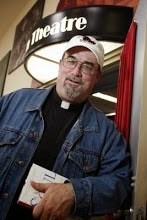
RON ROLHEISER, OMI Speaker, Columnist and Author


Ron Rolheiser

Ronald Rolheiser, a Roman Catholic priest and member of the Missionary Oblates of Mary Immaculate, is president of the Oblate School of Theology in San Antonio, Texas.

Labels: , ,